
Sustainable Port Development in Brazil: A New Era for Green Logistics


 Aime Summary
A Framework for ESG-Driven Growth
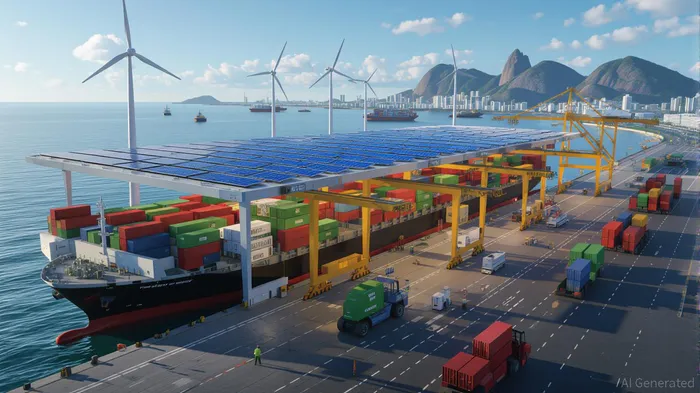
The Diamond Sustainability Seal is part of the Sustainability Pact, a national initiative aimed at reducing greenhouse gas emissions and aligning port operations with the United Nations' (SDGs). Wilson Sons' success in this program reflects a broader trend: , but only Wilson Sons achieved the highest Diamond category recognition. , , and replacing diesel equipment with electric alternatives-demonstrate how operational innovation can drive both environmental impact and profitability according to Wilson Sons' public release.
This progress is not isolated. A 2023 "Best Practices Guide for Port Sustainability" developed by the Federal University of Maranhão, the (ATP), and the (ABEPH) provides a structured ESG framework for the sector. The guide organizes best practices around six dimensions-Policies, Plans, Programs, Projects, Processes, and Partnerships-and emphasizes embedding ESG principles into daily operations. By aligning with global standards like the (GRI) and the (IBGC), the guide ensures that Brazilian ports remain competitive in an increasingly ESG-conscious global market.
Strategic Investment in a Green Transition
For investors, the integration of ESG criteria into Brazil's port sector represents a high-conviction opportunity. The "Port Sustainability Journey" model outlined in the 2023 guide frames sustainability as a progressive, evolutionary process according to the 2023 ESG Guide. This approach not only reduces regulatory risk but also enhances operational resilience, a critical factor in attracting capital. Wilson Sons' CEO has explicitly tied the Diamond Seal to the company's long-term strategy, signaling confidence in ESG-driven growth according to the company's public statement.
Moreover, the Brazilian government's emphasis on port-city integration and public-private partnerships creates a fertile ground for infrastructure investment. By fostering collaboration between regulators, private operators, and local communities, these frameworks mitigate social and environmental risks while amplifying returns. For example, Wilson Sons' not only cut emissions but also insulate the company from volatile fossil fuel prices, a tangible financial benefit.
Policy and Market Synergies
The alignment of Brazil's port sector with global ESG standards is further reinforced by the country's evolving financial regulations. A 2025 report highlights how ESG factors are increasingly embedded in Brazilian financial frameworks, influencing everything from credit ratings to investor due diligence. This shift is particularly relevant for ports, which require substantial capital for decarbonization and modernization. The Diamond Seal and similar certifications serve as credible signals to investors, demonstrating that ESG compliance is not merely a regulatory checkbox but a strategic asset.
Conclusion: A High-Conviction Opportunity
Brazil's port sector is at a pivotal inflection point. With Wilson Sons setting a benchmark for sustainability and the 2023 ESG Guide providing a scalable framework, the industry is well-positioned to attract capital from ESG-focused investors. The integration of renewable energy, electric infrastructure, and stakeholder-centric governance models not only reduces environmental footprints but also enhances long-term profitability. For investors seeking to align their portfolios with global sustainability goals, Brazil's green logistics revolution offers a compelling case study in strategic infrastructure investment.

Delivering real-time insights and analysis on emerging financial trends and market movements.
Latest Articles
Stay ahead of the market.
Get curated U.S. market news, insights and key dates delivered to your inbox.






Comments
No comments yet