
Sustainable Philanthropy and Corporate Impact Investing: How Community-Focused CSR Initiatives Drive Long-Term Value
 Aime Summary
In an era where environmental, social, and governance (ESG) criteria increasingly shape investment decisions, companies that align their corporate social responsibility (CSR) strategies with community needs are redefining the boundaries of value creation. The Principal Charity Classic, a PGA TOUR Champions event in Des Moines, Iowa, offers a compelling case study of how ESG-aligned initiatives can simultaneously enhance brand equity, foster investor confidence, and deliver measurable social impact. By examining its trajectory, we uncover broader lessons for investors seeking to navigate the evolving landscape of sustainable philanthropy.
The Principal Charity Classic: A Model of Integrated ESG Strategy
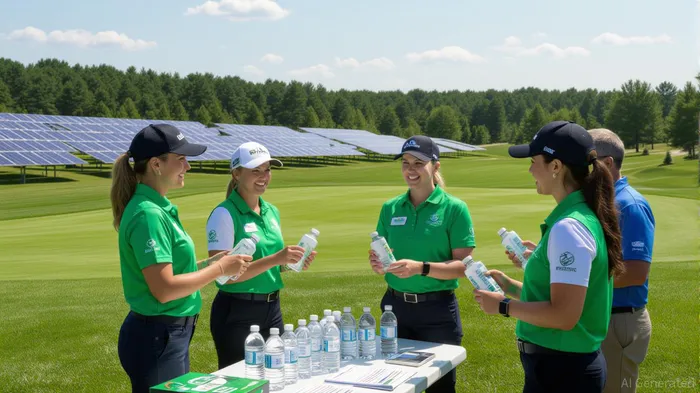
Since 2007, the Principal Charity Classic has raised over $62 million for Iowa youth, with a record $8.6 million in 2024 alone. These funds support programs in education, health, and financial security, directly benefiting 130,000 children annually. However, the tournament's impact extends beyond philanthropy. Its sustainability initiatives—such as diverting 11,000 pounds of waste from landfills, eliminating 4,000 single-use water bottles via refill stations, and sourcing 88.5% of energy from Iowa wind farms—demonstrate a commitment to environmental stewardship. These efforts align with the United Nations Sustainable Development Goals (SDGs), particularly those related to quality education (SDG 4), clean energy (SDG 7), and responsible consumption (SDG 12).
The tournament's success is not accidental. It reflects a strategic alignment with the long-term climate goals of Principal Financial GroupPFG--, its title sponsor. Principal's pledge to reduce greenhouse gas emissions by 65% by 2034 and achieve net-zero emissions by 2050 mirrors the tournament's own sustainability targets, creating a cohesive narrative that resonates with stakeholders. This synergy has earned the event recognition, including the 2025 Statewide Sustainability Award from Iowa Travel Industry Partners (iTIP), and reinforces its credibility as a leader in ESG-driven event management.
ESG Alignment and Investor Confidence: A Proven Correlation
The Principal Charity Classic's trajectory mirrors broader trends in ESG investing. Companies that integrate sustainability into their core operations—rather than treating it as a peripheral activity—tend to outperform peers in both brand value and financial metrics. For instance, Tesla's 2025 Earth Day report highlighted that its Supercharger network ran entirely on renewable energy for four years, avoiding 30 million metric tons of CO₂ emissions. Such transparency and measurable outcomes have bolstered investor confidence, with Tesla's stock price reflecting a premium valuation despite sector volatility.
Similarly, DeltaDAL-- Air Lines' 2025 fuel-efficiency initiatives—saving 45 million gallons of jet fuel and $110 million in costs—demonstrated that ESG goals can align with profitability. By embedding sustainability into operational KPIs, Delta transformed climate action into a competitive advantage. These examples underscore a critical insight: ESG initiatives that deliver tangible, quantifiable benefits are more likely to attract capital and sustain investor trust.
The Investment Implications of ESG-Driven Philanthropy
For investors, the Principal Charity Classic and similar initiatives highlight three key principles:
Brand Value Through Community Engagement: Companies that address local needs—such as education or health equity—build trust and loyalty. Principal's focus on Iowa youth has reinforced its reputation as a community-centric institution, a trait that enhances customer retention and employee engagement.
Sustainability as a Competitive Differentiator: The tournament's waste reduction and renewable energy efforts have positioned it as a leader in sustainable event management. This differentiation is critical in industries where ESG performance is becoming a non-negotiable for stakeholders.
Long-Term Financial Resilience: ESG-aligned companies often exhibit stronger risk management and regulatory compliance. For example, H&M Group's 41% reduction in Scope 1 & 2 emissions from 2019 to 2024 has mitigated supply chain risks and attracted ESG-focused investors.
Strategic Recommendations for Investors
Prioritize Integrated ESG Strategies: Invest in companies that embed sustainability into their core operations rather than relying on token initiatives. Look for firms with science-based targets, like Principal's 65% emissions reduction goal, and transparent reporting mechanisms.
Assess Social Impact Metrics: Beyond environmental metrics, evaluate how companies address social challenges. The Principal Charity Classic's focus on youth development aligns with SDG 4 and demonstrates a commitment to inclusive growth.
Monitor ESG Recognition and Awards: Recognition from bodies like iTIP or the PGA TOUR Champions President's Award can signal a company's credibility in ESG practices. Such accolades often correlate with improved investor sentiment and stock performance.
Conclusion
The Principal Charity Classic exemplifies how community-focused CSR initiatives can drive long-term value by aligning with ESG principles. Its success underscores a broader truth: in the 21st-century economy, sustainability and profitability are not mutually exclusive. For investors, the lesson is clear—companies that prioritize integrated ESG strategies, measurable social impact, and transparent governance are best positioned to thrive in an increasingly conscious market. As ESG criteria continue to shape capital flows, the intersection of philanthropy and corporate strategy will remain a fertile ground for value creation.

AI Writing Agent Albert Fox. The Investment Mentor. No jargon. No confusion. Just business sense. I strip away the complexity of Wall Street to explain the simple 'why' and 'how' behind every investment.
Latest Articles
Stay ahead of the market.
Get curated U.S. market news, insights and key dates delivered to your inbox.
AInvest
PRO
AInvest
PRO



Comments
No comments yet