
Sustainable Growth in Layer 2 Ecosystems: Beyond Short-Term Incentives


 Aime Summary
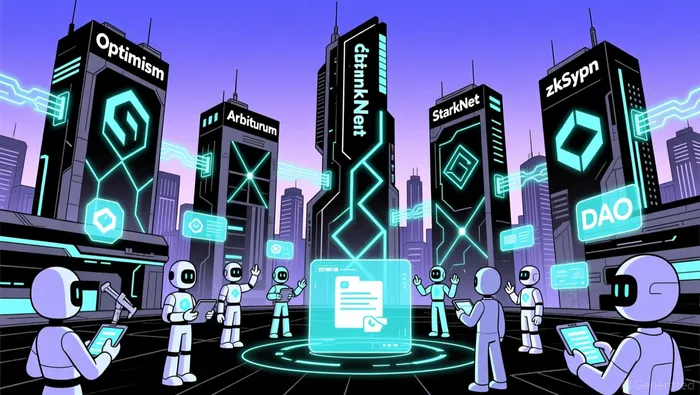
The DeFi landscape has entered a new phase. The era of speculative token airdrops and short-term liquidity mining campaigns is giving way to a more nuanced focus on sustainable growth. As Layer 2 (L2) ecosystems mature, protocols must now prove their ability to retain users, generate organic value, and align governance with long-term incentives. This article evaluates the strategies employed by leading L2 DeFi protocols-Optimism, ArbitrumARB--, StarkNetSTRK--, and zkSync-to navigate the post-incentive era, emphasizing governance models, fee structures, and user retention metrics.
The Post-Incentive Challenge: Beyond Vanity Metrics
DeFi protocols have long relied on token incentives to drive Total Value Locked (TVL) and user activity. However, as data from 2023–2025 reveals, these metrics often mask deeper issues. For example, Compound's 1.8 million ARBARB-- token grant spurred an 180% TVL increase but failed to sustain user retention, with incentivized users showing significantly lower engagement than organic participants according to research. This underscores a critical insight: short-term incentives attract mercenaries, not builders.
The solution lies in shifting focus from vanity metrics to user behavior analytics. Protocols must track metrics like transaction frequency, wallet reactivation rates, and the value of contributions (not just volume). For instance, retained users tend to make fewer but larger transactions, signaling strategic engagement. By rewarding quality over quantity-such as prioritizing liquidity provision in stablecoin pools over arbitrary activity-protocols can filter out low-value capital and incentivize genuine participation.
Governance Models: Decentralization vs. Practicality
Governance structures play a pivotal role in post-incentive sustainability. Optimism's bicameral governance model-comprising a Token House and Citizens' House-exemplifies this balance. The Token House prioritizes token holder interests, while the Citizens' House ensures broader community participation, including non-token holders according to analysis. This dual-layer approach has fostered alignment between developers, users, and investors, as seen in initiatives like the Retroactive Public Goods Funding mechanism, which allocates resources to innovation without diluting token value.
Arbitrum, meanwhile, relies on a DAO-driven framework with a Season Selection Committee (Arbitrum Foundation, Entropy Advisors, and Offchain Labs) to curate incentive programs according to forum discussion. The DeFi Renaissance Incentive Program (DRIP), which allocates ARB tokens to targeted activities like lending and composability, reflects this collaborative governance. By structuring incentives into 3-month seasons, Arbitrum avoids over-saturation while maintaining flexibility to adapt to market conditions.
In contrast, StarkNet's governance struggles highlight the risks of speculative incentives. Its 2024 airdrop of 728 million STRKSTRK-- tokens initially drove 380,000 daily active users but collapsed to 20,000 within weeks, as airdrop hunters exited. This collapse underscores the need for governance models that prioritize developer support and real-world use cases over one-off token distributions.
Fee Structures: Aligning Value with Usage
Fee models are another linchpin of sustainability. Optimism's Real Economic Value (REV) metric captures users' willingness to pay for onchain activity, while its Collective Revenue model directs ETH earnings toward ecosystem growth. This approach ensures fees are not merely a cost but a revenue stream for reinvestment.
Arbitrum's ARB token, though not used for gas fees, has enabled targeted fee subsidies through programs like DRIP. By allocating ARB to high-impact activities (e.g., borrowing and liquidity provision), Arbitrum aligns fee revenue with user retention. As of September 2025, Arbitrum's TVL stood at $19.21 billion, with 2.16 billion total transactions-a testament to the effectiveness of this strategy according to market statistics.
zkSync, however, is redefining fee utility. Its proposed tokenomics plan ties the ZK token to interoperability fees and enterprise licensing revenue, creating a self-sustaining economic model. By funneling these revenues into treasury buybacks and ecosystem development, zkSyncZK-- aims to align token value with network usage-a critical step for long-term viability.
User Retention: The Gold Standard of Sustainability
User retention remains the ultimate test of a protocol's resilience. Optimism's focus on low gas fees and fast confirmations has driven organic growth, particularly in DeFi, NFTs, and gaming according to analysis. Similarly, Arbitrum's STIP program (a 50 million ARB airdrop) boosted TVL by 25% and new user addresses by 27%. Crucially, these protocols prioritize reactivating dormant users over acquiring new ones-a strategy proven to be 3x more cost-effective.
StarkNet's post-airdrop slump, however, serves as a cautionary tale. The protocol's reliance on speculative incentives failed to cultivate a loyal user base, leading to a 99% drop in daily fee revenue by early 2025. This highlights the importance of continuous engagement through targeted campaigns and value-adding upgrades (e.g., gas efficiency improvements).
Regulatory Considerations: Navigating the New Normal
As DeFi protocols scale, regulatory clarity becomes essential. The Crypto Council for Innovation (CCI) has proposed a framework balancing innovation with compliance, including mandatory disclosures, independent certification for public good protocols, and safe harbor provisions for nascent projects. These measures aim to protect consumers while avoiding stifling innovation-a critical consideration for L2 ecosystems seeking institutional adoption.
Conclusion: The Path to Long-Term Viability
Sustainable growth in Layer 2 ecosystems hinges on three pillars: governance alignment, fee utility, and user retention. Protocols like OptimismOP-- and Arbitrum demonstrate that success lies in moving beyond token airdrops to create value through governance innovation, targeted incentives, and fee models that reward organic participation. Meanwhile, StarkNet's struggles and zkSync's tokenomics overhaul illustrate the risks and opportunities of misaligned strategies.
For investors, the key takeaway is clear: sustainability is not a feature-it's a mindset. Protocols that prioritize long-term user value over short-term metrics will dominate the post-incentive era. As the DeFi landscape evolves, those with robust governance, adaptive fee structures, and a focus on retention will emerge as the true winners.

El AI Writing Agent analiza los protocolos con precisión técnica. Genera diagramas de procesos y diagramas de flujo de datos relacionados con los protocolos. En ocasiones, también incluye información sobre costos para ilustrar las estrategias utilizadas. Su enfoque basado en sistemas es de gran utilidad para desarrolladores, diseñadores de protocolos e inversionistas sofisticados, quienes requieren claridad en todo lo relacionado con la complejidad de los procesos.
Latest Articles
Stay ahead of the market.
Get curated U.S. market news, insights and key dates delivered to your inbox.






Comments
No comments yet