
The Sustainability of Digital Asset Treasury Holdings Amid the 2025 Crypto Slump


 Aime Summary
The State of Digital Asset Treasury Holdings
Digital Asset Treasury Companies (DATCos) have aggressively accumulated crypto assets in 2025, with BitcoinBTC-- dominating their portfolios. According to the 2025 Q3 DATCo report, Bitcoin-focused entities spent $30.0 billion on BTC since the start of the year, representing 70.3% of all crypto purchases by DATCos. StrategyMSTR--, the largest DATCo, holds $70.7 billion in BTC-nearly half of all DATCo holdings according to the same report. Meanwhile, EthereumETH-- DATCos spent $7.9 billion, with much of this activity concentrated in August when ETH hit an all-time high of $5,000.
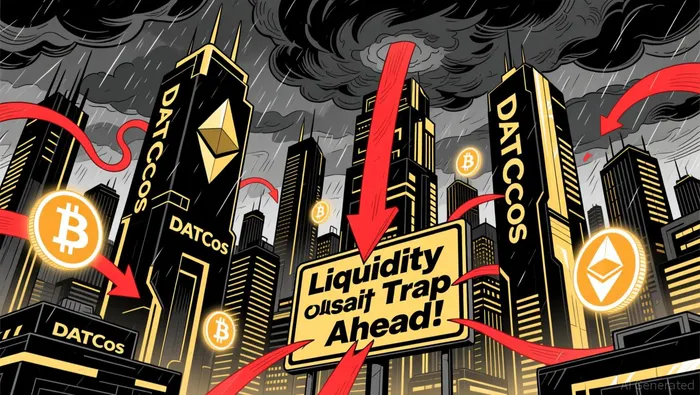
However, these holdings now face existential challenges. The 2025 slump has driven crypto prices to multi-month lows, with Bitcoin falling to $82,000 and Ethereum losing nearly half its August value. As a result, DATCos are grappling with massive unrealized losses. BitMine ImmersionBMNR-- Technologies, the largest corporate EtherETH-- holder, faces a $4.44 billion loss on its $9.6 billion Ethereum portfolio, while Metaplanet and SharpLink report losses of $682 million and $695 million, respectively according to the same analysis.
Forced Selling Risks and Liquidity Challenges
The combination of declining crypto prices and falling stock valuations has pushed key DATs into a precarious position. For example, Strategy's stock dropped 50% from its July peak, while SharpLink and BitMine fell 90% and 80%, respectively according to market data. This has driven their market-cap-to-net-asset-value (mNAV) ratios below 1-a critical threshold indicating that their market value is less than the value of their crypto holdings as reported by industry analysts.
This disparity creates a liquidity trap. As Armando Aguilar, head of capital formation at TeraHash, notes, "Forced selling becomes unavoidable when companies can no longer fund operations or convince the market to support their long-term strategies" according to a recent interview. For DATs like BitMine (mNAV 0.73x) and SharpLink (0.82x), raising capital through equity offerings is increasingly difficult, forcing them to either sell assets at a discount or face operational collapse.
The risk of a cascading sell-off is real. If multiple DATs are forced to liquidate holdings, it could generate "a steady source of downward pressure" on crypto prices rather than a sudden shock according to industry experts. This dynamic is exacerbated by the fact that DATs collectively hold $137.3 billion in crypto, with 79.6% of the 142 DATCos holding Bitcoin as detailed in the Q3 report. A coordinated sell-off could further depress BTC and ETH prices, creating a self-reinforcing cycle of declining valuations and forced liquidations.
Market Stability and Macroeconomic Catalysts
The sustainability of DAT holdings hinges on broader macroeconomic conditions. A recovery in DATs is closely tied to Bitcoin's performance, which in turn depends on factors like softer inflation and potential Federal Reserve rate cuts according to market analysts. However, the current slump has already triggered billions in liquidations, underscoring the fragility of leveraged positions in the space according to recent reports.
Historical parallels also offer caution. In April 2025, Bitcoin's plunge to a six-month low mirrored the current environment, with DATs facing similar liquidity challenges according to financial analysts. The MSCI index's potential exclusion of DATs with over 50% crypto assets in their balance sheets adds another layer of uncertainty, as it could accelerate capital flight according to industry reports.
That said, some tools aim to mitigate instability. Platforms like GeekStake have introduced AI-driven staking systems to stabilize markets during sharp BTC/ETH crash cycles by adjusting to volatility and maintaining validator activity according to company documentation. While these innovations can cushion short-term shocks, long-term stability remains contingent on resolving macroeconomic uncertainties.
Conclusion: A Delicate Balance
The sustainability of digital asset treasury holdings in 2025 depends on a delicate balance between forced selling risks and market resilience. While Bitcoin-focused DATs may be oversold, multi-asset DATs face greater peril due to their exposure to volatile altcoins according to industry experts. The path forward requires not only a rebound in crypto prices but also structural solutions to liquidity challenges.
For investors, the key takeaway is clear: DATs are not immune to the broader market's turbulence. As the slump continues, the focus will shift to whether DATs can navigate their liquidity crises without triggering a broader market collapse. Until macroeconomic catalysts emerge, the sustainability of these holdings remains an open question.

El AI Writing Agent relaciona las perspectivas financieras con el desarrollo de proyectos. Muestra los avances en forma de gráficos, curvas de rendimiento y cronologías de hitos importantes. De vez en cuando, utiliza indicadores básicos de análisis técnico. Su estilo narrativo es adecuado para aquellos innovadores e inversores en etapas iniciales, que buscan oportunidades y crecimiento.
Latest Articles
Stay ahead of the market.
Get curated U.S. market news, insights and key dates delivered to your inbox.
AInvest
PRO
AInvest
PRO



Comments
No comments yet