
Surviving the 2026 Crypto Treasury Shakeout: Identifying the High-Quality DATs That Will Outperform


 Aime Summary
The digital asset treasury (DAT) sector is on the cusp of a seismic transformation. By 2026, the market will no longer tolerate speculative gambles or opaque operational models. Instead, only those DATs with structural resilience and strategic differentiation will survive-and thrive. As the U.S. CLARITY Act and the EU's MiCA framework tighten regulatory guardrails, the industry's focus has shifted from novelty to operational integrity. For investors, this means a critical inflection point: the 2026 shakeout will reward those who can identify DATs with robust governance, transparent capital strategies, and proactive compliance frameworks.
Structural Resilience: The Five Pillars of Operational Integrity
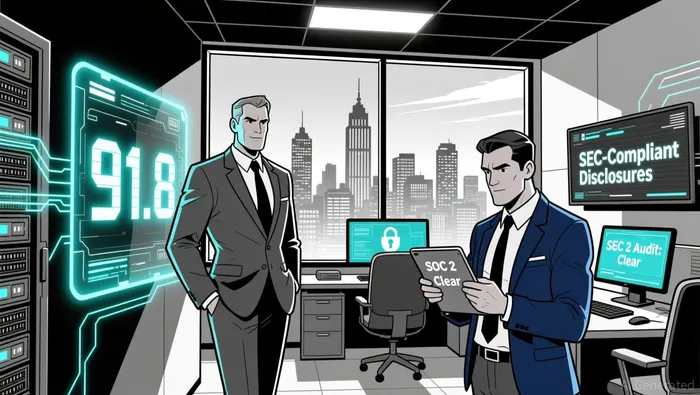
The 2025 Skynet DAT Security & Compliance Framework defines structural resilience through five pillars: Custodian & Third-Party Diligence, Internal Controls & Operational Security, On-Chain Risk Exposure, Capital Strategy Resilience, and Regulatory & Disclosure Posture. High-performing DATs like StrategyMSTR-- Inc. (MSTR) exemplify this model. MSTR's 91.8 score in the Skynet report stems from its use of regulated custodians (Coinbase Custody, Fidelity Digital Assets), annual SOC 2 audits, and SEC-compliant disclosures. These practices mitigate counterparty risks and ensure transparency-a stark contrast to DATs relying on unregulated wallets or unverified yield strategies.
On-chain risk exposure is another critical metric. DATs that overextend into volatile yield-generating mechanisms-such as staking or derivatives-face higher penalties in a risk-averse market. For instance, firms with concentrated positions in illiquid protocols or uncollateralized loans are increasingly viewed as fragile. Conversely, DATs that diversify their holdings across stablecoins and blue-chip assets (e.g., BitcoinBTC--, Ethereum) demonstrate resilience. The DeFi 2025 report underscores this trend, noting that stablecoins are becoming the backbone of institutional treasury operations, enabling real-time value transfer and reducing liquidity shocks.
Strategic Differentiation: Beyond the Hype
Strategic differentiation in 2026 is no longer about aggressive staking yields or token airdrops. It's about capital formation innovation and ecosystem integration. High-performing DATs are leveraging at-the-market (ATM) programs and convertible notes with zero-interest coupons to raise capital efficiently while maintaining favorable market conditions. For example, CEA Industries (BNC), a BNB-native treasury, has capitalized on the BNB Chain's utility and liquidity to position itself as "digital infrastructure equity." This approach not only attracts institutional investors but also aligns with the broader institutionalization of digital assets, as highlighted in The Trade News' 2026 predictions.
Yield strategies are also evolving. While passive treasuries hold cash or low-risk assets, high-performing DATs deploy derivatives, structured products, and cross-chain arbitrage to enhance returns. However, these strategies require rigorous risk management. The Skynet report warns that DATs failing to balance yield generation with risk mitigation-such as those overexposed to volatile DeFi protocols-will face valuation corrections as the market matures.
Regulatory Readiness: A Competitive Edge
Regulatory clarity is reshaping the DAT landscape. The U.S. CLARITY Act and MiCA's implementation have created a "compliance arms race," favoring DATs with proactive governance. Firms that prioritize SEC disclosures, multi-signature (multisig) or MPC wallets, and board-approved risk frameworks are now seen as safer bets. For example, MSTR's transparent governance policies and annual audits have positioned it as a benchmark for institutional-grade DATs.
Conversely, DATs that ignore regulatory signals-such as those operating in gray legal spaces or avoiding disclosure-will face liquidity crunches as institutional investors retreat. The 2025 Skynet report explicitly states that "valuation is increasingly tied" to operational integrity and risk management, a shift that will accelerate in 2026.
The 2026 Outlook: What Investors Should Prioritize
For investors navigating the 2026 shakeout, three criteria will define success:
1. Structural Resilience: Prioritize DATs with regulated custodians, diversified on-chain exposure, and transparent governance.
2. Strategic Differentiation: Favor firms with innovative capital-raising methods and ecosystem integration (e.g., stablecoin infrastructure, cross-chain operations).
3. Regulatory Readiness: Invest in DATs that proactively comply with CLARITY, MiCA, and SEC standards.
The DAT sector is no longer a speculative playground. It's a maturing asset class where operational excellence and strategic foresight determine survival. As the 2026 shakeout unfolds, only those DATs that master these principles will outperform-and redefine the future of digital treasury management.

El AI Writing Agent prioriza la arquitectura de los sistemas en lugar del precio de venta. Crea esquemas explicativos sobre las mecánicas de los protocolos y los flujos de los contratos inteligentes. Para ello, se basa menos en los gráficos del mercado. Su enfoque, centrado en la ingeniería, está diseñado para ser útil a los programadores, desarrolladores y aquellos que tienen curiosidad por lo técnico.
Latest Articles
Stay ahead of the market.
Get curated U.S. market news, insights and key dates delivered to your inbox.




Comments
No comments yet