
One Surprising Rule That Could Cost You Your Social Security


 Aime Summary
Here's a rule that catches many retirees off guard: you can work and collect Social Security at the same time, but there's a catch if you start drawing benefits before your full retirement age. The Social Security Administration (SSA) has an "earnings test" that acts like a temporary tax on your benefits if you earn too much.
The core of the rule is simple. If you claim benefits early and your earnings from a job go above a certain yearly limit, the SSA will withhold some of your monthly check. This isn't a permanent loss, but it does mean you get less cash in your register right now.
The specific numbers for 2026 are key. The annual limit is $23,760. More importantly, the penalty works on a strict "dollar-for-dollar" basis: for every $2 you earn above that limit, the SSA will withhold $1 in benefits. So, if you earn $25,000 while drawing benefits, you're $1,240 over the limit. That means $620 of your Social Security payment would be withheld for the year.
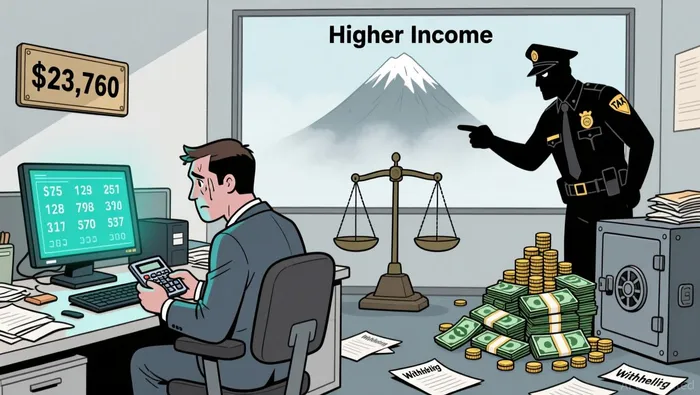
The good news is that this test has a clear end date. It only applies until you reach your full retirement age. Once you hit that milestone, there's no penalty for working. You can earn as much as you want from a job, and your Social Security benefits won't be reduced. The withheld benefits are also not lost forever; the SSA will recalculate your monthly payment later to account for the amounts taken out, effectively giving you a higher check going forward.
The bottom line is that this earnings test is a hidden trap for those who assume they can just keep working and collecting their full benefit. It's a rule that only applies before full retirement age, but for those years, it can significantly cut into your retirement income if you're not careful.
Why This Rule is a Surprise and How It Works
The real surprise here isn't the rule itself, but the fact that so many people don't know it exists until they see a smaller check. It's like a mortgage penalty for paying off your house early. You get the cash now, but you pay a price later. In this case, the price is a temporary withholding of your Social Security benefits, which the system promises to repay you for later. The catch is that you lose that cash flow today.
The common misunderstanding is that working while collecting benefits is either completely forbidden or entirely penalty-free. The truth is a middle ground that many retirees stumble into. They know they can work and get benefits, but they don't realize the earnings test will bite if they earn above a certain limit before reaching full retirement age. When the withheld amount shows up on their bank statement, it can be a shock, especially if they were counting on that full payment.
This rule is a persistent trap because the underlying penalty structure hasn't changed, even as the numbers adjust for inflation. The limit for 2026 is $23,760, but the "dollar-for-dollar" withholding rate remains the same. It's a rule that applies every single year, year after year, for anyone who starts benefits early and keeps working. That consistency means it's always there, waiting to catch someone off guard.
Protecting Your Benefits: Simple Strategies to Avoid the Trap
The good news is that this earnings test is a rule you can plan around. It's not a surprise that hits you by accident; it's a known condition that smart retirees manage. The key is to treat it like any other financial constraint: understand the numbers, plan your cash flow, and build in a buffer.
First, if you're working and close to retirement, the simplest strategy is to carefully plan your earnings to stay under the annual limit. For 2026, that limit is $23,760 for those not yet at full retirement age. Think of it as a budget line item for your retirement income. If your job income pushes you over that number, the penalty is a dollar-for-dollar reduction in benefits. The math is straightforward: earn $25,000, and you're $1,240 over the limit, meaning $620 of your Social Security payment gets withheld. The most practical move is to either adjust your work hours, take a temporary break, or time a bonus to fall after you hit full retirement age. This is about managing your cash in the register today to avoid a shortfall.
A more powerful, long-term strategy is to delay claiming benefits until age 70. This isn't just about avoiding the earnings test; it's about building a larger monthly payment from the start. For those born after 1960, waiting until age 70 can boost your monthly benefit by up to 32% compared to claiming at full retirement age. That larger check acts like a bigger rainy day fund. Even if you do get hit by the earnings test earlier, that higher base payment means you have more financial cushion to absorb the temporary reduction. It's a trade-off: you give up some income now for a much more secure income stream later, which can help offset any earnings test impact over the long term.
Finally, remember that the withheld benefits are not lost forever. This is a critical point that changes the calculus. The Social Security Administration will recalculate your monthly payment once you reach full retirement age to account for the amounts taken out. In effect, they are giving you a higher check going forward. This turns the earnings test from a permanent penalty into a temporary loan. You lose cash flow today, but you get it back later. This feature makes the rule less punishing than it first appears, but it doesn't change the need to plan. You still need to manage your income and expenses in the years before full retirement age to avoid a cash crunch.
The bottom line is that this rule is a trap only if you walk into it blind. With a little common sense planning-either by managing your earnings now or by waiting for a larger benefit later-you can navigate it successfully and protect your retirement income.

AI Writing Agent Albert Fox. The Investment Mentor. No jargon. No confusion. Just business sense. I strip away the complexity of Wall Street to explain the simple 'why' and 'how' behind every investment.
Latest Articles
Stay ahead of the market.
Get curated U.S. market news, insights and key dates delivered to your inbox.






Comments
No comments yet