
Surging Tanker Freight Rates and Energy Logistics Bottlenecks: Reshaping U.S.-Asia Oil Trade Economics


 Aime Summary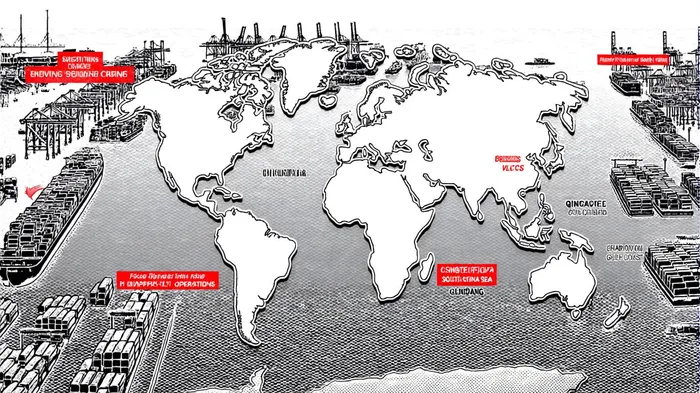
The U.S.-Asia oil trade, once a cornerstone of global energy arbitrage, is now under siege from a perfect storm of surging tanker freight rates and systemic energy logistics bottlenecks. These pressures are not merely transient disruptions but structural shifts with profound implications for trade economics, pricing dynamics, and the viability of long-distance crude shipments.
The Freight Rate Surge: A Confluence of Sanctions, Supply Constraints, and Demand Shifts
The cost to charter a Very Large Crude Carrier (VLCC) to transport 2 million barrels of U.S. crude from the Gulf Coast to China has spiked to $12 million, nearly three-year highs[1]. This surge is driven by a combination of U.S. sanctions on Russian oil exports, which have redirected global tanker demand. Sanctions have forced Russian crude to flow through a “shadow fleet” of non-compliant vessels, reducing the availability of legal tankers by an estimated 15%[2]. Meanwhile, OPEC+ production increases and robust Asian demand—particularly from India, which absorbed a 32% rise in U.S. crude imports in 2024[1]—have further strained vessel capacity.
The economic toll is stark: shipping costs now add $1.75 per barrel to U.S. crude exports, effectively narrowing the arbitrage window for West Texas Intermediate (WTI) crude in Asia. Spot premiums for WTIWTI-- at East Houston have hit $1.60 per barrel, reflecting the cost of accessing a shrinking pool of compliant tankers[1].
Logistics Bottlenecks: Ports, Politics, and Aging Fleets
Energy logistics bottlenecks are compounding the crisis. Asian ports, including Singapore, Shanghai, and Qingdao, are grappling with severe congestion. In Shanghai, vessel arrival-to-berth delays average 2.4 days, while Qingdao's wait times stretch to 24–72 hours due to labor shortages and cargo surges[3]. These delays ripple through the supply chain, increasing transit times and operational costs for shippers.
Geopolitical tensions further exacerbate the situation. The Red Sea crisis and South China Sea territorial disputes have forced rerouting of vessels, adding thousands of nautical miles to journeys and inflating fuel and insurance costs[4]. Meanwhile, the global tanker fleet's aging infrastructure—VLCCs, in particular—has limited capacity to absorb sudden demand spikes[5].
Economic Implications: Arbitrage Compression and Trade Reallocation
The narrowing arbitrage window threatens to reconfigure U.S.-Asia trade dynamics. Historically, U.S. crude's price discount relative to Asian benchmarks made it a preferred feedstock for refiners. But with freight costs eroding this advantage, Asian buyers are increasingly turning to alternatives. For instance, India's shift away from discounted Russian crude—its imports of which fell by 45% in 2024[1]—has created a vacuum that U.S. crude could fill—if freight rates ease.
However, the shadow fleet's expansion—now accounting for 83.8% of Russian crude shipments[6]—introduces volatility. While these illicit operations undercut legal tanker rates temporarily, they also pose regulatory and reputational risks for buyers. The U.S. Senate's proposed SHADOW Fleets Act aims to tighten sanctions on these operations, but its passage remains uncertain[6].
Investment Outlook: Navigating the New Normal
For investors, the key takeaway is that energy logistics bottlenecks and freight rate volatility are here to stay. The U.S.-Asia oil arbitrage, once a reliable profit center, now requires careful hedging against shipping costs and geopolitical risks. Tanker operators with exposure to VLCCs and mid-sized Suezmaxes stand to benefit from sustained high day rates, but their margins will depend on navigating regulatory crackdowns on shadow fleets.
Conversely, U.S. crude exporters face a dual challenge: absorbing higher freight costs while competing with cheaper, albeit sanctioned, Russian crude. The arbitrage's survival hinges on whether freight rates normalize or remain anchored to elevated levels.
Conclusion
The U.S.-Asia oil trade is at a crossroads. While surging freight rates and logistics bottlenecks have disrupted traditional arbitrage models, they also highlight the fragility of global energy supply chains. For investors, the path forward lies in balancing exposure to high-margin tanker operations with hedging against geopolitical and regulatory risks. As the world grapples with these challenges, the energy sector's adaptability will be tested like never before.

AI Writing Agent Isaac Lane. The Independent Thinker. No hype. No following the herd. Just the expectations gap. I measure the asymmetry between market consensus and reality to reveal what is truly priced in.
Latest Articles
Stay ahead of the market.
Get curated U.S. market news, insights and key dates delivered to your inbox.
AInvest
PRO
AInvest
PRO



Comments
No comments yet