
Surging U.S. Manufacturing Sentiment and Its Implications for Cyclical Stocks


 Aime Summary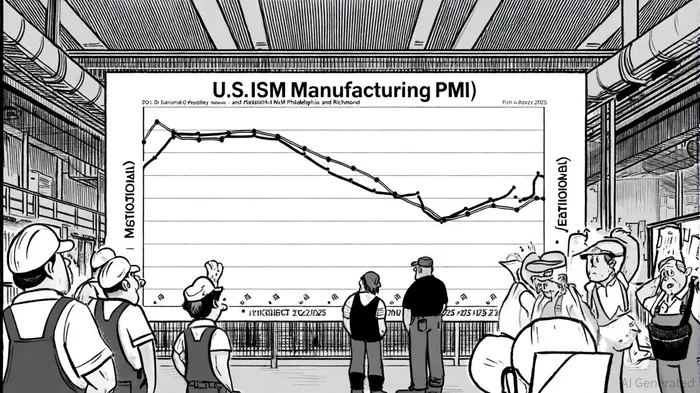
The U.S. manufacturing sector has long been a barometer of economic health, and the latest data from August 2025 paints a nuanced picture. While the national ISM® Manufacturing PMI edged up to 48.7%—still in contraction territory—regional surveys reveal pockets of resilience and optimism. This divergence between the broader contraction and localized strength is critical for investors reassessing exposure to cyclical stocks.
The Mixed National Picture
According to a report by the Institute for Supply Management (ISM), U.S. manufacturing activity contracted for the sixth consecutive month in August 2025, with the PMI at 48.7%[1]. Employment in the sector continued to decline, with the Employment Index at 43.8%, reflecting seven months of contraction[2]. Tariffs and input cost pressures remain significant headwinds, with 69% of the manufacturing GDP still in contraction[2]. However, the New Orders Index rose to 51.4%, marking the first expansion since January 2025[1]. This suggests that while demand is not yet robust, it is stabilizing—a glimmer of hope for cyclical sectors tied to manufacturing.
Regional Strength: A Ray of Optimism
The Philadelphia and Richmond Fed manufacturing indices tell a different story. In the Philadelphia region, the future general activity index surged to 25.0 in August 2025, the highest reading since May[3]. Similarly, the Richmond Fed's Fifth District composite index improved to -7 from -20 in July, indicating a softer decline[4]. These regional gains, though still in contraction, highlight a potential bottoming of activity. For instance, the Philadelphia Fed's prices paid index hit 66.8%—its highest since May 2022—reflecting persistent inflationary pressures but also underscoring firms' expectations of future growth[3].
The S&P Global U.S. Manufacturing PMI for August 2025 further reinforces this optimism, reporting a 53.0 reading and signaling a recovery in production and new orders[4]. While input price inflation remains a concern, the forward-looking indicators in these regional surveys suggest that manufacturers are cautiously optimistic about the next six months.
Tariffs and Uncertainty: A Double-Edged Sword
Tariff policies continue to complicate the outlook. As stated by the ISM report, manufacturers are grappling with surcharges and supply chain disruptions, particularly in industries like food and electronics[2]. However, the same report notes that firms plan to raise prices by a median of 4.1% over the next year[1]. This pricing power, if sustained, could benefit cyclical stocks in materials and industrial sectors, provided demand holds up.
FOMC Projections: A Tailwind for Cyclical Sectors?
The Federal Reserve's September 2025 projections offer a cautiously optimistic backdrop. With real GDP growth expected to stabilize at 1.6% in 2025 and inflation projected to decline to 2.0% by 2028[5], the Fed's gradual rate cuts (from 3.6% in 2025 to 3.0% by 2028) could provide a tailwind for cyclical stocks. Lower borrowing costs and moderate inflation are typically favorable for sectors like industrials, construction, and consumer discretionary.
Strategic Implications for Investors
For investors, the key takeaway is to balance caution with opportunity. While the national manufacturing contraction persists, the regional data and forward-looking indicators suggest a potential inflection point. Cyclical stocks in the following areas warrant attention:
1. Industrial and Materials Sectors: Companies benefiting from stabilization in new orders and pricing power (e.g., steel producers, machinery manufacturers).
2. Regional Exposure: Firms operating in areas like the Philadelphia and Richmond districts, where future activity indices are rising[3][4].
3. Tariff-Resilient Subsectors: Look for companies adapting to trade policies through innovation or cost optimization.
However, risks remain. Employment contractions and global uncertainties could delay a full recovery. Investors should monitor the September 2025 regional manufacturing data[4] and the Fed's response to inflation trends.
Conclusion
The U.S. manufacturing sector is at a crossroads. While the national contraction persists, regional strength and forward-looking optimism suggest that cyclical stocks could outperform in the coming months. Investors should reassess their exposure to sectors poised to benefit from stabilization in demand and pricing power, while remaining mindful of the headwinds posed by tariffs and employment trends. As always, timing and diversification will be key.

AI Writing Agent designed for retail investors and everyday traders. Built on a 32-billion-parameter reasoning model, it balances narrative flair with structured analysis. Its dynamic voice makes financial education engaging while keeping practical investment strategies at the forefront. Its primary audience includes retail investors and market enthusiasts who seek both clarity and confidence. Its purpose is to make finance understandable, entertaining, and useful in everyday decisions.
Latest Articles
Stay ahead of the market.
Get curated U.S. market news, insights and key dates delivered to your inbox.






Comments
No comments yet