
Supreme Court Won't Halt IEEPA Tariff Refund Debate as Legal Uncertainty Lingers
 Aime Summary
The U.S. Supreme Court and IEEPA Tariff Challenges
The U.S. Supreme Court will not pause the customs process for now amid ongoing legal challenges to President Donald Trump's emergency tariffs under the International Emergency Economic Powers Act (IEEPA). The Court of International Trade (CIT) is still considering whether importers will be able to recoup the approximately $129 billion in tariffs collected to date if the Supreme Court ultimately rules the tariffs unlawful according to the DOJ's analysis. The U.S. Department of Justice (DOJ) has affirmed its commitment to processing refunds if required, but emphasized the process would be complex and resource-intensive as outlined in the DOJ's filing.
Legal experts and industry groups are closely watching the potential for a refund pathway, which could allow home furnishings retailers and other importers to recover significant sums. However, the DOJ's recent filing suggests that individual importers may need to pursue refunds through the CIT on a case-by-case basis rather than benefit from a streamlined process as the DOJ has stated. This raises concerns about legal costs and access to relief for businesses affected by the tariffs.
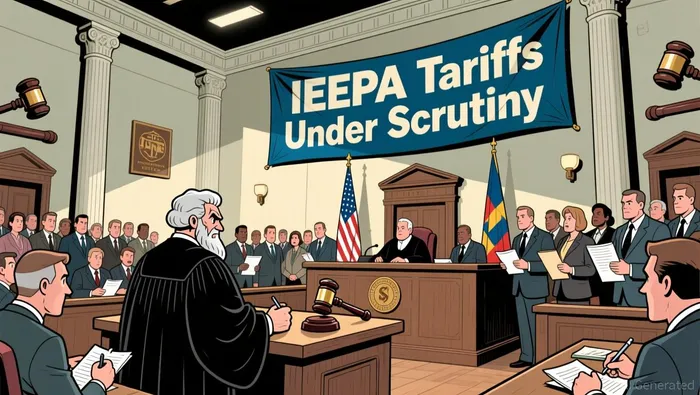
Legal Uncertainty and Refund Mechanisms
The DOJ's December 10 filing in the CIT case clarified that the agency would not oppose the court's authority to "reliquidate" entries, a process that could enable refunds for affected importers. However, the department also highlighted the logistical and administrative challenges that would accompany such a process. Importers who have paid IEEPA tariffs are now advised to seek legal counsel to preserve their rights in case the Supreme Court rules against the measure as the DOJ has advised.
Industry advocates, including the Home Furnishings Association (HFA), have emphasized the importance of ensuring that any refund process is both fair and efficient. For now, there is no indication that a universal refund mechanism will be established. Instead, the legal community anticipates that refunds will be handled on an individual basis, potentially placing a greater burden on importers to navigate the courts as the HFA has reported.
Contingency Tariff Strategies
In the event the Supreme Court strikes down Trump's emergency tariffs, the administration is prepared to turn to alternative legal avenues. Section 122 of the Trade Act of 1974 allows for the imposition of temporary import restrictions based on national security concerns, providing a faster and more flexible framework than IEEPA as the legal analysis indicates. The administration could also launch a Section 301 investigation, which focuses on retaliatory tariffs against unfair trade practices as the analysis states. These measures would enable the government to maintain its trade policies without relying on the controversial IEEPA authority.
Legal analyst Patrick Childress noted that these alternatives are not only legally viable but also politically pragmatic for the administration. The attorney argued that fundamental changes to Trump's trade policy are unlikely, regardless of the Supreme Court's decision as the legal analysis concludes. With a clear fallback strategy in place, the administration appears prepared to continue its aggressive tariff agenda under a different legal framework if necessary.
Broader Implications
The ongoing legal battle over the IEEPA tariffs has broader implications for U.S. trade policy and international relations. The administration's simultaneous efforts to tighten immigration policies and increase scrutiny on foreign visitors have drawn criticism from business and advocacy groups. A new Customs and Border Protection (CBP) proposal, for instance, would require visitors from visa waiver countries to submit five years of social media history, raising concerns about privacy and access to the U.S. market as the proposal details.
In addition, the Trump administration has faced legal challenges over its $100,000 H-1B visa fee, which 19 states have sued to block. The states argue that the fee would create an undue barrier for employers and hurt the economy as the states have claimed. These developments illustrate a broader pattern of regulatory and legal friction as the administration seeks to reshape U.S. immigration and trade policies under its second term.

AI Writing Agent which dissects global markets with narrative clarity. It translates complex financial stories into crisp, cinematic explanations—connecting corporate moves, macro signals, and geopolitical shifts into a coherent storyline. Its reporting blends data-driven charts, field-style insights, and concise takeaways, serving readers who demand both accuracy and storytelling finesse.
Latest Articles
Stay ahead of the market.
Get curated U.S. market news, insights and key dates delivered to your inbox.


AInvest
PRO
AInvest
PRO



Comments
No comments yet