
Supreme Court to Weigh President Trump’s Attempt to Remove Fed Governor Lisa Cook
 Aime Summary
The U.S. Supreme Court will hear arguments on January 21, 2026, in a case involving President Donald Trump’s attempt to remove Federal Reserve Governor Lisa Cook from her position in August 2025. This marks the latest and most prominent legal challenge to the independence of the Federal Reserve, an agency designed to operate free from direct presidential control.
Trump cited allegations of mortgage fraud as the basis for Cook’s removal, claiming her actions “exhibit[ed] the sort of gross negligence in financial transactions that calls into question her competence and trustworthiness as a financial regulator.” Cook has denied the allegations, asserting that she can refute them in court. She has also argued that her continued service on the Board of Governors has not disrupted Federal Reserve operations or market stability.
Lower courts have previously blocked the removal. A U.S. District Court judge ruled that Cook was likely to succeed in her claim that the firing violated the “for cause” provision in the Federal Reserve Act and her Fifth Amendment due process rights. A three-judge panel from the U.S. Court of Appeals for the District of Columbia Circuit upheld this ruling. The Supreme Court’s upcoming hearing will not determine the merits of the case but will assess whether to allow the administration to remove Cook pending the full legal challenge.
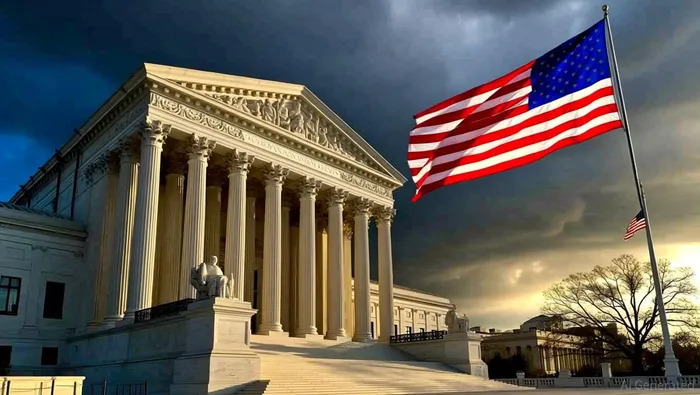
The Supreme Court has previously allowed Trump to remove officials from other independent agencies, such as the National Labor Relations Board and the Federal Trade Commission. In those cases, the court emphasized the president’s broad authority to remove executive officers. However, the Federal Reserve is a unique entity, historically designed to insulate monetary policy from political cycles. The court will now weigh whether that insulation remains intact in the face of a president seeking to assert control over a key economic institution.
The stakes for the broader economy are high. If the court rules in favor of Trump, it could set a precedent allowing future administrations to remove Fed officials on questionable grounds, potentially undermining the Fed’s ability to act independently on monetary policy. This could lead to greater political influence over interest rates and inflation, with potential consequences for financial markets and economic stability.
Trump’s interest in reshaping the Fed has been evident for months. His focus on appointing a loyal successor to outgoing Chair Jerome Powell has narrowed to a shortlist, though his final decision remains pending. The outcome of the Cook case may influence his strategy, especially if it signals resistance to executive overreach.
Legal arguments center on whether the Federal Reserve Act permits the president to remove a governor for conduct outside the scope of their official duties. The Trump administration asserts that the president’s removal power is broad and that courts should not second-guess the reasonableness of the justification provided. Cook and her legal team counter that the removal must be tied to official misconduct and that she is entitled to due process before being removed from a position confirmed by the Senate for a 14-year term.
The Supreme Court’s decision on this matter is expected by late June 2026. Until then, Cook remains on the Board of Governors and continues to participate in key Fed decisions, including recent interest rate cuts. The legal battle underscores the ongoing tension between executive authority and institutional independence, with significant implications for the future of U.S. monetary policy.

Stay ahead of the market.
Get curated U.S. market news, insights and key dates delivered to your inbox.


AInvest
PRO
AInvest
PRO



Comments
No comments yet