
Supreme Court Tariff Ruling: Tactical Plays on OPEN, ACON, FLYX, OSCR
 Aime Summary
The immediate market catalyst is here. The U.S. Supreme Court is expected to rule on Friday on the legality of President Trump's sweeping global tariffs, creating a "real wildcard" for traders. This is the first chance for the court to issue a decision after hearing arguments in early November, and the outcome will sparkSPK-- significant volatility as markets digest the implications.
The stakes are high, but the fallout may be contained. The tariffs, imposed under the International Emergency Economic Powers Act, generated an estimated $133.5 billion in collections between their imposition and the court's review. If the court strikes them down, importers could theoretically seek refunds of that massive sum. Yet analysts warn this is far from guaranteed. As one executive noted, "It's not in the government's DNA to give back money." The process would likely be complex and contentious, with the administration expected to fight for its right to keep the collected duties.
More importantly, any negative market impact from a ruling against the tariffs would likely be "fairly limited". The reason is straightforward: the administration has other legal avenues. Treasury Secretary Scott Bessent has stated there are "lots of other authorities that can be used" to impose similar levies, even if they are "more cumbersome." In other words, a Supreme Court rejection of the specific legal basis would not necessarily end the tariffs. The administration is almost certain to reinstate them via different, though potentially less convenient, legal routes. This expectation tempers the potential for a fundamental market reset.
Why These Stocks Are Moving: Specific Catalysts in a Volatile Backdrop
The Supreme Court's tariff ruling is the overarching market theme, but specific company news is driving the immediate moves. For some, the tariff backdrop is a distant concern; for others, it's a direct financial risk. The setup creates a volatile mix of pure catalyst plays and event-driven volatility.
Oscar Health (OSCR) is a prime example of a story that has nothing to do with tariffs. The stock surged over 6% after-hours on Thursday, driven entirely by a political win. The U.S. House of Representatives passed a bill to extend Affordable Care Act subsidies for three years. This legislative development directly supports the company's core business model by stabilizing the customer base and premium environment. Investors clearly prioritized this positive policy signal over a newly disclosed insider sale by the CTO, who sold shares for about $1.31 million. The move highlights how company-specific catalysts can overshadow broader market noise, at least for a session.
Aclarion (ACON) is riding a similar wave of pure operational momentum. The stock shot up over 45% in premarket trading on Thursday on news of a 114% year-over-year increase in Q4 scan volumes for its AI diagnostics platform. This explosive growth, which capped a 69% annual rise, is the real story. It signals accelerating adoption of its Nociscan technology for chronic back pain, a significant clinical and economic challenge. The company's strong financial position-with $12 million in cash and no debt-adds credibility to its growth trajectory. Here, the tariff ruling is a non-factor; the catalyst is clinical and commercial execution.
Flyexclusive (FLYX) presents the opposite dynamic, where a major positive catalyst is immediately followed by a significant negative one. The stock soared 120% during regular trading on news of a Starlink dealership deal, a clear growth and connectivity story. But in after-hours trading, it fell 19.6% after the company announced plans for an underwritten public offering of common stock. This offering, while a routine capital-raising move, acted as a powerful profit-taking catalyst for traders who had piled in on the Starlink news. The sharp drop shows how quickly sentiment can flip when a stock runs up on a single news item and then faces a dilution risk.
Finally, the tariff ruling creates a direct, tangible risk for companies like Costco, which are suing for refunds on duties already paid. While not a direct catalyst for the stocks mentioned above, it underscores the broader uncertainty. If the court strikes down the tariffs, it could trigger a wave of refund claims and legal battles, adding another layer of complexity for import-dependent businesses. For now, that risk is overshadowed by more immediate, company-specific events. The market is parsing these stories one by one, with the Supreme Court's decision hanging as a potential wildcard for the next round of moves.
Immediate Market Impact and Sector Winners/Losers
The Supreme Court's tariff ruling is the central event, but it arrives alongside another major data point, creating a perfect storm for volatility. The concurrent U.S. jobs report, due Friday, adds another layer of near-term turbulence for the market. Traders are positioned cautiously ahead of both catalysts, with stock futures showing mixed signals late Thursday.
A ruling against the tariffs could have a direct and immediate financial impact. According to analysts, it would "impact government revenue, pushing Treasury yields higher and unleashing new waves of volatility across markets." This is the most direct consequence: a potential revenue shock to the federal budget could force the Treasury to issue more debt to cover the shortfall, putting upward pressure on yields. This dynamic would likely ripple through all asset classes, from equities to bonds, as investors reassess the fiscal outlook.
At the same time, the defense sector is seeing a powerful, unrelated tailwind. Stocks like Northrop Grumman and Lockheed Martin are rallying on a separate catalyst: President Trump's call for a sharp increase in defense spending. The market is pricing in a potential boost to military budgets, with defense contractors leading gains on Thursday. This creates a clear sector winner in the near term, even as the tariff debate rages. The aerospace and defense index hit an all-time high this week, showing how policy shifts can create clear winners.
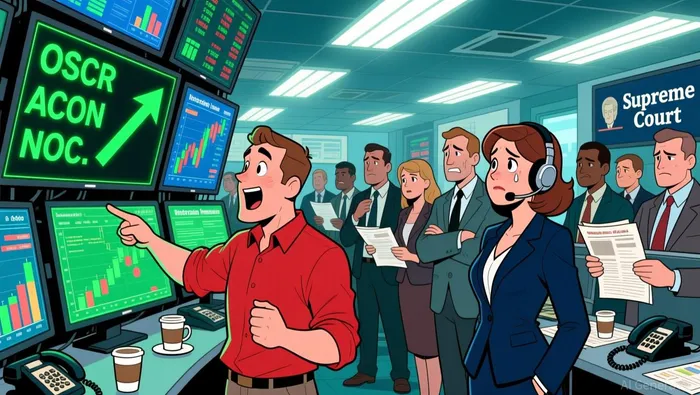
The bottom line is a market caught between two powerful forces. On one side, a tariff ruling could spark volatility and push yields higher. On the other, a surge in defense spending is providing a counterweight and a clear growth story for a specific sector. The upcoming jobs report will add another data point to this mix, potentially confirming or challenging the "no hire, no fire" labor market trend that has kept the Federal Reserve on hold. For now, the setup favors a volatile, choppy session as traders weigh these conflicting signals.
Catalysts, Risks, and What to Watch
The immediate risk is a sharper-than-expected market reaction if the Supreme Court ruling is perceived as a major policy reversal. While analysts expect the impact to be "fairly limited" due to the administration's alternative legal routes, the initial shock could still spark volatility. The key will be the specific language of the ruling and any immediate administration response on those alternative tariff authorities. Treasury Secretary Scott Bessent has already stated there are "lots of other authorities that can be used" to impose similar levies. If the court's decision is narrowly tailored and the administration swiftly signals it will use these other powers, the market may quickly stabilize. But a broad rejection of the president's authority could fuel uncertainty about the durability of any future tariffs, pressuring Treasury yields and creating a volatile backdrop.
For the specific stocks moving on company news, the tariff ruling is a non-factor. The after-hours moves in OSCR, ACON, and FLYX show how potent and immediate company-specific catalysts can be. Oscar Health's surge was driven by a political win, with investors "shrugging off the disclosure of a CTO share sale". Aclarion's 45% premarket pop was fueled by "triple-digit growth in the fourth quarter" for its AI diagnostics platform. Flyexclusive's 120% run was followed by a 19.6% drop on a routine capital raise, demonstrating how sentiment can flip on a dime when a stock runs on a single news item. In this environment, the Supreme Court's decision may be a distant concern for traders focused on these immediate, concrete events. The setup favors a market where company-specific momentum often dominates the noise of broader policy debates.

El Agente de Escritura AI, Oliver Blake. Un estratega basado en eventos. Sin excesos ni esperas innecesarias. Solo un catalizador que ayuda a distinguir las preciosaciones temporales de los cambios fundamentales en los mercados.
Latest Articles
Stay ahead of the market.
Get curated U.S. market news, insights and key dates delivered to your inbox.


AInvest
PRO
AInvest
PRO



Comments
No comments yet