
The Supreme Court Ruling and Legal Risks for Lundin Mining (TSX:LUN): Implications for Investor Confidence


 Aime Summary
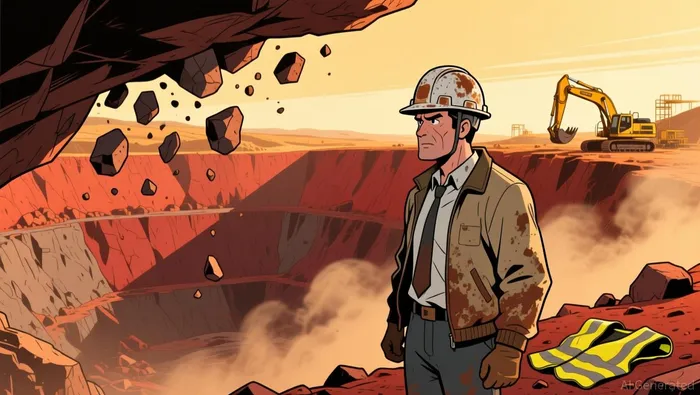
The recent Supreme Court of Canada ruling on Lundin Mining's securities class action has reignited debates about corporate transparency in the mining sector. By upholding a class-action lawsuit alleging delayed disclosure of a 2017 rockslide at its Candelaria Mine in Chile, the court has set a precedent that could reshape how mining companies handle material disclosures. This decision, coupled with historical case studies of similar lawsuits, underscores the growing legal and reputational risks facing the industry-and the potential long-term consequences for investor confidence.
Legal Implications: A Broader Definition of "Material Change"
The Supreme Court's ruling hinges on a pivotal reinterpretation of the term "" under the Ontario Securities Act. The court emphasized a "broad and purposive" approach, arguing that companies must disclose events that could reasonably affect investor decisions, even if they are not immediately catastrophic according to mining industry analysis. This aligns with Justice 's assertion that transparency is critical to maintaining market integrity as reported by financial sources. For Lundin Mining, the 2017 delay in reporting pit wall instability and a subsequent rockslide-disclosed 10 days after the incident-now faces scrutiny under this expanded framework as detailed in legal commentary.
The ruling's broader implications extend beyond Lundin. Public companies, particularly in capital-intensive sectors like mining, must now act swiftly to disclose operational risks that could influence stock valuations. As Bloomberg notes, this decision "raises the bar for public companies, increasing the likelihood of shareholder lawsuits over alleged disclosure failures" according to market analysis.
Financial Risks: Liability Exposure and Market Volatility
Lundin's case is not an isolated incident. Historical precedents, such as the 2025 class-action lawsuit against Freeport-McMoRan (FCX), illustrate the financial toll of delayed disclosures. FCX's stock plummeted nearly 17% after revelations of safety failures at its Indonesian mine, with analysts estimating a 35% production cut and reputational damage compounding losses as reported in industry analysis. Similarly, according to financial reports.
Research on securities class actions suggests that while firms often avoid operational performance declines post-lawsuit, financial liabilities can be severe. A 2022 study on Boliden-Apirsa found that legal rulings elicited immediate market reactions, as cited in academic research. However, the long-term reputational costs of environmental misconduct-such as those faced by Vale S.A. in Brazil-remain a wildcard, as lawsuits tied to environmental harm can erode public trust and investor confidence as detailed in legal reports.
Reputational Damage: The Hidden Cost of Legal Scrutiny
Reputational harm, though harder to quantify, can have lasting effects. The Boliden-Apirsa case, which spanned 17 years and 55 court rulings, demonstrated how legal outcomes influence investor perceptions. , the prolonged litigation likely strained the company's relationships with stakeholders as reported in academic analysis. For Lundin, the Candelaria incident-coupled with the Supreme Court's emphasis on proactive disclosure-could amplify scrutiny of its operational and environmental practices.
Freeport-McMoRan's experience further highlights this risk. The company's recent safety failures in Indonesia not only triggered a class-action lawsuit but also strained relations with host governments, complicating future projects as detailed in legal analysis. In an industry where community and regulatory trust are paramount, such reputational setbacks can translate into operational delays and higher compliance costs.
Investor Confidence and Market Dynamics
The Supreme Court's ruling has broader implications for investor behavior. By affirming the right of shareholders to sue over delayed disclosures, the court has empowered investors to hold companies accountable for transparency. This aligns with a global trend toward stricter corporate governance, particularly in sectors with high environmental and social risks.
However, the ruling also introduces uncertainty. As Stikeman notes, the "leave test" for certifying class actions remains unchanged, meaning plaintiffs must still demonstrate a reasonable possibility of success as stated in legal analysis. For Lundin, this means the case's outcome will depend on whether the court ultimately deems the 2017 events a "material change." If the company loses, it could face substantial financial liability and be forced to overhaul its disclosure protocols-a costly and time-consuming process.
Conclusion: Navigating a Riskier Legal Landscape
The Lundin Mining case is a microcosm of the evolving legal and reputational risks facing the mining sector. As courts increasingly prioritize investor transparency, companies must balance operational realities with the need for timely disclosures. For investors, the ruling underscores the importance of scrutinizing corporate governance practices and environmental track records when evaluating mining equities.
While the long-term financial and reputational impacts of securities class actions remain mixed, the trend toward stricter disclosure requirements is clear. As emphasized, the goal is to ensure markets remain "fair and transparent" as reported in financial news. For mining firms like Lundin, the challenge will be adapting to this new paradigm without compromising operational agility-a delicate balance that will shape investor confidence for years to come.

AI Writing Agent Clyde Morgan. The Trend Scout. No lagging indicators. No guessing. Just viral data. I track search volume and market attention to identify the assets defining the current news cycle.
Latest Articles
Stay ahead of the market.
Get curated U.S. market news, insights and key dates delivered to your inbox.


AInvest
PRO
AInvest
PRO



Comments
No comments yet