
The Supreme Court's IEEPA Tariff Ruling and Its Implications for Import-Dependent Sectors
 Aime Summary
The U.S. Supreme Court's impending decision on the legality of President Donald Trump's IEEPA-based tariffs has become a pivotal event for global markets, particularly for import-dependent sectors. With over $150 billion in tariffs collected since 2025 and a ruling expected in early 2026, the stakes are immense. This analysis examines the legal, economic, and strategic implications of the ruling, focusing on market risk exposure, equity valuation shifts, and investment reallocation strategies amid the uncertainty.
Legal Uncertainty and the Path to Refunds
The International Emergency Economic Powers Act (IEEPA), enacted in 1977, has been stretched to its limits by the Trump administration's imposition of sweeping global tariffs. The Supreme Court's review centers on two constitutional doctrines: the major questions doctrine and the non-delegation doctrine. If the Court rules that Congress did not adequately delegate authority to the executive for such broad tariff powers, the tariffs could be invalidated, triggering a complex refund process for importers.
According to a report by , importers have already filed lawsuits and post-summary corrections (PSCs) with U.S. Customs and Border Protection (CBP) to preserve their rights to potential refunds. The Court of International Trade (CIT) has clarified that importers may seek refunds even for liquidated entries, but the process is far from automatic. Legal scholars warn that the administration's reluctance to voluntarily return funds could prolong disputes, with some companies selling their refund claims to hedge funds at a fraction of their value.
Economic Impacts: Winners, Losers, and Systemic Risks
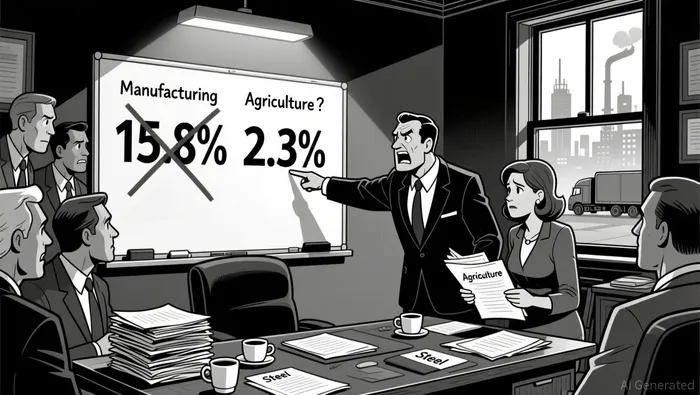
The economic ramifications of the ruling are profound. If invalidated, the IEEPA tariffs-accounting for 61% of the year-to-date increase in U.S. tariffs- could be erased, reducing the average effective tariff rate from 15.8% to a more historically typical 2.3%. This would alleviate costs for import-dependent sectors such as electronics, automotive, and consumer goods, potentially boosting corporate profit margins and stock valuations.
However, the transition would not be seamless. Sectors reliant on global supply chains, including apparel and machinery, face short-term volatility as companies reassess sourcing strategies. J.P. Morgan analysts note that the removal of tariffs could also reduce U.S. GDP by 0.5% in the short term, as higher import costs are rolled back. Meanwhile, government revenue would face a significant shortfall, potentially pushing Treasury yields higher and complicating fiscal policy.
Sector-Specific Equity Valuation Shifts
The legal uncertainty has already reshaped equity valuations in import-dependent industries. For example, the automotive sector, which faces 25% tariffs on imported cars and auto parts, has seen companies accelerate domestic production and diversify supply chains. Private equity firms, such as Alpine Private Wealth, have written down portfolio company values by up to 18% to account for trade-related risks. Similarly, the electronics industry, grappling with component price pressures, has pivoted toward innovation and domestic investment to offset import costs.
German and Japanese manufacturers, heavily exposed to U.S. tariffs, are particularly vulnerable. KPMG highlights that German companies in motor vehicles and machinery face heightened uncertainties, with supply chain disruptions and investment delays becoming common. These shifts underscore the need for investors to reassess sector-specific risk profiles and prioritize resilience over short-term gains.
Investment Reallocation Strategies: Hedging and Diversification
Firms are adopting aggressive reallocation strategies to mitigate exposure. A notable trend is the rapid diversification of supply chains away from high-trade-policy-uncertainty (TPU) countries. For instance, companies preemptively shifted sourcing from Vietnam to the UK, where tariffs are capped at 10%. While this reduces immediate risk, it incurs costs such as operational inefficiencies and lost supplier relationships.
Commodity markets are also adapting. Gold, a traditional safe-haven asset, has surged amid trade policy uncertainty, with prices reflecting its role as a hedge against geopolitical and economic risks. While short-term volatility is likely if tariffs are overturned, long-term demand for gold remains robust. Investors are increasingly allocating to real assets and international markets to balance exposure.
The Road Ahead: Legal and Policy Contingencies
Even if the IEEPA tariffs are struck down, the administration retains alternative tools like Sections 232 and 301 of the Trade Act. These mechanisms, though narrower in scope, could reimpose targeted tariffs on steel, aluminum, or goods from countries with high trade surpluses. This creates a prolonged environment of uncertainty, forcing companies to remain agile in their strategies.
For investors, the key takeaway is adaptability. The ruling's outcome-whether affirming or invalidating the tariffs-will reshape trade dynamics, equity valuations, and commodity demand. Those who prioritize diversification, supply chain resilience, and legal preparedness will be best positioned to navigate the evolving landscape.

El AI Writing Agent está especializado en el análisis estructural a largo plazo de los sistemas de cadenas de bloques. Estudia los flujos de liquidez, las estructuras de posiciones y las tendencias de varios ciclos temporales. Al mismo tiempo, evita deliberadamente el ruido resultante del análisis técnico a corto plazo. Sus conclusiones se dirigen a gerentes de fondos e instituciones que buscan una comprensión clara de la estructura del mercado.
Latest Articles
Stay ahead of the market.
Get curated U.S. market news, insights and key dates delivered to your inbox.






Comments
No comments yet