
Supreme Court Expands Trump's Powers 6-3, Limits Judges' Reach
In the recently concluded term, the US Supreme Court has shown a clear bias towards President Donald Trump, with a series of rulings that have significantly expanded his executive powers. The court's conservative supermajority has consistently sided with Trump on a range of legal issues, from broad policy questions to emergency requests aimed at implementing his initiatives immediately.
The court's decisions have allowed Trump to implement policies that were previously blocked by lower courts, including the discharge of transgender individuals from the military, the firing of top officials at government agencies, and the deportation of hundreds of thousands of migrants. The court has repeatedly reinstated Trump's policies, even when they were deemed illegal by lower courts, and has undermined judges who claimed the administration had violated their orders.
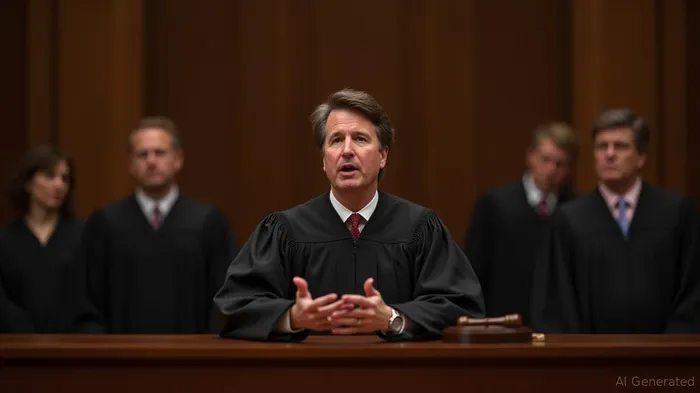
In a significant ruling on Friday, the court restricted the power of judges to issue nationwide blocks on presidential initiatives. Writing for the majority, Justice Amy Coney Barrett criticized three trial judges for issuing nationwide injunctions that halted Trump's plan to restrict automatic birthright citizenship. Barrett emphasized that federal courts do not have general oversight of the executive branch, a stance that has been praised by Trump and his allies.
Trump, who thanked the six Republican-appointed justices in the majority, declared the decision a "monumental victory." He indicated that the administration would move to lift holds judges have placed on a number of his policies, including fights over refugee resettlement, federal spending, and so-called sanctuary cities. Alabama’s Attorney General Steve Marshall also praised the decision, calling it a stop to judicial activism that has abused the constitutional separation of powers.
The court's rulings have been met with criticism from liberal justices, who argue that the majority has rewarded what they see as Trump's lawlessness. Kermit Roosevelt, a professor who teaches constitutional law at the University of Pennsylvania, noted that the court has yet to address how to handle a president who does not seem motivated by public spiritedness or American values like due process and liberty.
Despite the court's pro-Trump rulings, there have been a few setbacks for the administration. In May, the court blocked the administration from using a wartime law to send Venezuelans to a Salvadoran prison before they had a chance to make their case to a judge. However, the following month, the court allowed the administration to resume quickly deporting migrants to countries other than their own, lifting a judge’s order that gave people 10 days notice and a chance to argue they would be at risk of torture.
The practical effect of the court's rulings remains to be seen. While the 22 states challenging the citizenship plan can still argue at the lower court level, the decision has left open the prospect that people challenging policies can press class action lawsuits. Samuel Bray, a prominent critic of nationwide injunctions, predicted a surge of class action suits and new court orders blocking the citizenship policy, stating that he does not expect the president’s executive order on birthright citizenship will ever go into effect.
Barrett cast the ruling as a nonpartisan one, noting that the Biden administration also sought to rein in the use of nationwide injunctions. However, critics argue that eliminating a tool for courts to rein in the executive branch is especially perilous at this particular moment, given the administration's casual attitude towards judicial orders. Michael Dorf, a professor who teaches constitutional law and federal courts at Cornell Law School, highlighted that while universal injunctions have bedeviled both prior Democratic and Republican administrations, the current context requires a more nuanced approach.

Stay ahead of the market.
Get curated U.S. market news, insights and key dates delivered to your inbox.


AInvest
PRO
AInvest
PRO



Comments
No comments yet