
How to Use Supply-Demand Fundamentals and Cost Structure to Identify Commodity Market Winners
 Aime Summary
In the world of commodities, prices swing wildly based on forces that are often easier to predict than stock market trends. By understanding two key concepts—supply-demand fundamentals and production cost structures—investors can spot opportunities before the crowd. This article breaks down these concepts and shows how to apply them to identify commodity market winners.
Core Concept: Supply, Demand, and Cost
Supply-Demand Dynamics are the bedrock of commodity pricing. When demand outpaces supply, prices rise. Conversely, when supply exceeds demand, prices fall. For example, if a drought reduces wheat harvests (lower supply) while global food demand grows, wheat prices surge. The trick is to anticipate these shifts by tracking factors like weather patterns, geopolitical events, or economic data.
Cost Structure refers to the expenses involved in producing a commodity. This includes fixed costs (like mining equipment) and variable costs (like labor and fuel). A commodity’s price typically cannot fall below its marginal cost (the cost to produce one additional unit) for long, as producers would stop production. For instance, if oil prices dip below $40/barrel (a rough estimate of marginal production costs), many oil companies pause drilling, reducing supply and pushing prices back up.
Application: Strategies for Investors
- Track Imbalances: Monitor reports from organizations like the International Energy Agency (IEA) or the US Department of Agriculture (USDA) to spot supply-demand mismatches. For example, a surplus in copper supply due to new mine openings might signal a price drop, while a shortage could hint at a rally.
- Analyze Cost Floors: Identify commodities where prices are near or above their marginal cost. If prices are significantly higher, it may indicate strong demand or weak supply. For instance, lithium prices soared in 2021-2022 because demand from electric vehicles (EVs) outpaced production, and lithium’s marginal cost was low enough to allow for rapid price increases.
- Compare Sectors: Use cost structures to compare commodities. A metal with high production costs (like gold) may be more resilient during price dips than one with low costs (like aluminum), which can see sharper declines when demand softens.
Case Study: Lithium and the EV Boom
In 2020, lithium prices hovered around $5,000 per metric ton. By 2022, they hit $65,000—a 1200% surge. Why? Demand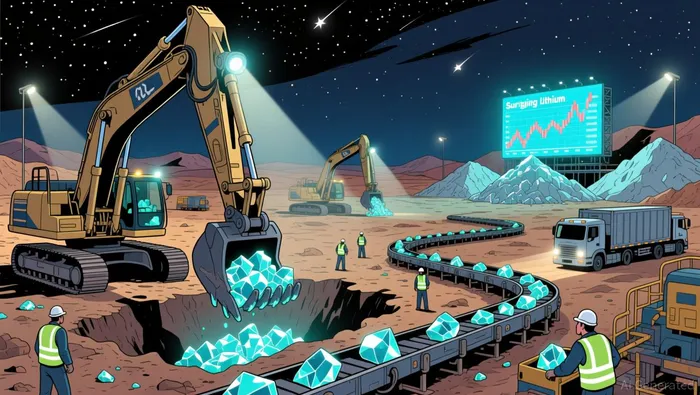 spiked due to EV adoption, while supply struggled to keep up. Lithium’s marginal cost was around $5,000, meaning prices could rise without immediate production shutdowns. Investors who recognized this imbalance early could have capitalized by investing in lithium producers or ETFs like LIT (which tracks lithium and battery metals). By 2023, prices stabilized as new supply came online, but early investors captured significant gains.
Risks and Considerations
- Overestimating Demand: Not all trends last. For example, a sudden drop in EV adoption (due to cheaper alternatives or policy changes) could crash lithium prices.
- Supply Elasticity: Some commodities (like oil) can ramp up production quickly, while others (like rare earth metals) cannot. Research how responsive a commodity’s supply is to price changes.
- Geopolitical Risks: Events like trade wars or sanctions can disrupt supply chains. Diversify investments to mitigate this risk.
Conclusion
By analyzing supply-demand imbalances and production cost structures, investors can identify commodities with strong price momentum. Look for sectors where demand is surging and supply is constrained, and where prices remain above marginal costs. Use tools like industry reports, cost analyses, and diversification to build a resilient portfolio. In a market where timing is everything, these fundamentals provide a roadmap to spot opportunities—and avoid pitfalls—before the crowd.
Remember: No strategy is foolproof. Combine these insights with broader market research and a clear risk management plan to navigate the volatile world of commodities.

Stay ahead of the market.
Get curated U.S. market news, insights and key dates delivered to your inbox.


AInvest
PRO
AInvest
PRO



Comments
No comments yet