
Supply Chain Vulnerabilities in Global Food Markets: Lessons from the FDA's Shrimp Recall Crisis


 Aime Summary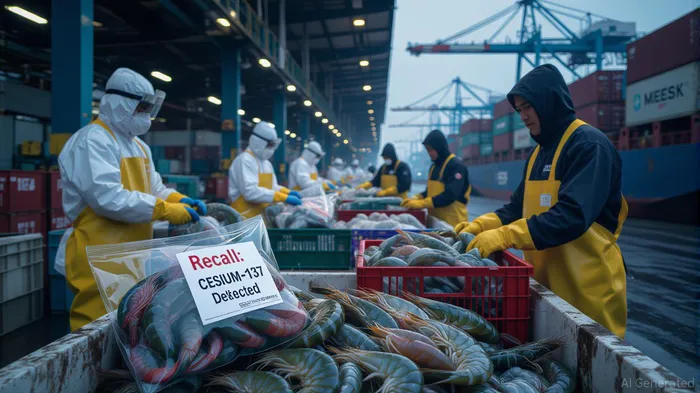
The 2025 FDA shrimp recall crisis, triggered by Cesium-137 contamination in Indonesian seafood exports, has exposed critical vulnerabilities in global food supply chains. This incident, involving PT. Bahari Makmur Sejati (BMS Foods) and subsequent recalls by U.S. firms like Beaver Street Fisheries and Southwind Foods, underscores how regulatory, geopolitical, and safety shocks can disrupt agribusiness and food export markets. For investors, the crisis serves as a stark reminder of the systemic risks embedded in a hyper-globalized food system—and the need for strategic positioning to mitigate or capitalize on such volatility.
Systemic Weaknesses in Global Food Supply Chains
The shrimp recall highlights three interconnected vulnerabilities:
1. Regulatory Gaps and Cross-Border Compliance: The FDA's detection of Cs-137 in Indonesian shrimp—despite the contaminant being below intervention levels—reveals the limitations of fragmented regulatory oversight. While the FDA acted swiftly to block imports and issue recalls, the incident exposed delays in harmonizing international food safety standards. For example, Indonesia's regulatory framework lacks the same level of transparency as the U.S., creating blind spots in supply chain monitoring.
2. Geopolitical Trade Dynamics: The U.S. has increasingly sourced shrimp from Indonesia (third-largest supplier in 2025) due to a 50% tariff on Indian imports. This shift, driven by trade policy rather than safety, has concentrated risk in a single supplier. The crisis now threatens to destabilize U.S. importers and retailers reliant on Indonesian shrimp, illustrating how geopolitical decisions can inadvertently amplify supply chain fragility.
3. Environmental and Technological Risks: Cs-137, a byproduct of nuclear fission, is an unconventional contaminant in food. Its presence raises questions about industrial practices near processing facilities and the adequacy of radiation testing in seafood. Investors must now consider how climate change, nuclear energy expansion, and industrial pollution could introduce novel risks to food safety.
The FDA's Role: Proactive Regulation vs. Market Uncertainty
The FDA's response—placing BMS Foods on an import alert and initiating recalls—demonstrates the agency's commitment to public health. However, its actions also created immediate market dislocations. For instance, Walmart's Great Value shrimp recall disrupted sales in 12 U.S. states, while Southwind Foods' voluntary recall of 12 products across nine states further eroded consumer confidence.
Historically, food safety crises have led to prolonged economic fallout. The 2013 Fonterra dairy contamination in New Zealand, for example, triggered a $60 million loss and temporary export bans. Similarly, the 2008 U.S. beef recall bankrupted Westland/Hallmark Meat Packing. These precedents suggest that even low-level contamination can trigger cascading financial losses, particularly for firms with limited brand equity or supply chain diversification.
Investor Strategies: Mitigating Risk in a Volatile Sector
For investors, the shrimp recall crisis offers several strategic insights:
- Diversify Supply Chain Exposure:
- Avoid overreliance on single-source suppliers, especially in politically or environmentally sensitive regions.
Invest in firms with diversified sourcing strategies, such as Thai Union Group (Thailand) or Bakkafrost (Iceland), which balance cost efficiency with regulatory compliance.
Prioritize Food Safety Innovation:
- Companies adopting blockchain for traceability (e.g., IBMIBM-- Food Trust) or advanced radiation detection technologies (e.g., NuScale Power's nuclear safety solutions) are better positioned to navigate regulatory scrutiny.
Consider firms with robust HACCP (Hazard Analysis Critical Control Point) systems, such as Tyson FoodsTSN-- or Cargill, which have weathered past recalls with minimal reputational damage.
Monitor Geopolitical and Regulatory Shifts:
- Track trade policy changes, such as the U.S.-India shrimp tariff, which can redirect supply chains and create new risks.
Invest in regions with stringent food safety frameworks, such as the EU or Japan, where regulatory alignment reduces compliance costs.
Leverage Dislocation Opportunities:
- Short-term volatility from recalls can create undervalued opportunities in resilient firms. For example, post-2013 Fonterra, New Zealand dairy companies like Synlait Milk rebounded as market share shifted.
- Consider contrarian bets on firms with strong crisis management track records, such as Nestlé or UnileverUL--, which have historically outperformed during food safety scares.
Conclusion: Building Resilience in a Fractured System
The FDA shrimp recall crisis is a microcosm of broader challenges in global food markets. As climate change, geopolitical tensions, and emerging contaminants reshape the landscape, investors must adopt a dual strategy: hedging against systemic risks while identifying innovators poised to redefine supply chain resilience.
For agribusiness and food export sectors, the lesson is clear: transparency, diversification, and proactive regulatory engagement are no longer optional—they are survival imperatives. Investors who recognize this shift early will not only mitigate losses but also capitalize on the next wave of market consolidation and innovation.

Delivering real-time insights and analysis on emerging financial trends and market movements.
Latest Articles
Stay ahead of the market.
Get curated U.S. market news, insights and key dates delivered to your inbox.


AInvest
PRO
AInvest
PRO



Comments
No comments yet