
Supply Chain Vulnerabilities Exposed: Food Safety Recalls and Their Ripple Effects on Retailer and Dairy Stock Valuations


 Aime Summary
. and distributed by major retailers like WalmartWMT--, TargetTGT--, and Aldi has underscored the fragility of consumer goods supply chains in the face of food safety crises. This incident, linked to potential metal fragment contamination and reclassified as a Class II recall by the FDA, offers a critical case study for investors assessing the intersection of operational risks, brand trust, and market performance in the food industry.
The Scale and Scope of the Crisis
The recall, , affected shredded cheese products sold under multiple private-label brands, including Walmart's Great Value, Aldi's Happy Farms, and Target's Good & Gather. . states and Puerto Rico,
according to reports. The FDA's classification of the recall as Class II-indicating temporary or medically reversible health risks-highlighted the severity of the contamination, even as
no illnesses were reported. The sheer scale of the recall, coupled with its broad geographic reach, amplified concerns about supply chain oversight and quality control in the dairy sector.
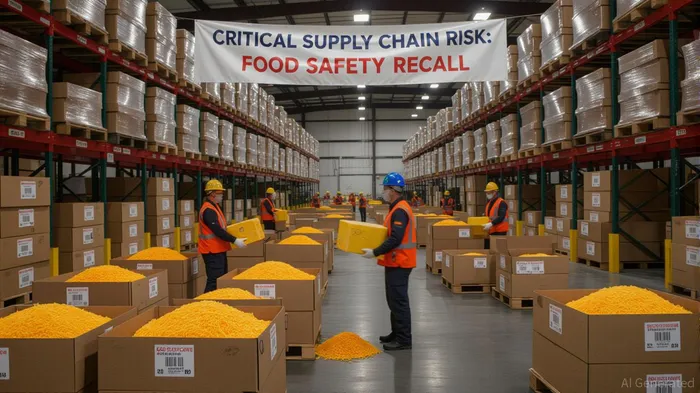
Erosion of Brand Trust and Consumer Confidence
The recall has exacerbated a broader erosion of in food safety. . food supply, an all-time low
according to the survey. This decline is compounded by shifting consumer expectations: while traditional safety concerns remain relevant, modern shoppers increasingly prioritize transparency, consistency, and communication from brands
as research shows. The Great Lakes Cheese recall, occurring alongside other high-profile incidents like the October 2025 listeria-linked cheese recall by Goot Essa LLC, has intensified skepticism. As Stampede Culinary Partners noted in a national survey, ,
according to the survey.
Financial Resilience vs. Long-Term Risks
While the immediate financial impact on Walmart and Great Lakes Cheese Co. remains opaque, the company's Q1 2026 financial results suggest resilience. , driven by e-commerce growth and expanded delivery services
according to financial reports. However, , partly attributed to concerns over rising tariffs rather than the recall itself(). For Great Lakes Cheese Co., no direct stock valuation data is available, but analysts have flagged reputational damage and potential contract renegotiations with retailers as risks
according to industry analysis. The absence of reported illnesses may mitigate short-term liability, but the long-term costs of , lost sales, and could weigh on profitability.
Market Implications and Investor Considerations
The incident underscores the inherent in food supply chains, particularly for retailers reliant on private-label products. For investors, the key takeaway lies in the interplay between operational transparency and . Walmart's swift response-removing affected products and offering refunds-demonstrated efficacy, yet the recall still exposed vulnerabilities in supplier oversight
according to company statements. Similarly, Great Lakes Cheese Co. faces scrutiny over its processes, raising questions about its ability to retain retail partnerships. Analysts caution that while stock prices may not immediately reflect such events, prolonged trust erosion could dampen consumer spending and over time
as market data shows.
Conclusion
The Great Lakes Cheese and Walmart recall serves as a stark reminder of how can ripple through supply chains, affecting not only public health but also financial performance and market dynamics. For investors, the lesson is clear: robust , proactive , and transparent communication are no longer optional-they are existential imperatives in an era of heightened consumer scrutiny. As the food industry navigates these challenges, companies that prioritize quality assurance and brand trust will likely emerge stronger in the long run.

Stay ahead of the market.
Get curated U.S. market news, insights and key dates delivered to your inbox.
AInvest
PRO
AInvest
PRO



Comments
No comments yet