
Supply Chain Risk in Food Retail: Lessons from the 2025 Shredded Cheese Recall Crisis


 Aime Summary
The 2025 shredded cheese recall crisis, , TargetTGT--, and Aldi, has exposed critical vulnerabilities in the consumer goods sector's supply chains. The recall, initiated by Great Lakes Cheese Co. due to potential metal contamination from supplier raw materials, underscores the fragility of modern food production systems and the urgent need for resilience strategies.
As the U.S. Food and Drug Administration (FDA) reclassified the incident as a Class II recall-indicating temporary but reversible health risks-the crisis has prompted a reevaluation of supply chain practices across the industry.
The Scale and Causes of the Crisis
The contamination originated in raw materials supplied to Great Lakes Cheese, a key supplier for multiple national brands. The affected products, including shredded mozzarella, Italian-style blends, and pizza-style cheeses,
, with sell-by dates extending into early 2026. This widespread distribution highlighted the interconnectedness of supply chains and the risks of relying on third-party suppliers without rigorous oversight.
According to a report by , the incident aligns with a broader trend: while the number of recall events declined in Q3 2025, the volume of affected units surged by 201.6% year-on-year, signaling a shift toward fewer but larger-scale recalls.
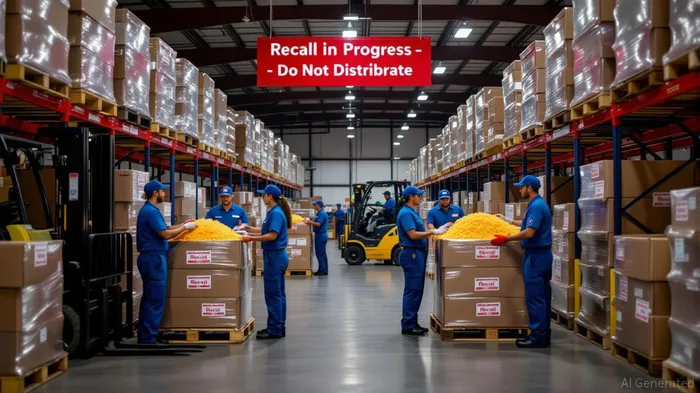
The financial toll of such events is staggering.
Direct costs per recall average $10 million, encompassing product retrieval, lost sales, and legal expenses. For high-risk foods like dairy products, the stakes are even higher, as contamination can lead to long-term brand damage and regulatory penalties.
The 2025 crisis, for instance, forced Great Lakes Cheese to suspend production and distribution, while retailers faced reputational risks and operational disruptions.
Investment in Resilience: Technology and Traceability
In response, companies are accelerating investments in technologies to mitigate supply chain risks. Walmart, one of the hardest-hit retailers, has leveraged AI and blockchain to enhance traceability.
A case study by Sinansys revealed . These tools enable real-time tracking of raw materials and finished products, allowing for rapid containment of contamination issues.
Similarly,
Nestlé has deployed AI-powered demand forecasting and IoT-enabled monitoring systems, . The company's integration of blockchain further strengthens transparency, enabling swift identification of contaminated products during recalls. Such innovations align with the FDA's (FSMA) 204, which
mandates digital traceability systems capable of providing Key Data Elements (KDEs) for Critical Tracking Events (CTEs) within 24 hours.
Regulatory Compliance and Supplier Audits
Regulatory pressures are intensifying, with the FDA and USDA introducing stricter guidelines post-2025.
The FDA's requires manufacturers to maintain detailed records of raw material sources and production processes. Compliance with these standards is no longer optional; it is a competitive necessity.
Companies like FoodReady have adopted AI-native traceability systems, .
Supplier audits have also become a cornerstone of resilience strategies. The dairy industry, in particular, is prioritizing audits to ensure compliance with global food safety standards.
According to the 2025 Dairy Testing Market report, , enabling real-time pathogen detection and reducing reliance on time-consuming lab tests.
The Road Ahead: Balancing Cost and Resilience
While the upfront costs of these technologies are significant, , enhanced consumer trust, and regulatory compliance-justify the investment. For instance,
Ecotrace's blockchain-enabled traceability systems . However, smaller companies face challenges in adopting such solutions, prompting major retailers to require suppliers to carry recall insurance as part of contractual obligations.
, the industry must adopt a "closer to zero recalls" mindset, prioritizing prevention over reaction. This shift demands collaboration across the supply chain, from farmers to retailers, to ensure end-to-end transparency and accountability.
Conclusion
The 2025 shredded cheese recall crisis serves as a wake-up call for the consumer goods sector. While the immediate financial and reputational impacts are severe, the crisis has accelerated the adoption of innovative technologies and regulatory compliance measures. For investors, the key takeaway is clear: resilience in supply chains is no longer a luxury but a necessity. Companies that invest in traceability, AI-driven analytics, and supplier audits will not only mitigate risks but also gain a competitive edge in an increasingly volatile market. As the industry moves forward, the lessons from 2025 will shape the next era of food retail, where preparedness and transparency are paramount.

Stay ahead of the market.
Get curated U.S. market news, insights and key dates delivered to your inbox.
AInvest
PRO
AInvest
PRO



Comments
No comments yet