
Supply Chain Exodus: How Japanese Tech Giants Are Outmaneuvering U.S.-China Trade Wars
The U.S.-China trade war has become a geopolitical game of Jenga, with each new tariff or sanction pulling out a block from global supply chains. Now, Japanese manufacturers—long the unsung heroes of precision engineering—are using this instability to their advantage. By pivoting production to Southeast Asia and Taiwan, they're turning tariff chaos into a profit-generating strategy. Here's how investors can capitalize on this shift.
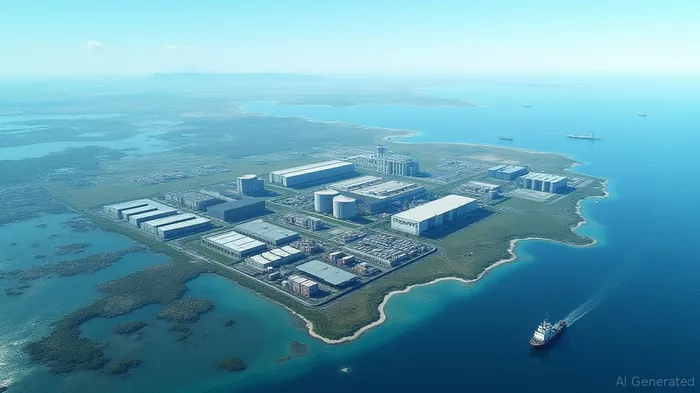
The Tariff Tsunami and Its Hidden Winners
The math is brutal: U.S. tariffs on Chinese-made semiconductors now average 83.3%, while EV batteries face 58.3% duties (see ). These levies, stacked with fentanyl-related penalties and national security measures, have made relying on China's factories a financial liability. Enter Japan's playbook.
Case Study 1: Semiconductors
Firms like Renesas Electronics (6723.T) and Kioxia Holdings (9684.T) are leveraging Section 301 exemptions for certain semiconductor components while relocating assembly to Vietnam and Malaysia. For instance, Kioxia's new $3 billion plant in Malaysia—its first outside Japan—will produce NAND flash memory chips for U.S. EV batteries, avoiding the 25% tariff on Chinese-made equivalents.
Case Study 2: EV Batteries
Toyota's Denso (6902.T) and Aisin (7251.T) are shifting 60% of auto parts production to Mexico to meet U.S. trade rules, but their tech arms are moving faster. Denso's $200 million EV inverter plant in Tennessee—fed by components made in Thailand—avoids tariffs while complying with U.S. content rules. Meanwhile, Advantest (6857.T), a tester of semiconductor chips, is expanding in Taiwan to supply U.S. EV battery makers like TeslaTSLA--, bypassing China entirely.
The Yen's Role: A Currency Tailwind?
The Bank of Japan's (BOJ) ultra-loose monetary policy—keeping rates at -0.1% despite 3.6% inflation—has kept the yen weak against the dollar. A yen-to-dollar rate of ¥110 (from current ¥107) would boost exporters' margins by 3–5%, according to NomuraNMR--. This is no accident: the BOJ's yield curve control is a stealth subsidy for manufacturers.
Why Investors Should Take Note
- Tariff-Proof Supply Chains: Companies like Kioxia and Renesas are building factories in tariff-friendly zones. Their shares could surge if U.S.-China trade tensions persist.
- Regional Dominance: Southeast Asia's lower labor costs and proximity to Japan's expertise create a “sweet spot” for tech production.
- Fed's Pause: The Federal Reserve's June 2025 decision to hold rates steady at 4.50% reduces dollar appreciation risks, allowing yen depreciation to support exporters.
Risks and Red Flags
- Labor Shortages: Japan's aging workforce could slow factory ramp-ups in regions like Vietnam.
- Geopolitical Volatility: U.S. tariffs on China's EVs could jump to 100% by 2026, requiring constant supply chain agility.
- Overexposure to Tech: A semiconductor slowdown (e.g., AI demand cooling) could hit firms like Advantest.
The Investment Thesis
Buy Japanese tech firms with dual exposure: - Kioxia Holdings (9684.T): Its memory chips are critical for EVs and data centers. - Renesas Electronics (6723.T): A leader in automotive semiconductors with a Vietnam-based production network. - Fast Retailing (9983.T): A “safe haven” with 80% Asia sales, insulated from tariffs.
For diversification, consider the iShares MSCI Japan ETF (EWJ) or WisdomTree Japan Hedged Equity Fund (DXJ) to mitigate yen volatility.
Final Verdict
The U.S.-China trade war isn't just a threat—it's a catalyst. Japanese manufacturers are proving that supply chains aren't just about cost, but geopolitical survival. For investors, this is a rare moment to bet on companies turning chaos into opportunity.
The question isn't whether tariffs will reshape tech—it's who will profit most from the new order. Japan's engineers, once the world's quiet backbone, are now its loudest winners.

Stay ahead of the market.
Get curated U.S. market news, insights and key dates delivered to your inbox.
AInvest
PRO
AInvest
PRO



Comments
No comments yet