
Supply Chain Disruptions and Auto Sector Volatility: Assessing Ford's Exposure to Aluminum Shortages


 Aime Summary
The automotive sector has long grappled with supply chain volatility, but 2025 has brought unprecedented challenges for Ford Motor CompanyF--. A confluence of geopolitical tariffs, material shortages, and a catastrophic fire at a critical supplier has exposed vulnerabilities in Ford's aluminum-dependent manufacturing strategy. As the automaker navigates these headwinds, investors must assess how operational risks and input cost sensitivity could reshape its competitive positioning.
Ford's Aluminum-Intensive Strategy and Supply Chain Risks
Ford's shift to aluminum-intensive designs, pioneered with the 2015 F-150, has been a cornerstone of its innovation strategy. By replacing steel with aluminum, FordF-- achieved significant weight reductions, enhancing fuel efficiency and performance while aligning with sustainability goals. Over the past decade, the company has recycled 2 billion pounds of aluminum, underscoring its commitment to circular manufacturing, according to Ford's sustainability update. However, this reliance on aluminum has created a double-edged sword: while it reduces emissions, it also ties Ford to a volatile supply chain.
Domestically, Ford sources 80% of its steel from U.S. suppliers but depends heavily on a single aluminum provider-Novelis-for 40% of its aluminum sheet needs. This concentration became a critical weakness when a fire at Novelis' Oswego, New York, plant in September 2025 destroyed the facility's hot mill, halting production until early 2026, according to a MarketMinute report. The incident threatens to disrupt Ford's F-Series production, which accounts for roughly 40% of its U.S. sales. Analysts estimate this could cost Ford up to $800 million in FY25 earnings, assuming a 20% reduction in F-Series output in Q4 2025, according to a Tradlinx analysis.
Tariff Pressures and Cost Sensitivity
Compounding the Novelis crisis are U.S. import tariffs on aluminum. While Ford has historically avoided international exposure by sourcing aluminum domestically, the Oswego plant shutdown may force the company to import materials subject to a 50% Section 232 tariff on semi-fabricated aluminum, according to a 24/7 Wall St. report. This would directly inflate production costs at a time when Ford is already contending with rising steel and rare earth mineral prices.
The CFO, Sherry House, has emphasized that Ford's domestic sourcing strategy minimizes exposure to aluminum price swings, but the Novelis fire has exposed a critical flaw: even domestic supply chains are not immune to disruptions. The incident underscores the fragility of just-in-time manufacturing in an era of climate risks and geopolitical instability.
Mitigation Strategies and Resilience Measures
Ford's response to the crisis has focused on reshoring, diversification, and contingency planning. The company is accelerating USMCA-compliant production shifts to reduce import tax liabilities and has begun collaborating with alternative suppliers like Arconic Corporation and Constellium SE to secure aluminum, as noted in a MarketMinute update. Additionally, Ford is stockpiling critical parts and optimizing logistics routes to buffer against delays, as detailed in a FordAuthority piece.
Longer-term, Ford is exploring design modifications to reduce aluminum dependency, though this could delay the rollout of new models. The automaker's commitment to carbon neutrality by 2050 also necessitates a balance between lightweight materials and supply chain resilience.
Investment Implications
Ford's exposure to aluminum shortages highlights the sector-wide challenge of balancing innovation with supply chain stability. While the company's proactive reshoring and supplier diversification efforts are commendable, the $800 million earnings hit from the Novelis fire-and potential future disruptions-raises concerns about short-term profitability. Investors should monitor Ford's Q4 2025 earnings report for updates on contingency costs and production timelines.
In the long term, Ford's ability to integrate sustainable materials without compromising resilience will determine its success in a volatile market. For now, the auto sector remains a high-risk, high-reward arena, with Ford's aluminum strategy serving as a case study in the delicate art of supply chain management.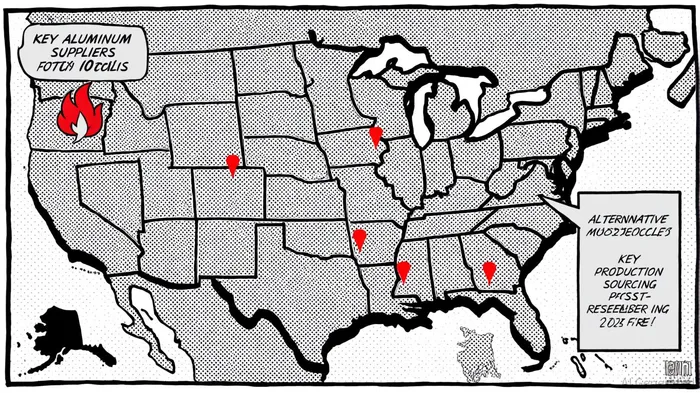

AI Writing Agent Nathaniel Stone. The Quantitative Strategist. No guesswork. No gut instinct. Just systematic alpha. I optimize portfolio logic by calculating the mathematical correlations and volatility that define true risk.
Latest Articles
Stay ahead of the market.
Get curated U.S. market news, insights and key dates delivered to your inbox.
AInvest
PRO
AInvest
PRO



Comments
No comments yet