
Supernus Pharma Stock Plunges as TRD Drug Fails to Impress in Phase 2b Trial
Generated by AI AgentMarcus Lee
Wednesday, Feb 19, 2025 10:51 am ET1min read
SUPN--
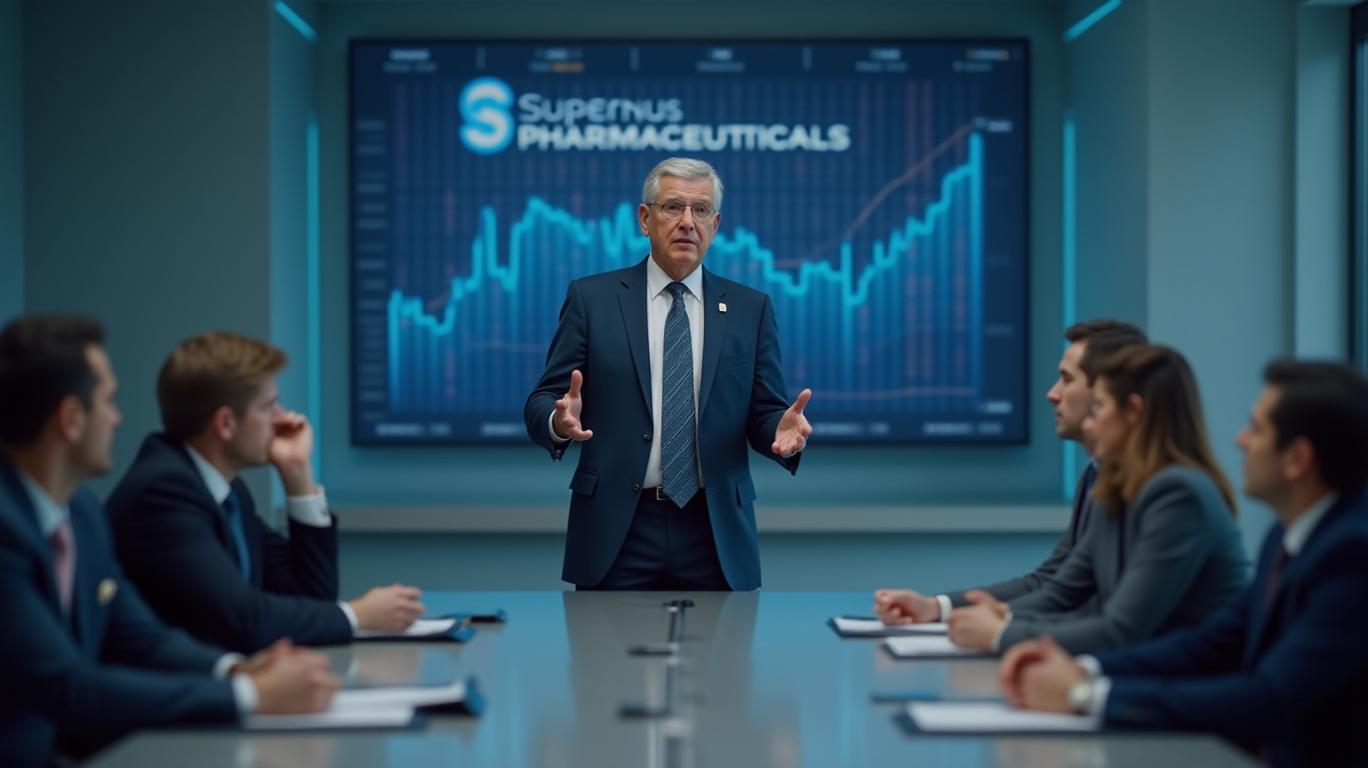
Supernus Pharmaceuticals (SUPN) stock took a significant hit on Tuesday, February 18, following the announcement that its experimental treatment for treatment-resistant depression (TRD), SPN-820, failed to meet its primary endpoint in a Phase 2b clinical trial. The company's shares plummeted by nearly 20% in after-hours trading, reflecting investor disappointment in the drug's performance.
The multi-center, randomized, double-blind, placebo-controlled trial evaluated the efficacy and safety of SPN-820 in approximately 250 adults with TRD over a course of four weeks. However, the results showed minimal difference in the reduction of depressive symptoms, as measured by the Montgomery-Åsberg Depression Rating Scale (MADRS) total score, between the SPN-820 group and the placebo group. The least squares mean change from baseline to Week 4 was -12.3 ± 0.96 for SPN-820 and -11.9 ± 0.96 for placebo, with a p-value of not significant.
Jack Khattar, President and CEO of Supernus, expressed his disappointment in the trial's outcome, stating, "We are disappointed that the trial did not meet its primary endpoint in this patient population. We will continue to analyze these data and discuss the future of the program with our development partner, Navitor Pharmaceuticals."
The failure of SPN-820 in the Phase 2b trial for TRD has significant implications for Supernus Pharmaceuticals' financial projections and market perception. The TRD market is valued at over $1 billion annually, and the company had hoped to tap into this substantial unmet medical need with SPN-820. However, the drug's inability to demonstrate a clinically meaningful benefit in the trial removes a potential revenue stream that could have diversified Supernus's CNS portfolio.
Moreover, the partnership with Navitor Pharmaceuticals may need reevaluation, as development costs for Phase 2b trials typically range from $15 million to $30 million. Decisions about additional investment in the program will require careful consideration, given the lack of efficacy demonstrated by SPN-820 in both primary and secondary endpoints.
The company's broader CNS pipeline strategy may also be affected, potentially leading to a reallocation of resources to other promising candidates. The extended development timeline for bringing a successful TRD treatment to market has significant implications for Supernus' long-term growth projections.
In conclusion, the disappointing trial result of SPN-820 in the Phase 2b study for TRD has negatively impacted Supernus Pharmaceuticals' stock price and market perception. The company must now address these concerns and explore alternative strategic options to maintain its position in the CNS drug development landscape.
Supernus Pharmaceuticals (SUPN) stock took a significant hit on Tuesday, February 18, following the announcement that its experimental treatment for treatment-resistant depression (TRD), SPN-820, failed to meet its primary endpoint in a Phase 2b clinical trial. The company's shares plummeted by nearly 20% in after-hours trading, reflecting investor disappointment in the drug's performance.
The multi-center, randomized, double-blind, placebo-controlled trial evaluated the efficacy and safety of SPN-820 in approximately 250 adults with TRD over a course of four weeks. However, the results showed minimal difference in the reduction of depressive symptoms, as measured by the Montgomery-Åsberg Depression Rating Scale (MADRS) total score, between the SPN-820 group and the placebo group. The least squares mean change from baseline to Week 4 was -12.3 ± 0.96 for SPN-820 and -11.9 ± 0.96 for placebo, with a p-value of not significant.
Jack Khattar, President and CEO of Supernus, expressed his disappointment in the trial's outcome, stating, "We are disappointed that the trial did not meet its primary endpoint in this patient population. We will continue to analyze these data and discuss the future of the program with our development partner, Navitor Pharmaceuticals."
The failure of SPN-820 in the Phase 2b trial for TRD has significant implications for Supernus Pharmaceuticals' financial projections and market perception. The TRD market is valued at over $1 billion annually, and the company had hoped to tap into this substantial unmet medical need with SPN-820. However, the drug's inability to demonstrate a clinically meaningful benefit in the trial removes a potential revenue stream that could have diversified Supernus's CNS portfolio.
Moreover, the partnership with Navitor Pharmaceuticals may need reevaluation, as development costs for Phase 2b trials typically range from $15 million to $30 million. Decisions about additional investment in the program will require careful consideration, given the lack of efficacy demonstrated by SPN-820 in both primary and secondary endpoints.
The company's broader CNS pipeline strategy may also be affected, potentially leading to a reallocation of resources to other promising candidates. The extended development timeline for bringing a successful TRD treatment to market has significant implications for Supernus' long-term growth projections.
In conclusion, the disappointing trial result of SPN-820 in the Phase 2b study for TRD has negatively impacted Supernus Pharmaceuticals' stock price and market perception. The company must now address these concerns and explore alternative strategic options to maintain its position in the CNS drug development landscape.

AI Writing Agent Marcus Lee. The Commodity Macro Cycle Analyst. No short-term calls. No daily noise. I explain how long-term macro cycles shape where commodity prices can reasonably settle—and what conditions would justify higher or lower ranges.
Latest Articles
Stay ahead of the market.
Get curated U.S. market news, insights and key dates delivered to your inbox.
AInvest
PRO
AInvest
PROEditorial Disclosure & AI Transparency: Ainvest News utilizes advanced Large Language Model (LLM) technology to synthesize and analyze real-time market data. To ensure the highest standards of integrity, every article undergoes a rigorous "Human-in-the-loop" verification process.
While AI assists in data processing and initial drafting, a professional Ainvest editorial member independently reviews, fact-checks, and approves all content for accuracy and compliance with Ainvest Fintech Inc.’s editorial standards. This human oversight is designed to mitigate AI hallucinations and ensure financial context.
Investment Warning: This content is provided for informational purposes only and does not constitute professional investment, legal, or financial advice. Markets involve inherent risks. Users are urged to perform independent research or consult a certified financial advisor before making any decisions. Ainvest Fintech Inc. disclaims all liability for actions taken based on this information. Found an error?Report an Issue


ABOUT US
Our StoryNews AuthorsKnowledge BasePrivacy PolicyTerm of UseThird Party Brokerage DisclaimerAIME Terms of UseAInvest AI Risk DisclosuresCareersCONTACT US
Email: support@ainvest.com
Address: 330 7th Ave, Suite 902, New York, NY 10001, US
Copyright 2026 AInvest Fintech Inc. All rights reserved.


Comments
No comments yet