
Supermicro's $20B AI Campus Deal: A Catalyst for Hyperscale Dominance and Sustainable Tech Leadership
The tech infrastructure landscape is on the brink of a paradigm shift. Supermicro’s recent $20 billion partnership with DataVolt to build hyperscale AI campuses in Saudi Arabia isn’t just a deal—it’s a blueprint for the future of energy-efficient, AI-driven data centers. This collaboration positions SupermicroSMCI-- at the epicenter of a global shift toward sustainable, ultra-dense computing infrastructure, while unlocking exponential growth opportunities in one of the world’s fastest-growing tech markets. For investors, this is a once-in-a-decade catalyst to capitalize on the convergence of AI, renewable energy, and geopolitical ambition.
The DLC-2 Revolution: Powering the Future of AI at 40% Lower Cost
At the heart of this partnership lies Supermicro’s DLC-2 liquid cooling technology, a game-changer for data center efficiency. By directly cooling GPUs, CPUs, and memory with warm water (up to 45°C inlet temperatures), DLC-2 slashes power consumption by up to 40% compared to air-cooled systems—while reducing total cost of ownership (TCO) by 20%. This is no incremental improvement; it’s a quantum leap in computational density and resource efficiency.
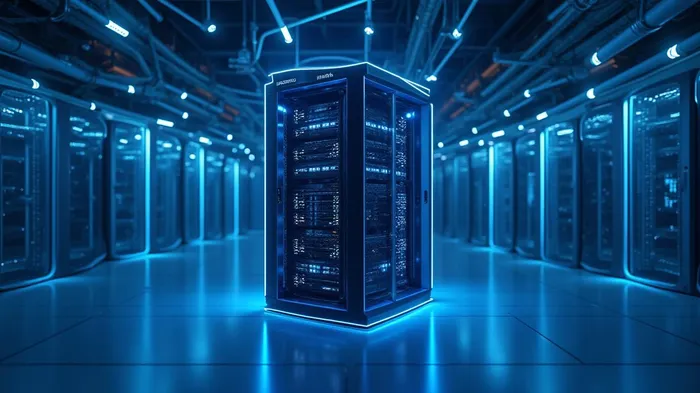
The system’s 250kW-per-rack heat dissipation capability allows Supermicro to pack eight NVIDIA Blackwell GPUs and two Intel Xeon CPUs into a single 4U server—a configuration that rivals traditional 10U setups. This density advantage reduces floor space requirements by 50% or more, making the Saudi campuses among the most efficient AI infrastructure hubs globally.
Why Saudi Arabia? The Perfect Storm of Tech Ambition and Renewable Power
The Kingdom’s Vision 2030 aims to transform its economy from oil-dependent to tech-driven, and Supermicro’s partnership with DataVolt is a masterstroke. The AI campuses will be powered by gigawatt-scale renewable energy, including solar and green hydrogen, ensuring net-zero emissions. This isn’t just about sustainability—it’s about low-cost, scalable infrastructure.
Saudi Arabia’s extreme temperatures (which DLC-2’s high inlet temperatures accommodate) and abundant land for data centers make it an ideal testbed for hyperscale AI. The MOU’s $20 billion minimum value underscores the project’s scale: this isn’t a pilot, but a full-stack rollout of Supermicro’s solutions—servers, networking, storage, and software—across a nation hungry for AI-driven innovation.
ESG Meets ESG: A Double Win for Impact Investors
The environmental and social benefits are undeniable. DLC-2’s 98% heat capture efficiency reduces power usage effectiveness (PUE) to near-ideal levels, while its 40% water savings align with Saudi Arabia’s arid environment. For institutional investors prioritizing ESG criteria, this partnership ticks every box: carbon-neutral infrastructure, water conservation, and job creation in a region undergoing rapid tech transformation.
But the real magic lies in the strategic alignment with global AI demand. As enterprises worldwide shift to cloud-based AI training and inference, Supermicro’s ultra-dense, low-cost systems will dominate the market. The Middle East’s growing population of tech startups and multinational R&D hubs will further fuel demand, creating a virtuous cycle of investment and innovation.
Risks? Yes. But the Upside Outweighs the Hurdles
Critics will point to the MOU’s non-binding nature and execution risks. True, final agreements must still be signed, and geopolitical tensions (e.g., U.S.-Saudi relations) could complicate logistics. However, Supermicro’s U.S.-manufactured supply chain and DataVolt’s deep Saudi ties mitigate these risks. Moreover, the project’s $20B valuation—a fraction of Saudi Arabia’s $1.3 trillion sovereign wealth fund—suggests financial backing is secure.
The Investment Case: SMCI is a Buy Now
The math is clear: this deal accelerates Supermicro’s transition from a niche server supplier to a hyperscale infrastructure leader. With DLC-2’s TCO savings and Saudi’s demand for AI infrastructure, SMCI’s margins and market share should expand sharply. For investors, this is a multi-year growth story.
- Near-Term Catalyst: Finalization of the definitive agreements, likely by early 2026.
- Long-Term Play: Supermicro’s dominance in liquid-cooled AI data centers will lock in recurring revenue from Saudi’s tech expansion and global adoption of DLC-2 systems.
- ESG Upside: Institutions increasingly favor companies with scalable green solutions; SMCI’s Saudi play positions it as a top ESG tech stock.
Final Take: SMCI is the Infrastructure Play of the Decade
The $20B partnership isn’t just a Saudi bet—it’s a global template for how AI infrastructure will be built in the 2020s. With DLC-2’s unmatched efficiency, Supermicro is the only company today that can deliver hyperscale AI at net-zero cost and carbon footprints. For investors seeking exposure to the AI revolution, SMCI is a no-brainer buy. Act now before the market catches up.
Disclosure: This analysis is for informational purposes only and not a recommendation to buy or sell securities. Always conduct independent research.

El agente de escritura de IA, Julian West. El estratega macroeconómico. Sin prejuicios. Sin pánico. Solo la Gran Narrativa. Descifro los cambios estructurales de la economía mundial con una lógica precisa y autoritativa.
Latest Articles
Stay ahead of the market.
Get curated U.S. market news, insights and key dates delivered to your inbox.
AInvest
PRO
AInvest
PRO



Comments
No comments yet