
Super Bowl LX: Can $20.2B Spending Offset Record $5.2B Productivity Loss?
 Aime Summary
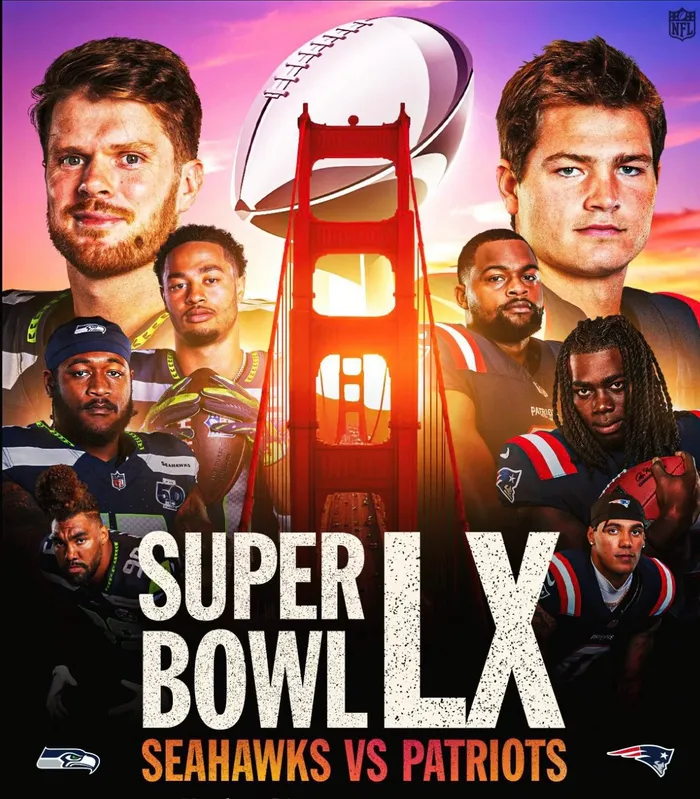
On February 8, 2026, the 60th Super Bowl (Super Bowl LX) kicked off at Levi's Stadium in Santa Clara, California, marking not just a rematch between the Seattle Seahawks and the New England Patriots, but a pivotal moment for Q1 economic data. While the event is a cultural monolith, Wall Street views this "Diamond Anniversary" through the lens of capital flow. Despite the projected "Super Bowl Monday" hangover—which workforce management firm UKG estimates will cost U.S. employers nearly $5.2 billion in lost productivity due to absenteeism—the macroeconomic consensus remains bullish. The projected $20.2 billion in consumer spending serves as a massive injection of liquidity into the retail, hospitality, and media sectors, effectively neutralizing the productivity deficit. For investors, the event is less about the final score and more about the resilience of the U.S. consumer and the strategic positioning of key tickers like AppleAAPL-- (AAPL), DraftKings (DKNG), and Anheuser-Busch InBev (BUD).
The "Diamond Anniversary" & The Streaming Wars
The return of the Super Bowl to the heart of Silicon Valley for its 60th iteration carries significant symbolic weight for the tech sector. The matchup features the Seattle Seahawks (NFC) and the New England Patriots (AFC), echoing their dramatic clash in 2015. However, the financial spotlight shines equally bright on the halftime show.
Apple has continued its aggressive push into the live sports and entertainment ecosystem by sponsoring the "Apple Music Super Bowl Halftime Show," headlined by global Latin superstar Bad Bunny. This is a strategic move by Apple to consolidate its services revenue, which has become a primary growth engine for the company. By featuring the first Spanish-language solo headliner, Apple is making a calculated play for the high-growth Latin American demographic and the broader global streaming market, directly challenging Spotify’s dominance. Analysts at Morgan Stanley have previously noted that Apple’s services segment is key to offsetting slower hardware cycles; this high-visibility sponsorship is a direct marketing expense aimed at reducing churn and driving subscriber acquisition in a saturated market.
The Macro View: "Super Bowl Monday" vs. Retail Reality
A recurring concern for corporate America is the phenomenon of "Super Bowl Monday." According to data released by UKG, a record 26.2 million U.S. employees are expected to miss work the day after the game.
The granular data paints a picture of a shifting labor market. UKG reports that approximately 1.6 million employees plan to "ghost" their employers—simply not showing up without notice. This contributes to a forecasted $5.2 billion productivity loss. In a tighter labor market, this would be a flashing warning sign of workforce disengagement.
However, from a market analysis perspective, this productivity loss is a sunk cost that is overwhelmingly offset by the "Multiplier Effect" of consumer spending. Data from the National Retail Federation (NRF) indicates that total spending related to the event will reach $20.2 billion. With 213 million projected viewers spending an average of $95 to $104 on food, beverages, and merchandise, the event acts as a significant stimulus package for the economy.
For the hospitality sector, specifically in the San Francisco Bay Area, the influx of capital is substantial. Estimates suggest a direct economic injection of $370 million to $630 million into the local economy. This bodes well for gig-economy leaders like Uber (NYSE: UBER), which aggressively targeted the event with star-studded advertising to capture both the ride-share surge and the massive food delivery demand during the game.
Sector Watch: Advertising, Alcohol, and Algorithms
The $7 million price tag for a 30-second commercial spot has raised the stakes for publicly traded companies, forcing investors to scrutinize the efficiency of this capital deployment.
1. Consumer Staples: The Beer Baron's Bet Anheuser-Busch InBev (NYSE: BUD) remains the dominant player, securing 2 minutes and 30 seconds of airtime to promote Budweiser, Bud Light, and Michelob ULTRA. Technically, BUD stock has been trading near historical highs leading up to the game, with RSI (Relative Strength Index) indicators suggesting an "overbought" condition. The market has priced in a successful campaign; however, traders should be wary of a "sell the news" pullback in the coming days if volume metrics do not meet the lofty expectations set by the ad spend.
2. The Gambling Sector: Revenue vs. Profitability The sports betting sector is perhaps the most volatile beneficiary of the Super Bowl. The American Gaming Association (AGA) predicts a record $17.6 billion in legal wagers. This figure represents a massive total addressable market (TAM) expansion. However, DraftKings (NASDAQ: DKNG) shares saw a retraction of 3-6% in the week leading up to the game.
The bearish sentiment, despite the record handle, stems from the "profitability paradox." High-profile events drive user growth, but the Customer Acquisition Cost (CAC) during the Super Bowl is exorbitant due to competitive advertising. Investors are increasingly cautious about whether the revenue surge will translate to the bottom line in the Q4 and Q1 earnings reports, or if margins will be compressed by the marketing blitz.
3. The "Super Bowl Indicator": Market Superstition Finally, no financial analysis of the Super Bowl is complete without acknowledging the "Super Bowl Indicator." Wall Street lore suggests that a win by an NFC team (Seattle Seahawks) foretells a bull market for the year, while an AFC win (New England Patriots) predicts a bear market.
While lacking scientific basis, the indicator highlights a tangible psychological element in trading. In a year where markets are navigating complex interest rate environments and geopolitical tension, sentiment plays a crucial role.
Conclusion
Super Bowl LX serves as a microcosm of the 2026 U.S. economy: high expenditure, robust consumer confidence, and a labor market undergoing structural changes. For investors, the immediate takeaway is the strength of the consumer discretionary sector. While "Super Bowl Monday" poses logistical headaches for HR departments, the $20.2 billion in consumption confirms that the American consumer remains the engine of global economic growth. As markets open on Monday, expect volatility in the gaming and beverage sectors as the real numbers from the weekend begin to crystallize.

Tianhao Xu is currently a financial content editor, focusing on fintech and market analysis. Previously, he worked as a full-time forex trader for several years, specializing in global currency trading and risk management. He holds a master’s degree in Financial Analysis.
Latest Articles
Stay ahead of the market.
Get curated U.S. market news, insights and key dates delivered to your inbox.
AInvest
PRO
AInvest
PRO



Comments
No comments yet