
Sunrun's Solar Struggles: Can the Sun Shine Again After Tax Credit Cuts?
The stock of SunrunRUN-- (RUN), America's leading residential solar installer, has been battered this year—down nearly 30% since January—as investors grapple with the seismic shift in U.S. energy policy. The looming expiration of federal tax incentives, particularly the Investment Tax Credit (ITC), has thrown the solar industry into a race against time. But is this a temporary stumble or a death knell for companies like Sunrun? Let's dig into the numbers and the policy shifts to find out.
First, the bad news: the ITC is dying faster than a solar panel in a coal mine. The proposed “One Big Beautiful Bill” now working its way through Congress slashes the solar ITC from 30% to 20% by 2027, then to zero by 2028. For Sunrun, which relies heavily on the ITC to offset upfront costs for homeowners, this is a body blow. Even worse, the residential solar tax credit (Section 25D) will vanish 180 days after the bill's passage—meaning Sunrun's core business model could collapse within months of the law's enactment.
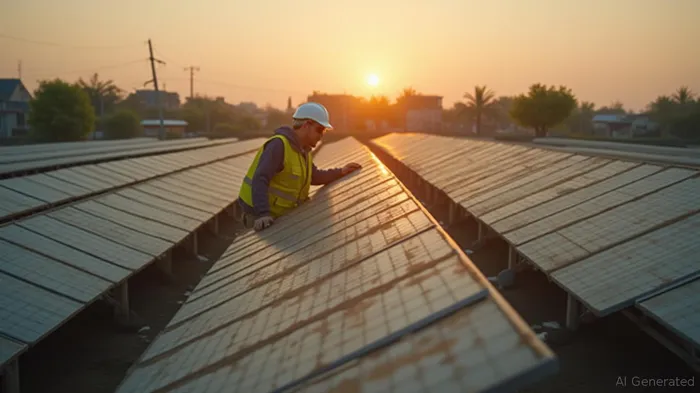
To make matters worse, supply chain hurdles and foreign entanglement rules are creating new roadblocks. The bill's Foreign Entity Ownership, Control, or Influence (FEOC) restrictions bar credits for projects using components from China or other “prohibited” nations. Sunrun, which sources inverters and panels from global suppliers, now faces a compliance nightmare. A single supplier linked to a PFE could invalidate a project's tax credit—a risk that could force companies to rewrite contracts or pay premium prices for U.S.-made parts.
But here's where the story gets interesting: this isn't just about tax credits. It's about survival of the fittest. The phaseout creates a “now or never” scenario for solar developers. Projects must begin construction within 60 days of the bill's passage—and be completed by 2028—to qualify for any ITC. For Sunrun, this means a sprint to secure permits, lock in supply chains, and mobilize installers before the clock runs out. Companies that can't scale quickly or pivot to energy storage (which retains a 10% ITC post-2028) might not survive.
Investors should ask: Is Sunrun up to the challenge? The company's Q1 results were lackluster, with net revenue growth slowing to 17% year-over-year—a far cry from the 50%+ growth rates of 2021. But Sunrun's balance sheet remains strong, with $2.3 billion in liquidity, and its partnerships with utilities like Pacific Gas & Electric could give it an edge in securing projects. Plus, the 10% permanent ITC for domestic-content projects—if achievable—might provide a lifeline.
However, historical data reveals significant underperformance for this approach. Over the period from 2020 to 2025, a strategy of buying 10 days before earnings and holding for 30 days resulted in a compound annual growth rate (CAGR) of -26.85%, with excess returns of -100.92%. This underscores the risks of relying on earnings-driven momentum for Sunrun's stock, as the strategy underperformed broadly and failed to capture consistent gains.
The wildcard? Cost declines and innovation. Solar panel prices have fallen 80% since 2010, and battery storage costs are plummeting too. Even without tax credits, solar could become cost-competitive with fossil fuels in many regions. Sunrun's strategy to bundle solar with storage (which still qualifies for some credits through 2035) might position it as a leader in resilient, off-grid energy solutions. But that's a long bet—what's the near-term path?
The bottom line for investors: Sunrun's stock is pricing in a worst-case scenario. If the company can secure enough projects before 2028, adapt to FEOC rules, and leverage storage tech, its shares could rebound. But if supply chains crumble or policy delays create chaos, this stock could sink further.
Action plan: Wait for clarity on the bill's passage timing. If the Senate and House reconcile their versions by July, the 180-day clock starts ticking—meaning the residential credit could vanish by early 2026. Buy Sunrun only if you see clear execution on these deadlines, or consider a “straddle” position with puts to hedge downside. The solar sun isn't setting forever—but its trajectory depends on speed, ingenuity, and a lot of paperwork.

Delivering real-time insights and analysis on emerging financial trends and market movements.
Latest Articles
Stay ahead of the market.
Get curated U.S. market news, insights and key dates delivered to your inbox.




Comments
No comments yet