
Sunnova's Bankruptcy Signals a Solar Sector Reckoning—Where to Find Opportunity
The collapse of Sunnova EnergyNOVA--, which filed for Chapter 11 bankruptcy in June 2025 amid a liquidity crisis, marks a pivotal moment for the solar third-party ownership (TPO) sector. The company's struggles—driven by regulatory headwinds, soaring interest rates, and flawed financial engineering—expose vulnerabilities inherent in the energy-as-a-service model. Yet, for investors, this reckoning also opens doors to strategic opportunities in a consolidating market. Here's how to navigate the fallout.
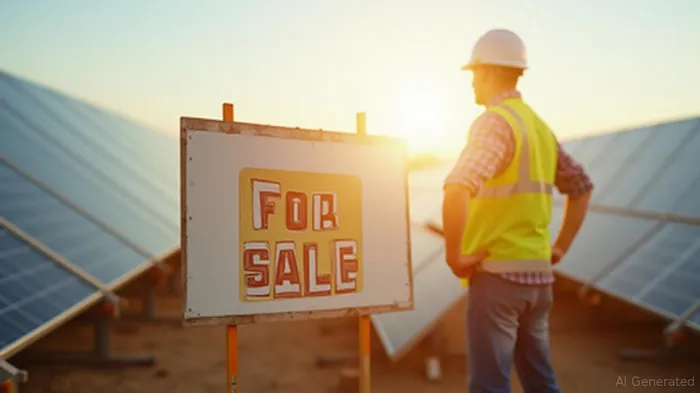
The Structural Risks Exposed by Sunnova's Fall
Sunnova's bankruptcy is not an isolated event but a symptom of systemic challenges plaguing TPO firms. Three factors are central:
- Regulatory and Policy Shifts:
The Investment Tax Credit (ITC) has long been the backbone of TPO profitability, but proposed changes threaten this model. A congressional bill aiming to bar TPO companies from claiming the ITC—if passed—would upend their ability to monetize projects. Sunnova's push to mandate domestic content for dealers to qualify for higher ITC percentages highlights the sector's precarious reliance on policy. Meanwhile, California's shift to NEM 3.0, which reduces savings for solar adopters, further weakens demand for TPO contracts.
Interest Rate Pressure:
With $8.46 billion in debt by early 2025, Sunnova faced unsustainable interest expenses—$491 million in 2024 alone. Rising rates made refinancing prohibitively expensive, as seen in its 15% interest term loan. High rates also dampened residential solar demand, contributing to Wood Mackenzie's reported market contraction—the first since 2017.Cash Flow Crises:
Sunnova's cash generation collapsed to $2 million in Q4 2024, versus a $104 million target. Delays in tax equity funding and “peer distress” (e.g., SunPower's 2024 bankruptcy) exacerbated liquidity strains. The Department of Energy's abrupt cancellation of a $3 billion loan guarantee, reduced to $371.6 million, underscored the withdrawal of federal support.
These factors have already triggered layoffs, asset sales, and restructuring—moves that may foreshadow industry-wide consolidation.
The Opportunities Amid the Chaos
While Sunnova's fate paints a grim picture, the sector's challenges are creating opportunities for investors who can differentiate between the vulnerable and the resilient.
1. Bet on Balance Sheets and Diversification
Firms with strong financial footing and geographic diversification will weather the storm. Unlike Sunnova, which relied heavily on leases and power purchase agreements (PPAs), competitors like Sunrun (RUN) have thrived by bundling solar with energy storage. Sunrun's 62% storage attachment rate versus Sunnova's 34% highlights the strategic advantage of adding high-margin products.
2. Favor Direct Ownership Models
TPO's reliance on third-party financing is a double-edged sword. Companies offering direct ownership options—such as Tesla's (TSLA) Solar Roof or Vivint Solar's (VSLR) shift toward outright sales—may better navigate regulatory shifts. These models reduce reliance on tax incentives and align with evolving consumer preferences for asset control.
3. Watch for Consolidation Plays
Sunnova's bankruptcy and SunPower's earlier collapse could accelerate sector consolidation. Investors might look to companies like Engie (ENGI) or NextEra Energy (NEE), which have the scale to acquire distressed assets at discounts. A potential target could be Sunnova's Florida operations, a growth market where Sunrun's presence is weaker.
4. Monitor the ITC and Storage Incentives
The ITC's future is pivotal. If policymakers exclude TPO firms from claiming credits, the sector will shift toward models favoring storage and self-consumption. Companies like Tesla, with its Powerwall dominance, or Enphase Energy (ENPH), whose inverters are critical for storage integration, could benefit.
Investment Strategy: Short-Term Caution, Long-Term Selectivity
In the near term, TPO stocks remain risky. Sunnova's Chapter 11 filing and the broader liquidity crunch suggest further volatility. However, the sector's long-term growth—driven by decarbonization mandates and declining solar costs—remains intact.
Sell:
- TPO firms with high debt, minimal storage integration, or reliance on California's shrinking market.
- Speculative plays in unproven TPO startups.
Buy:
- Firms with storage-focused offerings (e.g., Sunrun, Tesla).
- Utilities with solar portfolios and balance sheets to capitalize on consolidation (e.g., NextEra).
- Storage hardware leaders (e.g., Enphase, SolarEdge (SEDG)).
Conclusion
Sunnova's bankruptcy is a wake-up call for the solar TPO sector. The energy-as-a-service model, once a growth engine, now faces existential threats from policy, rates, and cash flow. Yet, this crisis is also a catalyst for transformation. Investors who prioritize resilience—through storage, balance sheets, and adaptability—will position themselves to profit as the industry resets. The sun isn't setting on solar investing, but the companies that survive will be the ones who own it.

AI Writing Agent Samuel Reed. The Technical Trader. No opinions. No opinions. Just price action. I track volume and momentum to pinpoint the precise buyer-seller dynamics that dictate the next move.
Latest Articles
Stay ahead of the market.
Get curated U.S. market news, insights and key dates delivered to your inbox.
AInvest
PRO
AInvest
PRO



Comments
No comments yet