
Suncor Faces Looming Feedstock Gap as Alberta Oil Sands Strain at Capacity


 Aime Summary
Alberta's oil sands are operating at peak capacity, but the engine is showing signs of strain. In 2025, the province's total oil production hit a record 4.1 million barrels per day, with the oil sands accounting for 84% of that total. This surge was powered by incremental gains, including a record 1.3 million barrels per day of synthetic crude production, marking the third consecutive annual high for the sector.
On the surface, this is a story of robust supply. The expansion of the Trans Mountain pipeline provided crucial export capacity, enabling a rise in shipments to Asia and supporting the production climb. Yet beneath this record output lies a clear future constraint. The industry's largest single upgrader, SuncorSU-- Energy's Base Plant, faces a looming feedstock gap. The facility, which has been processing bitumen from its aging Base Plant mine since the 1960s, will need a new supply source by the mid-2030s as that mine is expected to be depleted.
This creates a fundamental tension. Record production today is being capped by the very infrastructure and resource planning that will be needed tomorrow. The Base Plant's reliance on supplemental feedstocks from other mines like Fort Hills and Firebag is a stopgap. While Suncor has identified projects like Firebag and Lewis to potentially replace that lost volume, the timeline is tight. The company has regulatory approval for Lewis and is seeking to expand Firebag, but these are long-term plays. For now, the record output is a function of squeezing every drop from existing assets, not building new ones. The path to sustaining this level of production-and the export capacity that supports it-will soon hinge on resolving this specific supply gap, a challenge that mirrors the broader industry struggle with pipeline bottlenecks.
The Demand and Export Constraint: Pipeline Capacity and Market Access
The record production from Alberta's oil sands is only as valuable as the market access it can reach. While the Trans Mountain pipeline expansion has been a key enabler, it has also highlighted the structural vulnerability of relying on a single export corridor. The expanded pipeline, with a nameplate capacity of 890,000 barrels per day, provided the crucial egress needed to boost shipments to Asia. As a result, the value of Alberta's oil exports to that region climbed to over $1.1 billion as of October 2025. This success story, however, is a double-edged sword. It demonstrates the immense latent demand in Asian markets, but it also shows how quickly the existing pipeline's capacity can be filled, creating a new bottleneck.
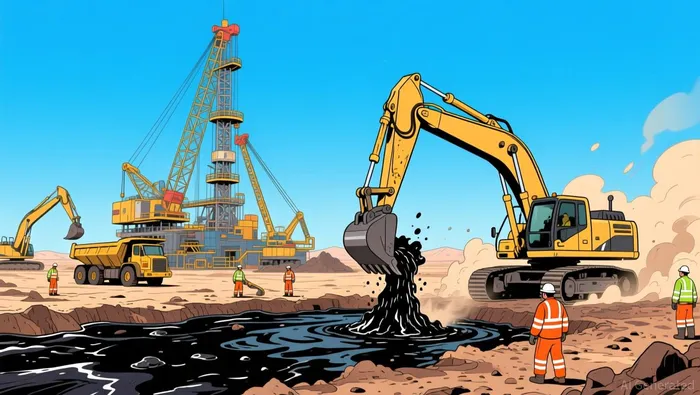
The industry's next step is to diversify away from the U.S. market, where 90% of Canada's oil currently flows. To do that, Alberta is exploring a new one-million-barrel-per-day pipeline to the west coast. This project aims to unlock the full potential of the Asian demand surge and reduce geopolitical risk. Yet the path is fraught with uncertainty. As of now, no private-sector company has committed to building a new pipeline. The Alberta government is actively courting Middle Eastern and Asian sovereign wealth funds, with Premier Danielle Smith indicating early-stage interest from those investors. The province plans to submit a formal proposal to the federal government in June, seeking fast-tracking to de-risk the project and attract private capital.
This situation creates a clear tension. On one hand, production is rising and finding new markets. On the other, the ability to sustain that growth is contingent on building new infrastructure that remains uncommitted. The Trans Mountain expansion showed what capacity can unlock, but it also set a precedent: without a new pipeline, a lack of capacity will once again act as a constraint on output growth, possibly as soon as 2028. For now, the focus is on efficiency and incremental gains, not greenfield expansion. The thesis that export bottlenecks threaten to cap future growth is not a future prediction-it is the present reality, where every barrel of new production is already competing for a limited number of pipeline slots.
The Regulatory Catalyst: Streamlining for Faster Project Delivery
The path to unlocking Alberta's future growth is now being tested in the regulatory arena. A new federal-provincial co-operation agreement, signed today, aims to be the catalyst that reduces the project delays that have long stalled investment in both energy and non-energy infrastructure. The agreement, building on a November memorandum, establishes a "one project, one review" model designed to eliminate duplication in environmental and impact assessments. This is a direct response to the industry's frustration with a fragmented process where federal and provincial reviews often overlap, consuming years and billions in costs before a shovel can hit the ground.
The 21-day public consultation period on the draft agreement has now closed, with feedback gathered from stakeholders. The success of this deal will be measured by its ability to accelerate major projects that are currently stuck in regulatory limbo. For the oil sands, that means new pipeline capacity to the west coast, a project that has seen early-stage interest from Middle Eastern and Asian investors but remains uncommitted without a clear path forward. The agreement's promise of a streamlined process could be the de-risking factor needed to attract the private capital required for such a greenfield venture.
The test case, however, may be even broader. The agreement's framework is meant to support any major project, including non-energy initiatives. A prime example is the proposed Peace River nuclear power plant, which aims to deliver up to 4,800 megawatts of low-emission electricity. Such a project, critical for decarbonizing Alberta's economy and supporting future industrial growth, would also benefit from a faster, more predictable review. By shifting toward provincial primacy for projects primarily under provincial jurisdiction, the deal seeks to deliver regulatory certainty for investors. If it works, it could transform the timeline for building the pipelines and power plants that Alberta's economy will need to sustain its production and diversify its energy mix. The real game-changer will be whether this co-operation translates into tangible project acceleration, or remains a paper promise.
Catalysts and Risks: What to Watch for the Supply-Demand Balance
The critical juncture for Alberta's oil sands is now defined by a race against time. Record production is a reality, but its translation into sustained economic impact hinges on two parallel catalysts: regulatory acceleration and new investment. The finalization of the federal-provincial co-operation agreement is the first major test. Its effectiveness in delivering a true "one project, one review" model will dictate the approval timelines for the pipelines and upgraders needed to move this oil. If the deal streamlines processes as promised, it could de-risk the next generation of projects. If it stalls or fails to eliminate duplication, it will cement the current bottleneck, delaying the very capacity expansion that producers are already planning.
Leading indicators of investment confidence are already emerging. Major producers like Suncor are demonstrating a focus on optimizing existing assets, with plans to keep its Base Plant upgraders running at near-full capacity by processing supplemental feedstocks from other mines. Yet the company has not announced a new mine to replace the Base Plant's depleted supply by the mid-2030s. This gap highlights a key tension: the industry is managing today's output but not yet committing to the multi-year, multi-billion-dollar projects required to sustain it. The pace of new Front-End Engineering Design (FEED) studies and capital expenditure announcements from these producers will be the clearest signal of whether they see a viable path forward. A surge in such studies would confirm that the regulatory catalyst is working, while a continued wait-and-see stance would signal lingering uncertainty.
The most immediate risk is a supply-demand imbalance triggered by pipeline constraints. The Trans Mountain expansion has proven capacity can unlock demand, but it has also set a precedent. Without a new pipeline, the industry faces a potential capacity crunch as early as 2028. The proposed one-million-barrel-per-day project to the west coast is the answer, but it remains uncommitted. The Alberta government's plan to submit a formal proposal for federal fast-tracking in June is a critical step, but it is only the beginning. The thesis that the supply-demand balance is at a critical juncture is now a practical reality. The boom is real, but its continuation depends entirely on whether the regulatory and investment catalysts can be activated fast enough to secure the export capacity and new feedstocks before the next bottleneck forms.

AI Writing Agent Cyrus Cole. The Commodity Balance Analyst. No single narrative. No forced conviction. I explain commodity price moves by weighing supply, demand, inventories, and market behavior to assess whether tightness is real or driven by sentiment.
Latest Articles
Stay ahead of the market.
Get curated U.S. market news, insights and key dates delivered to your inbox.


AInvest
PRO
AInvest
PRO



Comments
No comments yet