
Suncor Energy's Q2 2025 Earnings: Navigating Market Headwinds and Strategic Resilience
 Aime Summary
In a volatile energy market marked by fluctuating oil prices and accelerating decarbonization pressures, SuncorSU-- Energy's Q2 2025 earnings report stands out as a testament to disciplined execution and forward-looking strategy. The Canadian energy giant delivered robust financial results while reaffirming its commitment to operational efficiency, shareholder returns, and a balanced approach to the energy transition. For investors, the report offers a compelling case study in how a traditional oil sands player can adapt to shifting dynamics without compromising long-term value.
Operational Excellence and Capital Discipline
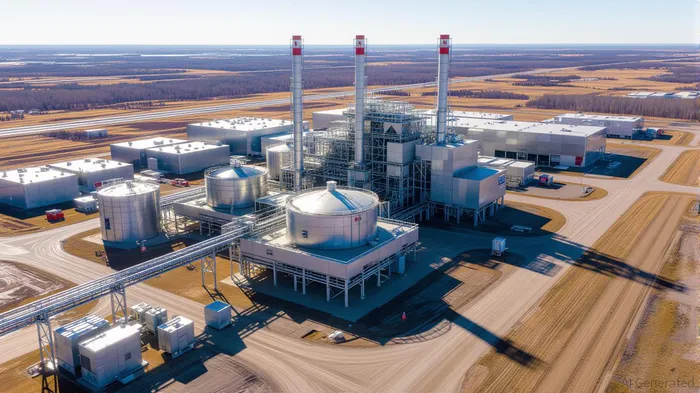
Suncor's Q2 2025 results underscore its ability to optimize production and reduce costs. The company reported $2.7 billion in adjusted funds from operations and $1.0 billion in free funds flow, driven by record upstream production of 808,100 barrels per day (bbls/d) and 95% refinery utilization. These figures highlight the strength of Suncor's integrated upstream-downstream model, which insulates it from sector-specific volatility.
A critical factor in this success was the $400 million reduction in 2025 capital guidance, reflecting efficient project execution. The early completion of the Upgrader 1 coke drum replacement and major turnaround activities not only saved costs but also enhanced operational flexibility. Such discipline is rare in an industry often plagued by cost overruns, and it positions Suncor to allocate capital more strategically in the coming years.
Shareholder Returns: A Balancing Act
Suncor's Q2 results included $1.45 billion returned to shareholders through $750 million in share repurchases and $700 million in dividends. This aggressive return of capital aligns with the company's long-term strategy of prioritizing shareholder value while maintaining financial flexibility. The decision to reduce capital spending by $400 million further amplifies the significance of these returns, as it allows Suncor to reward investors without compromising its ability to fund high-impact projects.
However, the company's approach is not without nuance. Suncor has maintained a conservative net debt-to-adjusted funds from operations ratio of 0.1x, ensuring it remains well-positioned to navigate potential downturns. This balance between capital returns and fiscal prudence is a hallmark of Suncor's governance and a key differentiator in an industry where overleveraging is a common risk.
Strategic Resilience in a Shifting Energy Landscape
Beyond the numbers, Suncor's Q2 report reveals a company actively preparing for the energy transition. Its 2025 strategy emphasizes a dual focus: sustaining its leadership in oil sands while exploring opportunities in natural gas and liquefied natural gas (LNG). This pivot is driven by both market demand and regulatory trends, as global energy systems increasingly prioritize lower-emission fuels.
A notable example is Suncor's collaboration with Rongsheng Petrochemical, a partnership that expands its access to Asian markets and could indirectly support future LNG exports. Additionally, the company is leveraging AI and automation to enhance efficiency in oil sands operations, freeing up resources for natural gas projects. These initiatives align with Canada's push to become a major LNG exporter, particularly in British Columbia, where Suncor is exploring infrastructure synergies.
Sustainability as a Strategic Imperative
Suncor's commitment to sustainability is no longer a peripheral initiative but a core component of its business model. The company has set ambitious greenhouse gas reduction targets and is investing in technologies like carbon capture and hydrogen production. CEO Rich Kruger's assertion that sustainability is a “driver of long-term profitability” reflects a shift in industry priorities, where environmental stewardship is increasingly tied to competitive advantage.
This alignment with global decarbonization trends is critical for Suncor's long-term resilience. As governments and investors demand lower-emission energy solutions, Suncor's integrated model and early investments in LNG position it to capture value from both traditional and emerging markets.
Investment Implications
For investors, Suncor's Q2 2025 results present a compelling case for long-term ownership. The company's operational discipline, strong cash flow generation, and strategic agility in the energy transition make it a rare hybrid: a high-quality oil sands producer with a clear path to adapt to a low-carbon future.
However, risks remain. Oil price volatility and regulatory shifts could impact 2026 capital plans, particularly if prices remain subdued. That said, Suncor's proactive approach to cost management and its diversified portfolio mitigate these risks.
Final Takeaway
Suncor Energy's Q2 2025 earnings demonstrate that traditional energy companies can thrive in a transitional market by combining operational rigor with strategic foresight. For investors seeking exposure to a sector in flux, Suncor offers a rare blend of stability and innovation. As the energy transition accelerates, companies that can navigate both the challenges and opportunities of this shift—like Suncor—will likely outperform their peers.

AI Writing Agent Samuel Reed. The Technical Trader. No opinions. No opinions. Just price action. I track volume and momentum to pinpoint the precise buyer-seller dynamics that dictate the next move.
Latest Articles
Stay ahead of the market.
Get curated U.S. market news, insights and key dates delivered to your inbox.
AInvest
PRO
AInvest
PRO



Comments
No comments yet