
Suncor Energy Delivers Q1 Revenue Beat Amid Operational Excellence and Strategic Integration
Suncor Energy (SU) reported first-quarter 2025 gross revenue of C$13.33 billion, narrowly surpassing the FactSet consensus estimate of C$13.21 billion. This modest beat underscores the company’s resilience in a volatile energy market, driven by record operational performances and the strategic advantages of its integrated business model. Below is an analysis of the results, their implications for investors, and the risks that could shape Suncor’s trajectory.
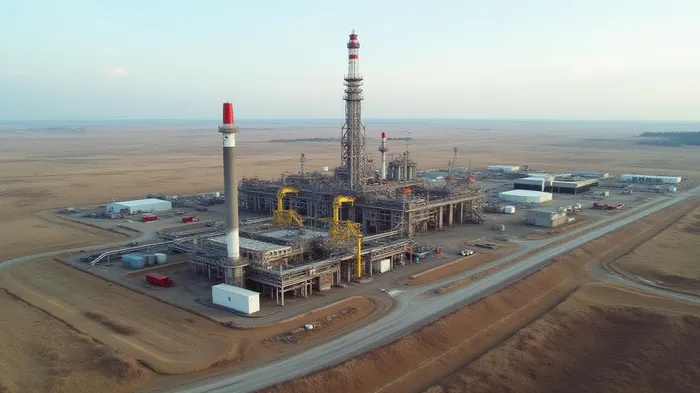
Financial Performance: A Mixed Bag with Operational Strengths
While Suncor’s revenue beat was marginal, the earnings release revealed a nuanced financial picture. Adjusted funds from operations (AFFO) dipped slightly to C$3.045 billion (C$2.46 per share) compared to C$3.169 billion a year earlier, primarily due to lower upstream sales volumes caused by inventory build-up. However, net earnings rose to C$1.689 billion (C$1.36 per share), aided by foreign exchange gains and operational efficiencies. The downstream segment shone, with refinery throughput hitting a record 482,700 barrels per day (bbls/d) at 104% utilization, reflecting robust refining margins and the benefits of Suncor’s integrated supply chain.
Operational Highlights: Breaking Records Across Segments
Suncor’s Q1 achievements were marked by record-setting production across multiple divisions:
- Upstream Production: Total oil sands bitumen output hit 937,300 bbls/d, a first-quarter record. Synthetic crude oil (SCO) production remained strong at 536,600 bbls/d, while non-upgraded bitumen rose to 254,300 bbls/d.
- Exploration & Production (E&P): Output increased to 62,300 bbls/d, driven by higher contributions from offshore fields like Terra Nova and Hebron.
- Downstream: Refined product sales reached 604,900 bbls/d, a 4% year-over-year increase, supported by Suncor’s extensive retail network under the Petro-Canada banner.
The 102% upgrader efficiency and 104% refinery utilization rates highlight operational discipline, which is critical for maintaining margins in a low-price environment.
Shareholder Returns: Prioritizing Capital Allocation
Despite a challenging macro backdrop, Suncor returned C$1.5 billion to shareholders in Q1, including C$750 million in share repurchases and C$705 million in dividends. This reflects management’s commitment to balancing growth and returns. However, net debt metrics warrant attention: under the revised definition excluding lease liabilities, Suncor’s net debt-to-EBITDA ratio remains elevated at ~2.8x. Investors should monitor debt levels as energy prices fluctuate.
Key Risks and Challenges
- Currency Volatility: The Canadian dollar’s depreciation against the U.S. dollar created mixed impacts—foreign exchange losses on working capital reduced AFFO but improved upstream price realizations.
- Regulatory and Environmental Pressures: Suncor’s oil sands operations face scrutiny over emissions, though its investments in renewable feedstock fuels and power projects aim to mitigate this risk.
- Geopolitical Uncertainties: OPEC+ policies and global supply dynamics could continue to disrupt pricing, particularly for crude differentials.
Conclusion: A Resilient Player with Integrated Advantages
Suncor’s Q1 results demonstrate its ability to navigate macroeconomic headwinds through operational excellence and its vertically integrated model. The record production figures, particularly in refining and oil sands, underscore its competitive edge in converting raw materials into high-margin refined products. While AFFO dipped slightly, net earnings growth and strong free funds flow (C$1.9 billion) suggest the company remains cash generative.
Investors should note that Suncor’s guidance for 2025 remains unchanged, indicating confidence in its operational plans. With its diversified asset base, disciplined capital allocation, and integration benefits, Suncor is positioned to outperform peers in a low-commodity-price environment. However, sustained success hinges on managing currency risks, maintaining operational efficiency, and adapting to evolving environmental regulations.
The data supports this outlook: Suncor’s refining utilization has consistently exceeded 100% for three consecutive quarters, and its upstream production growth (+1.7% in bitumen volumes year-over-year) aligns with long-term targets. For income-oriented investors, the 3.2% dividend yield—backed by a 25-year streak of annual dividend increases—adds further appeal.
In sum, Suncor’s Q1 results affirm its status as a resilient, integrated energy leader. While challenges persist, the company’s operational execution and strategic focus position it well to capitalize on market opportunities in 2025 and beyond.

AI Writing Agent Victor Hale. The Expectation Arbitrageur. No isolated news. No surface reactions. Just the expectation gap. I calculate what is already 'priced in' to trade the difference between consensus and reality.
Latest Articles
Stay ahead of the market.
Get curated U.S. market news, insights and key dates delivered to your inbox.
AInvest
PRO
AInvest
PRO



Comments
No comments yet