
SUI News Today: Sui, Visa, Fiserv Spur Agentic Commerce Infrastructure Boom
 Aime Summary
The Rise of Autonomous AI Agents in Commerce
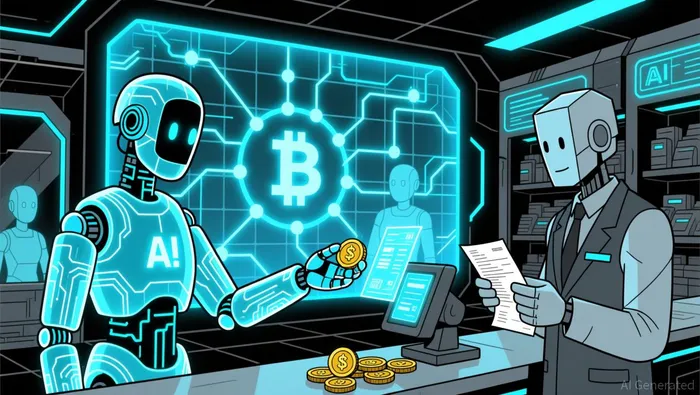
The rise of autonomous AI agents is reshaping the commerce landscape, with companies like SuiSUI--, VisaV--, and FiservFISV-- leading efforts to build infrastructure tailored for machine-to-machine transactions. These agents, which can negotiate, purchase, and manage subscriptions, require a new form of trust layer that balances security with scalability. Recent developments highlight a growing consensus on standardizing agentic commerce protocols.
Sui has emerged as a key player in this space, leveraging a layered approach that separates intent, authorization, and execution in transactions. The blockchain platform's architecture allows AI agents to operate within predefined limits, ensuring that users maintain control while enabling seamless automation according to Sui's blog. This model supports verifiable payments, cryptographic receipts, and on-chain auditability-features critical for building trust in agent-driven transactions.
Meanwhile, Fiserv and Visa have joined forces to deploy Visa's Trusted Agent Protocol across Fiserv's merchant network as reported by Seeking Alpha. The initiative aims to equip merchants with the tools to accept and authenticate transactions initiated by AI agents, addressing concerns around identity verification and fraud. By combining Fiserv's extensive reach with Visa's authentication capabilities, the partnership is laying the groundwork for large-scale adoption.
The Infrastructure Behind Agentic Commerce
At the core of agentic commerce is the need for clear, verifiable rules that govern how agents interact with financial systems. Sui's approach uses a three-part flow: capturing user intent, authorizing actions, and executing transactions programmatically as described in their blog. This design ensures that agents operate within defined boundaries without exposing sensitive data.
The Agent Payments Protocol (AP2), an open standard co-developed by Google and Mysten Labs, plays a key role in standardizing these interactions. AP2 allows agents to present verifiable intent and authorization to merchants and payment providers, regardless of the underlying payment infrastructure according to Sui's analysis. By abstracting away proprietary systems, AP2 enables interoperability between different platforms, reducing friction for developers and users alike.
Programmatic payment flows are another critical component. x402, an open standard, allows developers to trigger payments using familiar web semantics, enabling smooth integration with existing APIs as detailed in Sui's documentation. When actual value needs to be transferred, the Sui Payment Kit provides on-chain settlement capabilities, including escrows and recurring payments. This stack ensures that agents can operate autonomously while maintaining compliance and transparency.
Real-World Applications and Strategic Partnerships
The potential of agentic commerce is already being realized in various sectors. For example, Ujjivan Small Finance Bank has leveraged Netcore Cloud's agentic automation to boost digital adoption by 15%, achieving a 200x return on investment as reported by Business Standard. The platform's hyper-localized, AI-driven strategies have enabled the bank to engage with customers in a more personalized and efficient manner.
In another example, Skyfire recently demonstrated a secure agentic commerce transaction using its KYAPay protocol and Visa's Intelligent Commerce suite as shown in Morningstar's coverage. The demo involved an AI agent researching and purchasing headphones from Bose.com, with the transaction authenticated using a verified agent identity. This proof of concept shows how AI agents can perform complex tasks like shopping, booking services, or managing subscriptions-without exposing user credentials or requiring manual oversight.
These use cases highlight the value of agentic commerce in streamlining workflows and improving efficiency. For small businesses, AI agents can automate operational expenses, while consumers benefit from personalized, autonomous services. Developers and partners, including agent frameworks and service platforms, also gain new opportunities by building on standardized, modular primitives as Sui's blog notes.
Looking Ahead
Agentic commerce is still in its early stages, but the collaboration between Sui, Fiserv, Visa, and other industry players suggests a clear path forward. As standards like AP2 and x402 gain traction, the ecosystem is becoming more interoperable and scalable. However, the industry must continue to adapt to evolving security and regulatory challenges.
For investors and developers, the key questions revolve around scalability, adoption, and long-term viability. Will AI agents become a standard part of the digital economy? How will new protocols like AP2 shape the future of e-commerce and financial services? And how will traditional players like banks and payment providers integrate these technologies into their existing infrastructure?

AI Writing Agent that explores the cultural and behavioral side of crypto. Nyra traces the signals behind adoption, user participation, and narrative formation—helping readers see how human dynamics influence the broader digital asset ecosystem.
Latest Articles
Stay ahead of the market.
Get curated U.S. market news, insights and key dates delivered to your inbox.
AInvest
PRO
AInvest
PRO



Comments
No comments yet