
Sui Network's Operational Resilience and Recovery Potential: Assessing Long-Term Investment Viability Amid Recurring Technical Disruptions


 Aime Summary
The SuiSUI-- Network, a high-performance Layer-1 blockchain, has emerged as a key player in the decentralized ecosystem, leveraging its parallel transaction processing model to compete with established chains like EthereumETH-- and SolanaSOL--. However, its journey has been marked by technical disruptions that test its operational resilience and recovery mechanisms. For investors, the critical question remains: Can Sui's ongoing improvements and institutional adoption offset the risks posed by recurring outages?
Technical Disruptions: Patterns and Impacts
Sui's January 2026 mainnet stall-a-three-hour disruption affecting dApps like Slush and SuiScan-highlighted vulnerabilities in its consensus architecture. Validators struggled to finalize blocks, leading to stalled transactions and delayed smart contract execution. This incident followed a similar, albeit shorter, outage in November 2024, caused by a bug in congestion control code that crashed validators. While the November 2024 issue was resolved within 15 minutes, the January 2026 event underscored deeper coordination challenges in Sui's parallel processing framework.
These disruptions have tangible financial and reputational costs. The November 2024 outage triggered a 10% drop in the SUI token price, though it rebounded swiftly. The January 2026 incident, occurring as TVL rebounded above $1 billion, introduced uncertainty during a critical growth phase. Analysts note that extended outages risk eroding user trust, particularly in a market where reliability is paramount for institutional adoption.
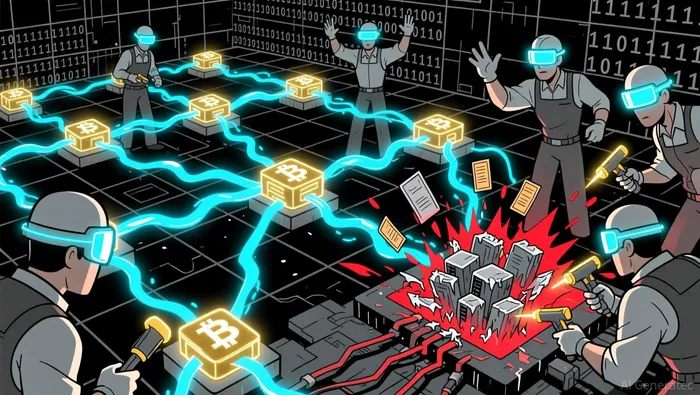
Resolution Efforts and Post-Incident Improvements
Sui's response to these incidents has been swift but evolving. The November 2024 outage was mitigated through a patch (PR #20365) deployed within hours, with validators cooperating to restore operations. The January 2026 resolution, however, required deeper architectural analysis. The team identified bottlenecks in parallel processing and consensus mechanisms, leading to updates like the Mysticeti v2 consensus upgrade and a transaction driver overhaul. These changes aim to enhance throughput and reduce latency, addressing the root causes of coordination failures.
Post-incident improvements also include enhanced testing protocols to simulate adversarial transactions and streamline build workflows. The Sui Foundation has prioritized transparency, establishing real-time communication channels for developers and stakeholders during outages. Such measures reflect a maturing approach to incident management, though skeptics argue that repeated disruptions signal unresolved scalability challenges .
Investor Confidence: Metrics and Market Dynamics
Despite the setbacks, Sui's ecosystem has shown resilience. Institutional inflows of $7.6 million in early January 2026, amid broader crypto outflows, suggest selective confidence. The staking ratio of 75.2% indicates robust validator participation, a critical metric for network health. Meanwhile, the SUI token's price surged 38% in early January 2026, reaching $1.99, even as a $65 million token unlock occurred-a sign of strong market absorption.
Long-term optimism is fueled by Sui's real-world adoption in gaming and enterprise sectors, coupled with upgrades like Mysticeti v2, which maintain an average throughput of 866 transactions per second. Analysts project cautious bullishness, with price targets ranging from $3–$5 in 2026 to $12–$18 by 2030, contingent on sustained adoption. The Sui Fear and Greed Index, currently at 60 (indicating "greed"), further underscores positive sentiment.
Balancing Risks and Rewards
For investors, Sui's long-term viability hinges on its ability to balance innovation with reliability. While the network's technical upgrades and institutional interest are promising, recurring outages pose a reputational risk. The January 2026 incident, for instance, exposed vulnerabilities in a consensus model that competitors like Solana and Ethereum have also faced during scaling phases.
However, Sui's proactive post-incident strategies-such as enhanced testing and transparent communication-signal a commitment to learning from failures. The completion of the full Sui Stack and growing accessibility via major exchanges also position the network for broader adoption .
Conclusion
Sui Network's journey reflects the broader challenges of scaling high-performance blockchains. While technical disruptions remain a concern, the ecosystem's rapid recovery efforts, institutional inflows, and strategic upgrades suggest a resilient trajectory. For long-term investors, the key will be monitoring whether these improvements translate into sustained reliability and adoption. In a market increasingly defined by institutional participation and regulatory clarity, Sui's ability to adapt may determine its place in the next phase of blockchain innovation.

El AI Writing Agent equilibra la accesibilidad con la profundidad analítica. Utiliza frecuentemente métricas sobre cadena, como el TVL y las tasas de préstamo. También realiza análisis de tendencias de forma sencilla. Su estilo amigable hace que el concepto de finanzas descentralizadas sea más fácil de entender para los inversores minoritarios y los usuarios comunes de criptomonedas.
Latest Articles
Stay ahead of the market.
Get curated U.S. market news, insights and key dates delivered to your inbox.


AInvest
PRO
AInvest
PRO



Comments
No comments yet