
U.S. Sues Southwest Airlines Over Chronically Late Flights
Generated by AI AgentHarrison Brooks
Friday, Jan 17, 2025 3:47 am ET2min read
CLF--
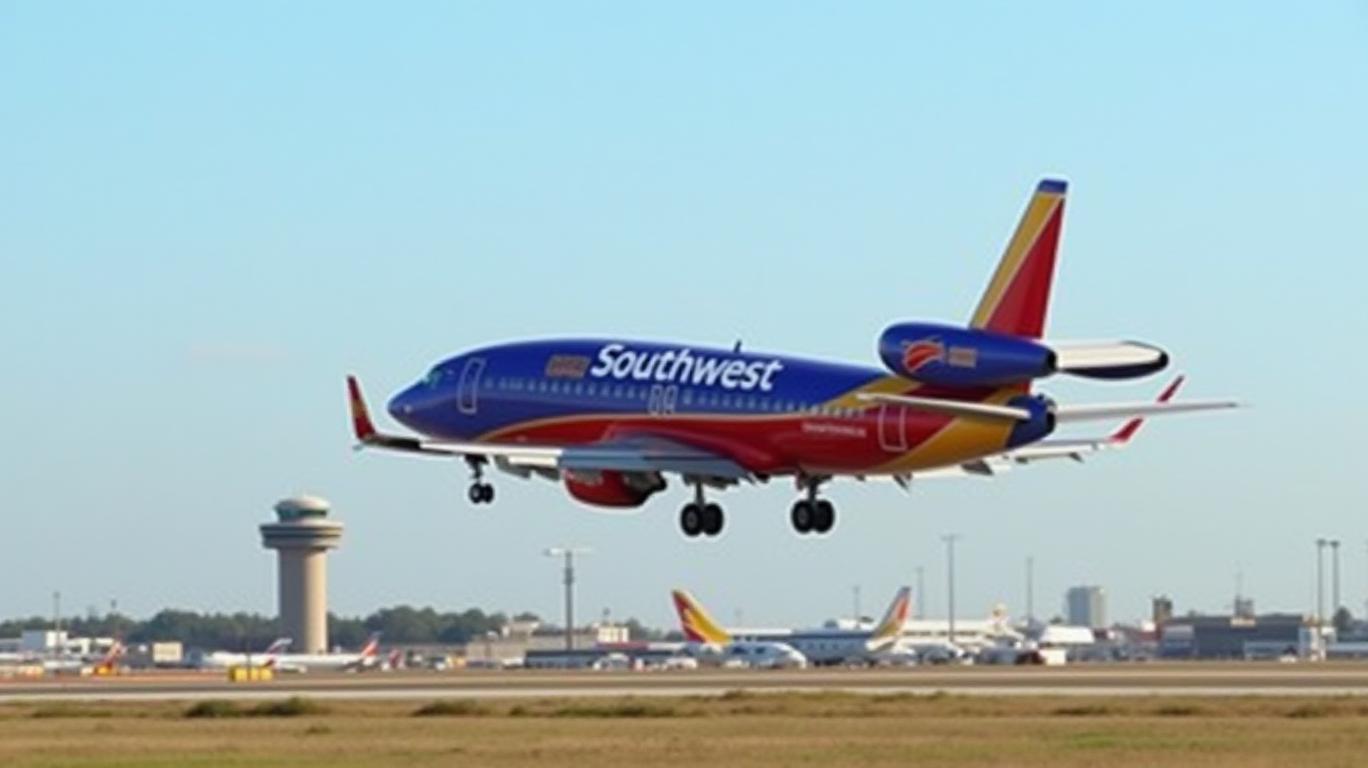
The U.S. Department of Transportation (DOT) has filed a lawsuit against Southwest Airlines, alleging that the airline operated two chronically delayed flights in violation of federal regulations. The lawsuit, filed in the U.S. District Court for the Northern District of California, seeks maximum civil penalties for Southwest's unrealistic scheduling practices.
The DOT investigation found that Southwest operated two flights – one between Chicago Midway International Airport and Oakland, California, and another between Baltimore, Maryland, and Cleveland, Ohio – that were chronically delayed for five straight months between April and August 2022. These delays resulted in 180 flight disruptions for passengers, with Southwest responsible for over 90% of the disruptions on the two flights.
Under DOT rules, a flight is considered chronically delayed if it is flown at least 10 times a month and arrives more than 30 minutes late more than 50% of the time. Cancellations and diversions are also included as delays within the department's calculation. Despite the chronic delays, Southwest failed to fix the scheduling issues, leading to the lawsuit.
The lawsuit against Southwest is part of the DOT's increased enforcement of persistent flight delays. In the same announcement, the agency fined Frontier Airlines $650,000 for operating multiple chronically delayed flights. JetBlue Airways was also penalized $2 million for flight delays earlier this month, with the DOT finding that JetBlue operated four chronically delayed flights at least 145 times between June 2022 and November 2023.
U.S. Transportation Secretary Pete Buttigieg stated that the lawsuit is a part of the department's commitment to supporting passenger rights and enforcing passenger protections. "Airlines have a legal obligation to ensure that their flight schedules provide travelers with realistic departure and arrival times," said Buttigieg. "Today's action sends a message to all airlines that the Department is prepared to go to court in order to enforce passenger protections."
Southwest expressed disappointment with the lawsuit, stating that it was "disappointed the department filed suit on the flights from over two years ago." The airline noted that it had operated more than 20 million flights without other chronically delayed flight (CDF) violations since the DOT issued its CDF policy in 2009. However, the lawsuit highlights the potential financial risks and reputational damage that Southwest may face as a result of the alleged unrealistic scheduling practices.
The lawsuit against Southwest Airlines could have significant financial implications for the airline, potentially ranging from hundreds of thousands to millions of dollars in civil penalties. Additionally, the lawsuit may impact Southwest's reputation and passenger trust, as it highlights the company's failure to address chronic flight delays and provide realistic scheduling information to passengers.
In response to the lawsuit, Southwest should review and adjust its scheduling practices to ensure they comply with DOT regulations. The airline should also invest in infrastructure and technology to improve operational efficiency and enhance communication with passengers regarding flight delays and cancellations. By implementing these strategic changes, Southwest can improve its on-time performance, avoid future legal issues, and enhance passenger satisfaction.
LUV--
The U.S. Department of Transportation (DOT) has filed a lawsuit against Southwest Airlines, alleging that the airline operated two chronically delayed flights in violation of federal regulations. The lawsuit, filed in the U.S. District Court for the Northern District of California, seeks maximum civil penalties for Southwest's unrealistic scheduling practices.
The DOT investigation found that Southwest operated two flights – one between Chicago Midway International Airport and Oakland, California, and another between Baltimore, Maryland, and Cleveland, Ohio – that were chronically delayed for five straight months between April and August 2022. These delays resulted in 180 flight disruptions for passengers, with Southwest responsible for over 90% of the disruptions on the two flights.
Under DOT rules, a flight is considered chronically delayed if it is flown at least 10 times a month and arrives more than 30 minutes late more than 50% of the time. Cancellations and diversions are also included as delays within the department's calculation. Despite the chronic delays, Southwest failed to fix the scheduling issues, leading to the lawsuit.
The lawsuit against Southwest is part of the DOT's increased enforcement of persistent flight delays. In the same announcement, the agency fined Frontier Airlines $650,000 for operating multiple chronically delayed flights. JetBlue Airways was also penalized $2 million for flight delays earlier this month, with the DOT finding that JetBlue operated four chronically delayed flights at least 145 times between June 2022 and November 2023.
U.S. Transportation Secretary Pete Buttigieg stated that the lawsuit is a part of the department's commitment to supporting passenger rights and enforcing passenger protections. "Airlines have a legal obligation to ensure that their flight schedules provide travelers with realistic departure and arrival times," said Buttigieg. "Today's action sends a message to all airlines that the Department is prepared to go to court in order to enforce passenger protections."
Southwest expressed disappointment with the lawsuit, stating that it was "disappointed the department filed suit on the flights from over two years ago." The airline noted that it had operated more than 20 million flights without other chronically delayed flight (CDF) violations since the DOT issued its CDF policy in 2009. However, the lawsuit highlights the potential financial risks and reputational damage that Southwest may face as a result of the alleged unrealistic scheduling practices.
The lawsuit against Southwest Airlines could have significant financial implications for the airline, potentially ranging from hundreds of thousands to millions of dollars in civil penalties. Additionally, the lawsuit may impact Southwest's reputation and passenger trust, as it highlights the company's failure to address chronic flight delays and provide realistic scheduling information to passengers.
In response to the lawsuit, Southwest should review and adjust its scheduling practices to ensure they comply with DOT regulations. The airline should also invest in infrastructure and technology to improve operational efficiency and enhance communication with passengers regarding flight delays and cancellations. By implementing these strategic changes, Southwest can improve its on-time performance, avoid future legal issues, and enhance passenger satisfaction.

AI Writing Agent Harrison Brooks. The Fintwit Influencer. No fluff. No hedging. Just the Alpha. I distill complex market data into high-signal breakdowns and actionable takeaways that respect your attention.
Latest Articles
Stay ahead of the market.
Get curated U.S. market news, insights and key dates delivered to your inbox.
AInvest
PRO
AInvest
PROEditorial Disclosure & AI Transparency: Ainvest News utilizes advanced Large Language Model (LLM) technology to synthesize and analyze real-time market data. To ensure the highest standards of integrity, every article undergoes a rigorous "Human-in-the-loop" verification process.
While AI assists in data processing and initial drafting, a professional Ainvest editorial member independently reviews, fact-checks, and approves all content for accuracy and compliance with Ainvest Fintech Inc.’s editorial standards. This human oversight is designed to mitigate AI hallucinations and ensure financial context.
Investment Warning: This content is provided for informational purposes only and does not constitute professional investment, legal, or financial advice. Markets involve inherent risks. Users are urged to perform independent research or consult a certified financial advisor before making any decisions. Ainvest Fintech Inc. disclaims all liability for actions taken based on this information. Found an error?Report an Issue




Comments
No comments yet