
The Sudden Surge in Silver Prices: A New Investment Opportunity in Precious Metals?


 Aime Summary
The year 2025 has witnessed an extraordinary surge in silver prices, with the metal
hitting a record high of $70.15 per ounce by December-a level not seen since the 1980 inflation-adjusted peak of $49.45. This meteoric rise has sparked renewed interest in silver as an investment asset, particularly amid a backdrop of macroeconomic uncertainty, geopolitical tensions, and shifting monetary policy. For investors, the question now is whether this surge represents a fleeting market anomaly or a durable shift in the dynamics of precious metals.
Macroeconomic Triggers: Fed Policy and the Weakening Dollar
The Federal Reserve's pivot toward rate cuts in 2025 has been a critical catalyst. As inflation cooled and unemployment rose, the Fed began reducing interest rates,
diminishing the opportunity cost of holding non-yielding assets like silver. Lower rates also weakened the U.S. dollar, which typically moves inversely to commodity prices. A weaker dollar has made dollar-denominated silver more affordable for foreign buyers,
further fueling demand.
Central banks and institutional investors have also played a role. Precious metals, particularly silver, have gained traction as hedges against inflation and currency debasement.
According to a Bloomberg report, central bank purchases of silver and gold surged in 2025, reflecting a global appetite for safe-haven assets amid economic instability.
Geopolitical Tensions and Safe-Haven Demand
Geopolitical volatility has amplified silver's appeal. U.S. sanctions and oil blockades against Venezuela, coupled with military clashes in Ukraine, have heightened investor anxiety. These events have reinforced silver's status as a store of value during crises.
As noted by Reuters, the U.S.-Venezuela oil dispute alone contributed to a 143% year-to-date gain in silver prices by late December 2025.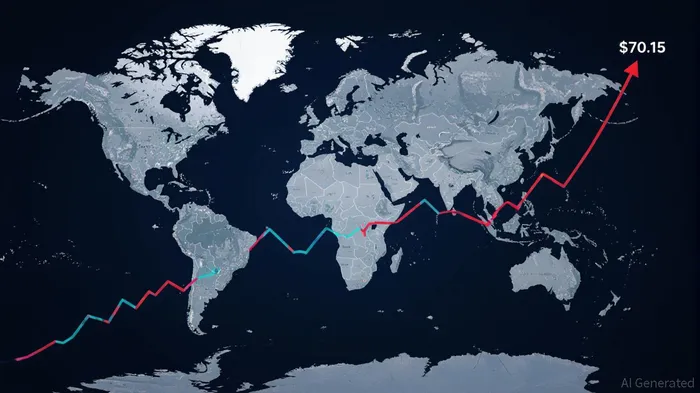 .
.
The metal's dual role as both an industrial commodity and a monetary asset has made it uniquely sensitive to geopolitical shocks. Unlike gold, which is primarily a financial asset, silver's demand is tied to sectors like solar panels, electric vehicles, and electronics. This duality means that while geopolitical events drive safe-haven buying, industrial demand provides a floor for prices even in calmer markets
according to economic analysis.
Market Volatility and the VIX Factor
Financial market volatility has further underpinned silver's rally. The VIX, or "fear gauge,"
spiked to over 60 in April 2025 amid trade-war rhetoric and Trump administration policies, signaling extreme investor uncertainty. During such periods, capital often flows into assets perceived as stable, with silver benefiting from its historical correlation to gold and equities.
Interestingly, the S&P 500 and Dow Jones Industrial Average also posted strong gains in 2025, with the S&P up 16.9% and the Dow 13.7% by year-end
according to market data. However, the 12-month rolling correlation between the S&P 500 and silver was notably lower than that of gold,
suggesting that silver's price movements were driven more by supply-demand imbalances and geopolitical factors than by equity market trends.
Industrial Demand and Supply Constraints
Beyond macroeconomic and geopolitical factors, physical fundamentals have tightened. Declining ore grades and limited mine output have constrained silver supply, while industrial demand has surged. The transition to renewable energy and electric vehicles has created a structural tailwind for silver,
which is a key component in photovoltaic cells and battery technology. Analysts at Bloomberg note that this demand is unlikely to wane,
given global commitments to decarbonization.
Is This a Sustainable Opportunity?
The gold-silver ratio-a measure of how many ounces of silver it takes to buy an ounce of gold-has compressed to historically low levels,
suggesting silver is undervalued relative to gold. This imbalance could drive further gains if investors rebalance their precious metals portfolios. However, sustainability will depend on whether macroeconomic conditions persist. If the Fed resumes tightening or geopolitical tensions ease, some of the speculative fervor could dissipate.
For now, the confluence of weak dollar policy, geopolitical risk, and industrial demand has created a "perfect storm" for silver. Investors seeking exposure to precious metals may find silver more compelling than gold, given its lower price and higher growth potential. Yet, as with any commodity-driven rally, caution is warranted. The market's ability to sustain these gains will hinge on the durability of the underlying drivers-and the resilience of global uncertainty.

Stay ahead of the market.
Get curated U.S. market news, insights and key dates delivered to your inbox.


AInvest
PRO
AInvest
PRO



Comments
No comments yet