
Sudan's RSF Announces Three-Month Humanitarian Ceasefire
 Aime Summary
The head of Sudan’s Rapid Support Forces (RSF), General , announced late on Monday a three-month humanitarian ceasefire following U.S. President ’s intervention to end the ongoing conflict. The announcement came after a period of escalating violence that saw the RSF accept the truce proposal before launching drone strikes into army-held territory.
U.S. and Gulf Mediation Efforts Intensify
The ceasefire is part of a broader mediation initiative led by what has been termed the “Quad” — a group composed of the U.S., Saudi Arabia, Egypt, and the United Arab Emirates. Earlier this month, the Quad had proposed a three-month truce followed by a political dialogue. While the RSF initially appeared to accept the plan, tensions flared as the group launched attacks on army positions shortly after.
General Dagalo’s announcement of a unilateral ceasefire came a day after Sudan’s army chief, General , rejected the Quad’s proposal. Burhan criticized the inclusion of the UAE in the mediation, accusing the country of arming the RSF and undermining the army’s position in peace negotiations.
RSF Faces Criticism Amid Escalating Violence
The RSF has drawn widespread condemnation for its military actions in recent months, particularly following its takeover of the city of al-Fashir in late October. The operation, which solidified RSF control of the Darfur region, was followed by increased violence in the Kordofan region. Humanitarian groups have reported mass displacement, civilian casualties, and accusations of war crimes against both sides.
In response to international pressure, Dagalo emphasized the RSF’s willingness to halt hostilities for a three-month period, urging the other side to reciprocate the gesture. “In response to international efforts, chiefly that of His Excellency U.S. President Donald Trump ... I announce a humanitarian ceasefire including a cessation of hostilities for three months,” he said in a public address.
Sudan’s Army Chief Remains Skeptical
General Burhan has been a consistent critic of the ceasefire proposals, arguing that they favor the RSF and seek to weaken the army. He also denied U.S. claims of Islamist influence within the army and dismissed allegations of chemical weapon use. The army chief has made clear that any truce must include the full withdrawal of RSF forces from civilian areas before political negotiations can proceed.
The war, which began in April 2023, has resulted in a humanitarian catastrophe, with over 14 million people displaced and parts of the country facing famine. Both the RSF and the army have been accused of severe violations of human rights, with the U.S. imposing sanctions on key figures, including Dagalo and Burhan.
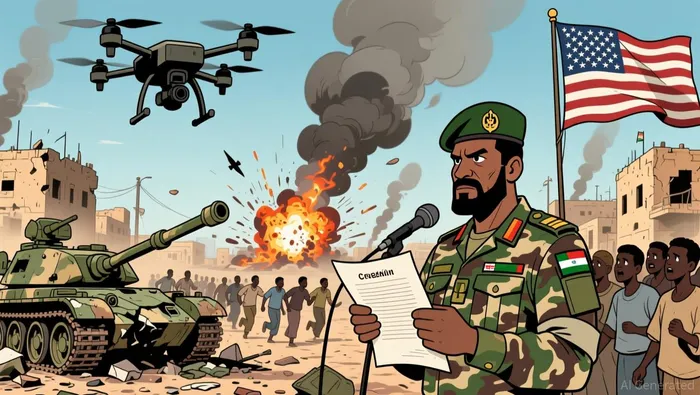
The ongoing conflict has drawn global attention, with multiple international actors attempting to broker peace. As the RSF steps forward with a unilateral truce, the path to a lasting resolution remains uncertain, and the role of external mediators will be critical in shaping the next phase of the crisis.

Stay ahead of the market.
Get curated U.S. market news, insights and key dates delivered to your inbox.






Comments
No comments yet