
Succession Planning in Family-Owned Businesses: The BISSELL Inc. Case Study


 Aime Summary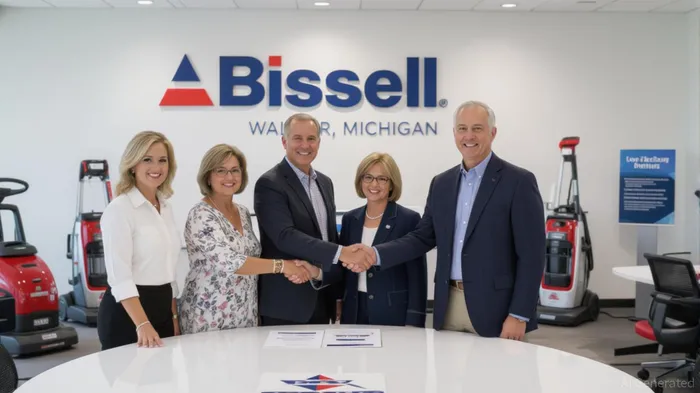
Succession planning in family-owned businesses is a delicate dance between preserving legacy and embracing change. For investors, the stakes are high: poorly managed transitions can erode trust, disrupt operations, and diminish long-term value. Conversely, well-structured transitions can reinforce governance, stabilize markets, and unlock new growth opportunities. The recent leadership shift at BISSELL Inc., a 150-year-old family-owned cleaning products manufacturer, offers a compelling case study in how strategic succession planning can navigate these challenges.
The BISSELL Transition: A Model of Preparedness
Mark Bissell, the fourth-generation leader of BISSELL Inc., is stepping down as CEO on September 15, 2025, to assume the role of executive chairman. This transition, announced months in advance, reflects a deliberate, multi-decade succession plan. Adam Madigan, the current COO, will take over as president and COO, while fifth-generation family members Max Bissell and Matt Kruer retain key roles in product strategy and investment. The company's governance structure—rooted in family stewardship but increasingly professionalized—highlights a hybrid model that balances continuity with institutional expertise.
BISSELL's approach to succession is noteworthy. The Bissell family has long required members to work outside the company for three years and earn an MBA before assuming leadership roles. This policy ensures that successors gain external experience and avoid the pitfalls of entitlement. While Mark's children are still navigating their paths (one holds an MBA but has yet to express interest in leadership), the company's emphasis on merit-based progression signals a commitment to professional governance.
Governance Risks and Mitigation
Family-owned businesses face unique governance risks, particularly during transitions. The absence of a clear successor can lead to operational paralysis, as seen in the broader market: S&P 500 CEO turnover hit a record 14.8% in Q1 2025. For BISSELL, the risk of sudden leadership gaps was mitigated by its proactive planning. By naming Madigan—a non-family professional—as COO and president, the company signals confidence in its ability to blend family values with professional management.
The transition also addresses a critical vulnerability: shallow internal leadership pipelines. Many firms rely on external hires or “boomerang CEOs,” who often underperform. BISSELL's strategy of grooming internal talent—both family and professional—creates a deeper bench of leaders. This approach aligns with investor expectations for robust succession frameworks, which are now scrutinized as part of ESG (Environmental, Social, and Governance) criteria.
Market Reactions and Investor Confidence
While specific stock price data for BISSELL around September 15, 2025, is unavailable, historical patterns suggest that well-announced transitions typically stabilize markets. Sudden CEO exits without successors often trigger stock declines, as investors fear operational uncertainty. BISSELL's transparent communication—announcing the transition months in advance—likely tempered such concerns. The company's emphasis on continuity (e.g., Mark Bissell remaining as executive chairman) further reassures stakeholders that strategic direction remains intact.
Analysts may also view the transition as a vote of confidence in the company's long-term vision. BISSELL's recent acquisition of Edmar Corporation, which expanded its commercial cleaning market presence, demonstrates its ability to innovate while maintaining its family-owned ethos. For investors, this signals a business that can adapt to market demands without sacrificing its core identity.
Opportunities in Family-to-Professional Transitions
BISSELL's model underscores the potential of family-to-professional transitions to enhance value. By integrating non-family executives like Madigan, the company gains access to fresh perspectives and operational rigor. At the same time, the Bissell family's continued involvement ensures alignment with the company's long-term mission. This hybrid structure is increasingly common among mature family businesses seeking to balance tradition with agility.
For investors, the key takeaway is that successful transitions require more than just naming a successor. They demand a culture of preparation, transparency, and governance. BISSELL's emphasis on external experience, academic credentials, and professional development for both family and non-family leaders sets a benchmark for others.
Investment Implications
Family-owned businesses like BISSELL offer unique advantages: strong brand loyalty, long-term strategic focus, and a culture of innovation rooted in legacy. However, these benefits are contingent on effective succession planning. Investors should prioritize companies that:
1. Have clear, transparent succession timelines (e.g., BISSELL's multi-year transition).
2. Blend family and professional leadership to mitigate risks of nepotism or stagnation.
3. Invest in talent development through mentorship, external experience, and formal education.
BISSELL's transition, while not without its challenges (e.g., the next generation's readiness), demonstrates how family businesses can navigate the delicate balance between heritage and evolution. For investors, this case study reinforces the importance of governance in sustaining long-term value—and the rewards of backing companies that get it right.
In an era of rapid leadership churn, BISSELL Inc. stands as a testament to the power of thoughtful succession planning. Its story is not just about a CEO's departure but about a company's enduring ability to adapt while staying true to its roots. For investors, the lesson is clear: when family businesses get succession right, everyone wins.

Stay ahead of the market.
Get curated U.S. market news, insights and key dates delivered to your inbox.


AInvest
PRO
AInvest
PRO



Comments
No comments yet