
Suburban Shift: Navigating Strategic Opportunities in Commercial Real Estate Momentum
The post-pandemic era has witnessed a seismic shift in corporate behavior: a mass exodus from urban centers to suburban and secondary markets. Driven by hybrid work models, cost efficiency imperatives, and evolving employee preferences, this suburban relocation trend has reshaped commercial real estate dynamics. For investors, the question is no longer if to engage with suburban markets, but how. Below, we dissect the strategic opportunities—and risks—emerging in this transformative landscape.
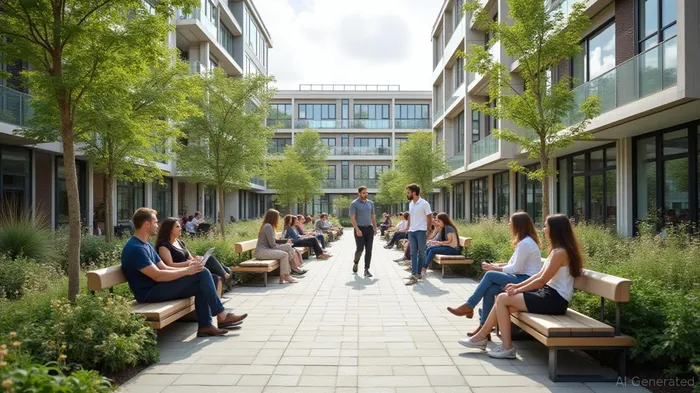
The Suburban Surge: Drivers and Market Realities
Corporate America's suburban pivot is rooted in three core forces:
1. Cost Efficiency: Suburban office rents average 30-40% below urban rates, while industrial spaces in markets like PhoenixPHOE-- and Dallas offer 20-25% lower operating costs than California.
2. Employee-Centric Design: Companies like Apple and Google are anchoring suburban tech corridors with campuses that blend work, living, and recreational spaces, appealing to talent prioritizing work-life balance.
3. Policy Incentives: States like Texas and Tennessee leverage low taxes, streamlined regulations, and targeted subsidies (e.g., Texas' HQ Relocation Tax Credit) to attract businesses.
This trend is fueling suburban commercial real estate momentum, particularly in secondary markets such as Raleigh, Nashville, and Salt Lake City. These areas combine affordability, talent pipelines, and modern infrastructure—key ingredients for hybrid work ecosystems.
Data Note: Vacancy rates in Dallas suburbs averaged 12% in 2025, compared to 22% in San Francisco's urban core—a stark illustration of suburban resilience.
Sector-Specific Opportunities
1. Industrial and Logistics: The Suburban Engine
Suburban industrial markets are booming, driven by e-commerce growth, reshored manufacturing, and supply chain reconfigurations. In Phoenix, warehouses near I-10 logistics corridors command 48% higher rents than in 2020, while Austin's industrial sector—now home to Tesla's Cybertruck plant—has seen 35% occupancy growth since 2023.
Investment Play: Target infill industrial sites near major highways or airports. Look for retrofittable buildings to accommodate specialized uses like semiconductor labs or last-mile distribution centers.
2. Mixed-Use Tech Hubs: Austin and Beyond
Suburban tech corridors are becoming magnets for talent and capital. Austin's Tesla campus and Raleigh's Research Triangle Park exemplify this shift: these mixed-use zones blend R&D facilities, housing, and retail, creating “24/7” ecosystems.
Data Note: Austin's suburban tech employment grew 18% in 2024, outpacing urban core growth by 12 percentage points.
3. Affordable Housing: A Suburban Imperative
While suburban multifamily markets face overbuilding risks (e.g., Austin's 30% occupancy softness in 2024), demand remains robust for workforce housing. Investors should prioritize projects with:
- Public-Private Partnerships: JPMorgan's $100M affordable housing fund in Nashville offers a model for subsidized developments.
- Regulatory Tailwinds: Markets like Denver now mandate 30% of new multifamily units to serve low- to moderate-income renters.
4. Adaptive Reuse: Repurposing for Resilience
Suburban office parks are evolving into mixed-use spaces. In Nashville, former corporate campuses are being converted into healthcare hubs or co-living facilities—a strategy that adds value while addressing oversupply.
Navigating the Risks
Overbuilding and Oversupply
Suburban Sun Belt markets face risks from overzealous multifamily construction. Austin's Class A rents dropped 6% in Q3 2024 due to oversupply, a cautionary signal for investors.
Climate Vulnerabilities
Coastal suburbs (e.g., Miami, Houston) face rising flood risks. Properties lacking green infrastructure—like elevated foundations or solar microgrids—may face devaluation.
Loan Maturity Pressures
A $1.1 trillion loan maturity wall looms in 2025. Suburban assets with expiring CMBS loans in volatile sectors (e.g., legacy malls) may struggle to refinance unless they pivot to adaptive reuse.
Strategic Investment Framework
- Focus on Sectors with Inelastic Demand
- Industrial: Target logistics hubs near Texas-Mexico border crossings or Atlanta's Hartsfield Airport.
Life Sciences: Invest in suburban R&D parks near research universities (e.g., Chapel Hill, NC).
Prioritize Resilience
- Build climate adaptation into projects (e.g., flood barriers, energy-efficient HVAC).
Partner with governments to secure permits and subsidies for affordable housing.
Leverage Data-Driven Due Diligence
- Use AI tools to model occupancy trends in hybrid office markets.
- Monitor corporate relocation announcements via platforms like CBRE's HQ Relocation Tracker.
Data Note: Tesla's 2023 Austin expansion correlated with a 22% rise in local industrial REIT valuations—a clear signal of the multiplier effect of corporate relocations.
Conclusion: The Suburban Advantage
The suburban real estate boom is not a passing trend but a structural shift. Investors who align with tech corridors, logistics networks, and adaptive reuse projects will capture long-term value. However, success demands discernment: avoid overbuilt multifamily markets and prioritize resilience in climate-sensitive areas. As corporate America bets on the suburbs, so too should investors—strategically, selectively, and with an eye on the future.
Final Take: Deploy 15-20% of real estate allocations to suburban industrial/logistics and mixed-use tech hubs. Avoid pure-play suburban retail and overbuilt multifamily assets.

Delivering real-time insights and analysis on emerging financial trends and market movements.
Latest Articles
Stay ahead of the market.
Get curated U.S. market news, insights and key dates delivered to your inbox.


AInvest
PRO
AInvest
PRO



Comments
No comments yet