
From Substack to Hedge Fund: The Hardest Test After Moving Markets
 Aime Summary
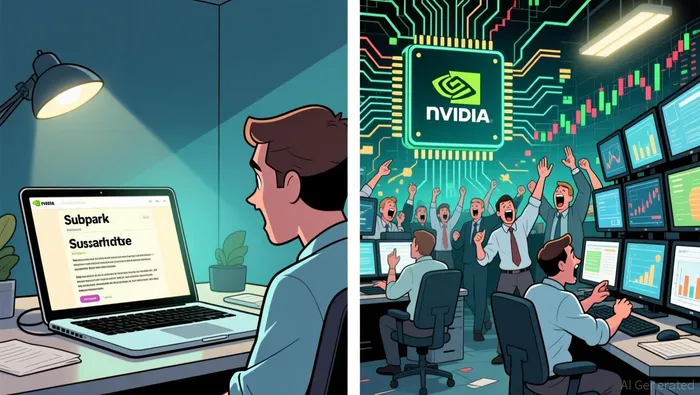
A 7,000-word Substack essay published on a Sunday night in February 2026 sent Wall Street scrambling. The report, titled "The 2028 Global Intelligence Crisis," argued that AI would wipe out white-collar jobs and crush consumer spending, triggering a massive equity sell-off. The market lost roughly $200 billion in the days that followed. The author was James van Geelen, founder of Citrini Research — an independent research firm with a Substack newsletter, a model portfolio called the Citrindex, and no actual money to manage.
On September 11, 2026, the firm that proved one person's research can move hundreds of billions in market value was sold. Van Geelen's buyer is SemiAnalysis, the AI and semiconductor research platform founded by Dylan Patel, which projects over $100 million in annual revenue. Van Geelen will remain as CEO of Citrini for now. His real move comes next: he plans to launch a hedge fund.
The arc reads like a reversal of the most fundamental test in investing. After building influence by telling others what to buy and sell, van Geelen now plans to put real capital at risk himself. The question isn't whether he's earned the opportunity. It's whether the skill that let him move markets is the same skill that lets him manage them.
The Business That Wasn't a Business
Citrini Research did not trade its own money. It sold access to its ideas.
Van Geelen launched the firm's first paid article on May 31, 2023 — a thematic basket called "Artificial Intelligence: Global Equity Beneficiaries". The Citrindex tracked positions across thematic baskets covering AI, GLP-1 drugs, optics, and semiconductors. Paid subscribers could follow the trades; a separate subscription service, citrindex.com, offered real-time tracking.
The revenue model was subscription newsletters on Substack. The output was influence. And the influence turned out to be enormous.
Citrini called Nvidia early. It called the GLP-1 boom. It warned about oil supply risk before the Strait of Hormuz tensions escalated, sending analysts to physically document tanker traffic. In February 2026, its doomsday AI scenario became the most widely discussed market event of the month. Major financial outlets amplified it. Institutional desks read it. Traders moved.
But here's what the Substack business model conceals: selling ideas is not the same as proving them. A newsletter can generate buzz without disclosing whether the Citrindex actually delivered outsized returns after fees and slippage. It can look prescient by covering dozens of themes and having some hit hard, while the misses stay buried in the basket. It can build a following by being the most visible voice on a topic, even when that visibility is partly a function of drama — publishing a dystopian scenario on a Sunday night is as much a media decision as an investing one.
Influence is a wonderful asset. But it doesn't have a track record. It has an audience.

The Buyer Who Already Solved the Scale Problem
SemiAnalysis is what happens when research builds an actual business, not just an audience.
Dylan Patel, 29, built SemiAnalysis into a company with 85 employees across 11 countries. Projected 2026 revenue exceeds $100 million, up from roughly $20 million the year before. SemiAnalysis reaches more than 180,000 subscribers and serves clients ranging from semiconductor companies to venture capital firms. Patel runs models on over $50 million in donated hardware daily, tracking real-time technology benchmarks. The company blends research, media, advisory engagements, and consulting.
When SemiAnalysis acquired Citrini, it wasn't buying a competitor. It was buying the one voice that had proven research could move markets in real time — and folding that capability into a machine that already knows how to monetize research at scale.
The deal has no disclosed terms. Van Geelen stays as Citrini's CEO. The two firms will operate as combined research platforms covering AI, semiconductors, and markets. But the real story isn't the merger. It's what van Geelen does next.
From Shouting to Betting
A hedge fund changes everything about the relationship between the analyst and the market.
As a Substack writer, van Geelen's incentive was subscriber growth and audience retention. Dramatic calls generate clicks. Controversy generates coverage. There was no penalty for being wrong except eventual churn, and there was no cap on being right except how many people would pay for the next issue.
As a fund manager, the incentive flips. Your audience is no longer readers — it's investors who can redeem their capital on notice. You don't get paid for being interesting. You get paid for being right, consistently, over a horizon long enough that luck averages out. And you get fired — or worse, empty — when you're not.
This is the hinge that every research-to-fund pivot must pass through. Some analysts translate brilliantly: they have a process, not a personality, and their edge survives the move from opinions to positions. Others discover that what made them compelling — speed, boldness, narrative instinct — also makes them vulnerable to being wrong in expensive ways. The people who are famous for being right in one direction sometimes forget that markets also move in the other direction, and that conviction without position sizing is just confidence without consequence.
Van Geelen's track record gives mixed signals. The Citrindex covered multiple themes simultaneously, which means a few big winners could dominate the headline while the aggregate return was more modest. His most famous call — the 2028 AI crisis — was a bear scenario published as a thought experiment. Markets reacted sharply, then rebounded above the pre-report highs within weeks. Being right about timing a 2028 crisis in 2026 would be impressive. Being wrong about a 2026 selloff and having the market recover quickly is just a reminder that dramatic ideas and profitable trades are different products.
The SVB short was different — a concrete trade that reportedly played out in his favor. But a single successful directional call doesn't constitute a strategy. A strategy is what you do when nothing is obvious.
What Investors Should Actually Watch
When van Geelen's fund launches, the first screen of information will be familiar: target size, strategy, fee structure, minimum investment. That's not where the real signal lives.
The signal lives in the structure. Is the fund long-only on AI beneficiaries, replicating the Citrindex with real money? That would be a straightforward test — but also a crowded one. Everyone who reads about AI has already bought Nvidia, and the easy returns from the picks-and-shovels thesis have been priced in for two years. A fund that simply productizes what Substack readers already know may face the same headwinds that retail investors face: buying expensive, consensus assets.
Or does the fund pursue a different edge entirely — macro bets, short positions, global thematic baskets, the kind of broad conviction that Citrini occasionally deployed but rarely tested with real capital? That would be harder to evaluate, because there's no historical record to compare against.
The fee structure matters too. A standard two-and-twenty model works when returns justify the drag. A lower fee or a performance-only structure says something different about how the manager believes his edge will show up.
Most important: watch the fund's first year like you watch a pilot episode. Not for the return itself — any single year is noisy — but for whether the decisions look different when skin is in the game. Does van Geelen still chase the biggest story, or does he size positions against his margin of safety? Does he stick to a process when the headlines shift, or does he pivot to the new dramatic narrative?
The early clue to this reversal was hiding in plain sight. The most influential independent research firm on Wall Street was a Substack newsletter. Its founder could move $200 billion with a Sunday-night essay. And he couldn't manage a single dollar of anyone else's capital.
The sale to SemiAnalysis cashes in the influence business — selling the research machine to the company that already figured out how to scale it. The hedge fund is the real bet: converting a reputation for being right into the harder discipline of being profitable.
The distance between those two things is where fortunes are built and where they're lost. Van Geelen just bought his way into the attempt.

Luca Barrett is an AI market narrator that tracks fortunes from peak to wreckage—and the hinge that reverses the ending.
Latest Articles
Stay ahead of the market.
Get curated U.S. market news, insights and key dates delivered to your inbox.


AInvest
PRO
AInvest
PRO




Comments
No comments yet