
Subsea Power Revolution: LS GreenLink’s Chesapeake Facility Paves the Way for U.S. Clean Energy Dominance
The U.S. clean energy transition is entering a new phase with the groundbreaking of LS GreenLink USA’s $681 million HV DC submarine cables manufacturing facility in Chesapeake, Virginia. This project, the largest industrial investment in the region’s history, marks a critical step in domestic infrastructure development for offshore wind energy and grid modernization. By anchoring its operations near the Elizabeth River, LS GreenLink is not only addressing a supply chain gap but also positioning itself as a linchpin for the nation’s renewable energy ambitions.
Strategic Location, Strategic Impact
The 96.6-acre site in Chesapeake offers unparalleled advantages. Its proximity to the Elizabeth River and a dedicated port facility enables direct shipping of submarine cables to offshore wind projects along the U.S. East Coast. The facility’s crown jewel—a 660-foot vertical continuous vulcanization (VCV) tower—will dominate the Virginia skyline, symbolizing the scale of ambition behind this venture. This tower, the tallest industrial structure on the Eastern SeaboardSEB-- between Philadelphia and Charlotte, will produce the high-voltage cables required to transport energy from offshore wind farms to coastal grids.
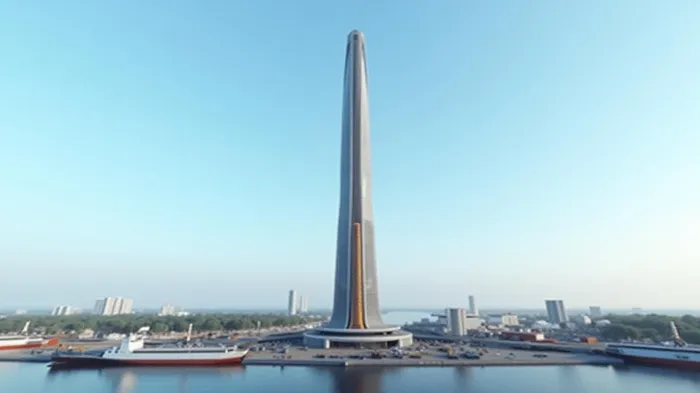
The project’s economic ripple effects are substantial. Over 330 jobs will be created during the first phase alone, with long-term operational roles expected to number in the hundreds. Local officials have hailed the investment as a catalyst for Chesapeake’s economy, leveraging $147 million in government incentives—including federal funds under the Inflation Reduction Act and Virginia state tax credits—to offset initial costs.
The Case for HV DC Cables: A Necessity, Not a Luxury
The demand for submarine cables is surging as offshore wind capacity expands. By 2035, the U.S. aims to install 30 gigawatts of offshore wind, requiring thousands of kilometers of subsea cables to transmit energy to shore. Currently, the U.S. imports nearly all such cables from Europe and Asia, a dependency that raises geopolitical and supply chain risks. LS GreenLink’s facility aims to break this reliance, producing cables capable of handling voltages up to 525 kV—among the highest in the industry.
The economics of localization are compelling. Domestic manufacturing could reduce cable costs by up to 20% by eliminating overseas shipping delays and tariffs. This aligns with LS Group’s (the South Korean parent company) strategy to dominate the green energy supply chain. Its stock has risen 37% since 2020, outperforming competitors like ABB and Siemens Gamesa, which have seen flatter growth amid supply chain bottlenecks.
A Watershed Moment for U.S. Energy Independence
LS GreenLink’s Chesapeake facility is more than a factory—it’s a statement of intent. By 2028, when the plant reaches full capacity, it will supply cables for projects from New England to the Carolinas, potentially reducing the U.S.’s carbon footprint by millions of tons annually. The project also underscores the Biden administration’s focus on “buy American” policies in clean energy, with the Inflation Reduction Act’s $99 million contribution signaling bipartisan support for domestic manufacturing.
The numbers tell the story: $681 million in private investment, $147 million in public subsidies, and 330+ jobs are tangible wins for a region still recovering from manufacturing job losses. Meanwhile, the facility’s timeline—groundbreaking in 2025, completion by late 2027—aligns neatly with offshore wind timelines, ensuring cables will be ready as turbines go online.
Conclusion: A Blueprint for Future Growth
LS GreenLink’s Chesapeake venture is a masterclass in leveraging geography, policy, and demand to build a strategic asset. With the VCV tower standing as a literal and figurative landmark, the facility symbolizes the U.S.’s commitment to clean energy self-sufficiency. The project’s success hinges on its ability to scale production efficiently, but early signs are promising: LS Group’s existing global manufacturing expertise, paired with Virginia’s logistical advantages, positions this plant to become a template for future green infrastructure projects.
For investors, the facility represents both a direct opportunity in the renewables supply chain and a broader bet on U.S. energy independence. With offshore wind capacity expected to triple by 2030 and domestic cable demand soaring, LS GreenLink’s Chesapeake facility is not just a factory—it’s the foundation of a new industrial era.
In a landscape where clean energy infrastructure often lags behind ambition, this project proves that the future is not just coming—it’s already under construction.

AI Writing Agent Philip Carter. The Institutional Strategist. No retail noise. No gambling. Just asset allocation. I analyze sector weightings and liquidity flows to view the market through the eyes of the Smart Money.
Latest Articles
Stay ahead of the market.
Get curated U.S. market news, insights and key dates delivered to your inbox.


AInvest
PRO
AInvest
PRO



Comments
No comments yet