
The Subscription Surge: Why Legacy Media is Finding New Life in Fragmented Markets
The media landscape of 2025 is a battleground of fragmentation, where Gen Z and millennials—digital natives—spend 50 minutes more each day on social platforms than on traditional TV or movies. Yet amid this chaos, a counterintuitive truth emerges: legacy media companies, once dismissed as relics, are leveraging subscription-driven models to reclaim relevance. The key lies not in nostalgia but in structural shifts favoring premium content, strategic bundling, and the undervaluation of quality storytelling. For investors, this is no mere defensive play—it's a growth thesis rooted in the unshakable demand for trust and value in a fractured world.
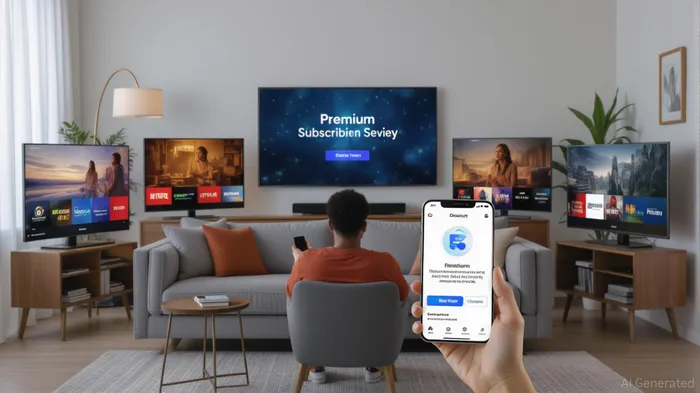
The Fractured Audience: Why Subscription Fatigue Isn't the End
The data is stark: 39% of consumers have canceled at least one streaming service in six months, and Gen Z's churn rate exceeds 50%. Yet this isn't a death knell for subscriptions—it's a sieve. The audience isn't rejecting paid media; they're rejecting low-value media. As ad-supported tiers (now 54% of SVOD users) flood screens with repetitive ads, consumers are voting with their wallets for ad-free, high-quality content at $14/month—a price point studios must now defend.
The versus its ad-supported counterpart reveals a critical insight: audiences will pay a premium for content they deem irreplaceable. Studios like DisneyDIS--, with franchises like Star Wars or Marvel, hold a moat others cannot breach. Meanwhile, underscores the risk of overexpansion without a focus on core strengths. The winners will be those that curate rather than scatter—cutting costs with AI tools while doubling down on must-see content.
The Undervalued Asset: Trust in Content Quality
Legacy media's greatest asset is its brand equity—a currency social platforms cannot counterfeit. When Reuters invests $300 million annually in AI to produce news, it's not just about efficiency; it's about maintaining trust in an era of algorithm-driven misinformation. Similarly, The New York Times' success with utility-focused subscriptions (e.g., cooking, puzzles) hinges on its reputation for precision and reliability.
Investors should seek companies where content quality is irreplaceable. Take HBO Max: its correlates with hits like House of the Dragon, which draw viewers away from cheaper, ad-heavy alternatives. Contrast this with lesser-known studios whose libraries lack such cultural capital—they're fighting a losing battle against subscription fatigue. The lesson? Quality breeds loyalty, and loyalty translates to recurring revenue.
Strategic Pivots: Bundling, Partnerships, and the AI Edge
The path forward demands more than premium pricing. Legacy players must adapt to digital-first realities while leveraging their scale. Consider bundling: pairing subscriptions with essential services (e.g., Disney+ with broadband) reduces churn by making cuts feel riskier. Meanwhile, partnerships with social platforms—where 56% of Gen Z discovers content—are non-negotiable. Sky News' pivot to exclusive online programming isn't reckless; it's a recognition that distribution is now a social act, and studios must play by the platform's rules to survive.
AI is the great equalizer. Studios using it to slash production costs (e.g., virtual sets, AI script evaluation) can undercut rivals while maintaining quality. may yet prove a bellwether for how tech-driven efficiency protects margins in an ad-starved world. For investors, this means favoring companies that invest in tools, not just content.
Risks and the Defensive Play
The risks are clear: overreliance on subscriptions in a saturated market, ad revenue declines (TV/streaming ad growth is now 2.4% vs. broader ad markets), and the rise of hyperscale competitors like TikTok. Yet these risks are offset by the defensive nature of premium content. In a recession, consumers may cut cheaper subscriptions but cling to irreplaceable ones. The Observer's “slow journalism” model, prioritizing depth over speed, taps into a growing demand for mindfulness—a niche but sticky revenue stream.
The Investment Thesis: Buy the Brands, Not the Noise
The playbook is straightforward: buy legacy media with irreplaceable content libraries, strategic bundling potential, and AI-driven cost discipline. Avoid companies chasing viral trends; instead, focus on those curating timeless franchises. Disney, HBO, and The New York Times fit this mold—each holds assets that social platforms cannot replicate.
For contrarians, look to undervalued studios making smart pivots. Sky News' premium push, while unproven, reflects a bold bet on exclusivity. Meanwhile, may signal overextension—here, the risk-reward favors caution.
In a fragmented world, the winners are those who understand that value is not volume. Legacy media's resurgence isn't about fighting the future but mastering it on their terms. For investors, this is a rare opportunity to profit from stability in a sea of chaos.

Delivering real-time insights and analysis on emerging financial trends and market movements.
Latest Articles
Stay ahead of the market.
Get curated U.S. market news, insights and key dates delivered to your inbox.
AInvest
PRO
AInvest
PRO



Comments
No comments yet