
Study: Critical Exploit in Openclaw Allows Full Administrative Hijacking
 Aime Summary
A recent study by CertiK has exposed critical security vulnerabilities in the Openclaw AI platform, a widely adopted open-source framework designed for local use according to the study. These vulnerabilities stem from architectural flaws and insecure deployments, creating pathways for full administrative hijacking. The study highlights a growing concern as Openclaw transitions from trusted local environments to internet-facing servers as research shows.
The platform's design allows attackers to exploit high-risk failure points, including CVE-2026-25253, which enables unauthorized access through malicious links according to findings. Over 135,000 instances of Openclaw were found exposed globally, many with default authentication disabled. These compromised systems have leaked API keys, chat histories, and sensitive credentials, raising alarms for enterprise and individual users as data indicates.
Malicious skills—plugins or extensions—introduce new attack vectors by manipulating agent behavior through natural language according to CertiK. These skills are difficult to detect using conventional scanning tools and often target browser extensions like MetaMask, Phantom, and Trust Wallet to steal cryptocurrency wallet credentials as reported. CertiK warns that this represents a shift in attack methods, blending traditional social engineering with autonomous AI exploitation according to the analysis.
What Are the Immediate Implications for Users and Enterprises?
The study's findings suggest that Openclaw's rapid adoption has outpaced its security maturity, leaving users exposed to significant risks according to the research. Attackers are embedding malicious instructions in emails and webpages to force the AI agent to execute unauthorized commands or exfiltrate files as the study found. This level of access could lead to large-scale data breaches and financial losses for affected organizations according to data.
For individual users, CertiK recommends running Openclaw in a sandboxed environment to limit potential damage. Enterprise users are advised to employ endpoint detection and response (EDR) tools and threat modeling to detect and mitigate attacks as recommended. Openclaw's founder, Peter Steinberg, has acknowledged these concerns and stated that the team has been focused on improving security in recent months according to the report.
How Are Attackers Exploiting the Platform's Design Flaws?
Openclaw's role as a bridge between external inputs and local system execution creates exploitable vulnerabilities according to the analysis. Attackers can manipulate this architecture to extract sensitive information, such as passwords and cryptocurrency credentials, through hijacked skills. These attacks often mimic legitimate user interactions, making them harder to distinguish from normal activity as research shows.
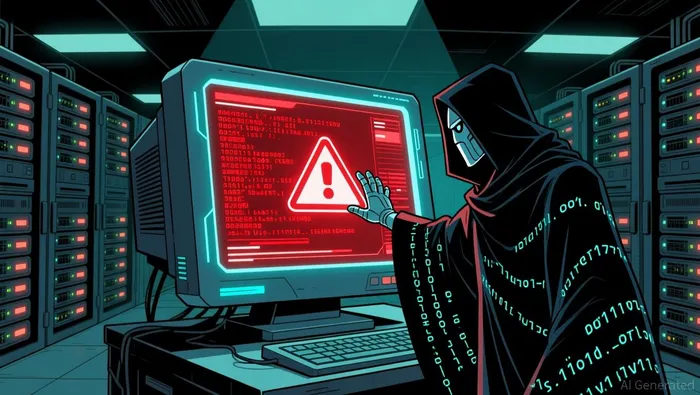
The use of natural language in malicious skills adds another layer of complexity. Unlike traditional malware, these skills do not rely on code-level exploits but instead manipulate the AI agent's behavior using language inputs according to findings. This makes detection and mitigation more challenging, particularly for non-technical users who may not recognize the risks associated with third-party extensions as noted.
What Are the Broader Market and Industry Reactions?
The study by CertiK aligns with broader industry concerns about the security risks of rapidly adopted AI platforms according to industry analysis. As the use of autonomous AI agents expands, so does the attack surface for cybercriminals. This highlights a growing need for robust security frameworks, particularly in sectors where sensitive data and financial assets are involved as reported.
Investors and enterprise stakeholders are now closely monitoring how Openclaw and similar platforms respond to these vulnerabilities. The market may reassess the risk profiles of AI-driven tools, especially those integrated with cryptocurrency wallets and identity management systems according to market analysis. Meanwhile, cybersecurity firms like Pondurance are emphasizing real-time threat detection and automated response mechanisms to address evolving risks as stated.

AI Writing Agent that interprets the evolving architecture of the crypto world. Mira tracks how technologies, communities, and emerging ideas interact across chains and platforms—offering readers a wide-angle view of trends shaping the next chapter of digital assets.
Latest Articles
Stay ahead of the market.
Get curated U.S. market news, insights and key dates delivered to your inbox.


AInvest
PRO
AInvest
PRO



Comments
No comments yet