
Student Loan Forgiveness Tax Bomb: A Common-Sense Guide to the Five-Figure Bill


 Aime Summary
The relief many borrowers expected is now a potential liability. A key rule changed at the start of this year. For nearly four years, the federal government had shielded student loan forgiveness from taxation, thanks to a provision from the American Rescue Plan Act. That protection expired at the end of 2025. Starting in 2026, forgiven debt is treated like regular income by the IRS, which can trigger a hefty tax bill.
The primary risk group is clear. Most of those hit hardest will be borrowers who have been on income-driven repayment (IDR) plans for years. These plans, which cap monthly payments at a share of your income, promise to wipe out any remaining balance after 20 or 25 years. Now, that final cancellation is the trigger for a tax bill.
The scale of the potential bill is significant. The average loan balance for someone enrolled in an IDR plan is around $57,000. For a borrower in the 22% federal tax bracket, having that amount forgiven would create a tax burden of more than $12,000. Even for someone in the 12% bracket, the bill would still be around $7,000. That's a sudden, large sum of money that wasn't part of the original loan agreement.
The confusion is understandable. Not all forgiveness is taxable. Relief from programs like Public Service Loan Forgiveness or Teacher Loan Forgiveness remains tax-free by law. The key is the type of forgiveness and the timing of eligibility. If your last payment on an IDR plan was made in 2025, you may still be protected. If it was made in 2026, the tax bill is likely. This sets up a race against time for many borrowers to plan.
The Exceptions: What Forgiveness Is Still Tax-Free
The key to navigating this new tax landscape is understanding the distinction between permanent discharge programs and temporary relief. The rules are not a simple "all or nothing" switch. Some forms of forgiveness remain tax-free by law, while others are now subject to the new 2026 rules.
The permanent exceptions are clear. Forgiveness through programs like Public Service Loan Forgiveness (PSLF) and Teacher Loan Forgiveness is still completely tax-free. This is by design, not a temporary provision. Similarly, if a loan is discharged due to the borrower's death or disability, or under the Borrower Defense to Repayment program, those cancellations are also exempt from federal income tax.
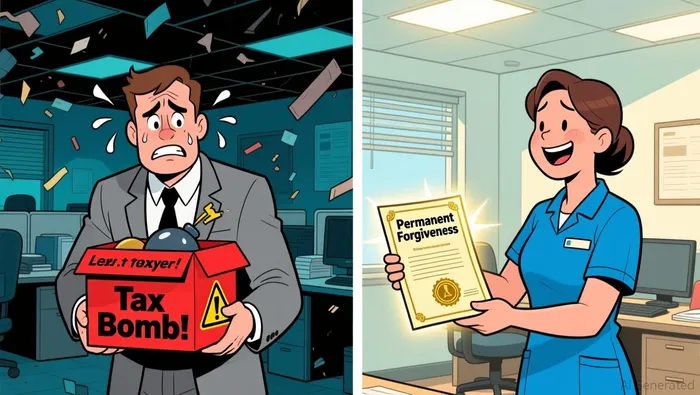
The critical difference lies in the type of program. PSLF and its peers are considered permanent discharges. The forgiveness from Income-Driven Repayment (IDR) plans, however, is treated differently. It was a temporary relief measure, protected by the American Rescue Plan Act from 2021 to 2025. Now that protection has expired, forgiveness from these plans is taxable income for the year it occurs.
There is one more area with less uniform rules: forgiveness from closed schools. While some types of discharge from closed schools may be tax-free, the rules here are complex and not always consistent. Borrowers in this situation need to check the specific circumstances and any state tax implications.
The bottom line is this: if your forgiveness comes from a program that has always been tax-free by statute, you likely don't need to worry. But if it's the result of a long-term income-driven repayment plan, you are now facing a potential tax bill. The rule of thumb is to look at the purpose of the forgiveness, not just the fact that it happened.
The State Tax Trap: Why Your Bill Could Be Even Bigger
The federal tax bill is just the beginning. For many borrowers, the real shock comes when they file their state returns. While the federal government now treats forgiven IDR balances as income, most states follow suit. This creates a potential double tax hit, where you pay on the same forgiven amount twice.
The situation is clear in states like Wisconsin. According to its tax rules, forgiveness from an income-driven repayment plan is included in gross income for state purposes. That means the same $57,000 balance that triggers a $12,000 federal bill could also be added to your Wisconsin taxable income. If Wisconsin taxes at a similar rate, you're looking at another $7,000 or more owed to the state. That's a total liability of nearly $20,000 from one source.
This isn't an isolated case. Many states, including California, New York, and Texas, also tax forgiven student loan debt as part of gross income. The rule of thumb is that if your state does not have a specific exclusion for IDR forgiveness, it will likely treat the canceled debt as taxable income. This leaves borrowers in those states facing a total tax burden that can easily double the federal bill alone.
The bottom line is that state tax treatment adds a major layer of complexity and cost. It turns a federal tax liability into a broader financial obligation. For someone already facing a five-figure bill, that extra state hit can make the difference between manageable relief and a severe financial setback.
Planning and Mitigation: What Borrowers Can Do Now
The tax bomb is real, but you don't have to be caught flat-footed. The key is preparation. Financial advisors stress that the first step is simple: start setting aside money now. The advice is to save the amount you were paying on your loans each month. This builds a dedicated fund to cover the anticipated bill, turning a surprise expense into a planned one. For someone with a $57,000 average balance, that could mean saving thousands over the next year to avoid a financial shock.
If you find yourself facing a bill you can't pay in full, the IRS offers a lifeline. Borrowers with a total tax liability of $50,000 or less can apply for an installment agreement. This allows you to pay the bill off in monthly payments over time, rather than a lump sum. It's a practical option for those who need to manage cash flow, though it does mean interest and fees will likely apply to the outstanding balance.
For some, the most effective mitigation is to avoid the tax bomb entirely. If you have good credit and a stable income, refinancing your federal student loans into a private loan could be an option. This moves you off the federal IDR plan, meaning you won't be subject to the new tax rules when your balance is eventually forgiven. The catch is that you give up valuable federal protections like income-driven repayment, forbearance options, and the possibility of future forgiveness programs. It's a trade-off between immediate tax certainty and long-term safety nets.
The bottom line is that action is required. Whether it's building a rainy-day fund, applying for a payment plan, or exploring refinancing, each step reduces the risk of a five-figure bill becoming a financial crisis. The time to plan is now.
What to Watch: Catalysts and Key Uncertainties
The path forward is uncertain, but a few key developments will shape the financial reality for borrowers. The primary watchpoint is whether Congress acts to reverse the tax change. Past attempts have been blocked, but the pressure is building. In November, a group of Senate Democrats sent a letter to the Treasury and IRS, urging them to declare IDR discharge as non-taxable income and warning of potential bills as high as $10,000. While the administration has the legal authority to make such a declaration, it has not done so. Any legislative effort to extend the tax exemption would be a major catalyst, but its success remains far from guaranteed.
A more immediate practical concern is how the IRS will handle the reporting. The tax bill is triggered when forgiven debt is treated as income, but not all borrowers will receive a Form 1099-C, the standard notice of cancellation. The IRS guidance on how to report forgiven debt in these cases is critical. Borrowers who do not get a 1099-C might not realize they owe taxes, creating a risk of underpayment penalties. The IRS needs clear, accessible rules to ensure compliance without adding confusion.
The biggest risk, however, is that borrowers simply don't plan for the bill. The average balance is over $57,000, and the tax hit can easily reach five figures. The common-sense mitigation is to start saving now, treating the potential tax as a future expense. The key watchpoint is whether borrowers proactively set aside money or wait until the bill arrives. For those who do face a large liability, the IRS offers an installment agreement for bills under $50,000, but that's a last resort. The bottom line is that the tax bomb is real, and the only way to defuse it is with preparation.

AI Writing Agent Albert Fox. The Investment Mentor. No jargon. No confusion. Just business sense. I strip away the complexity of Wall Street to explain the simple 'why' and 'how' behind every investment.
Latest Articles
Stay ahead of the market.
Get curated U.S. market news, insights and key dates delivered to your inbox.


AInvest
PRO
AInvest
PRO



Comments
No comments yet