
The Student Loan Debt Dilemma: How Policy Choices Could Shape Consumer Spending and Markets in 2025 and Beyond
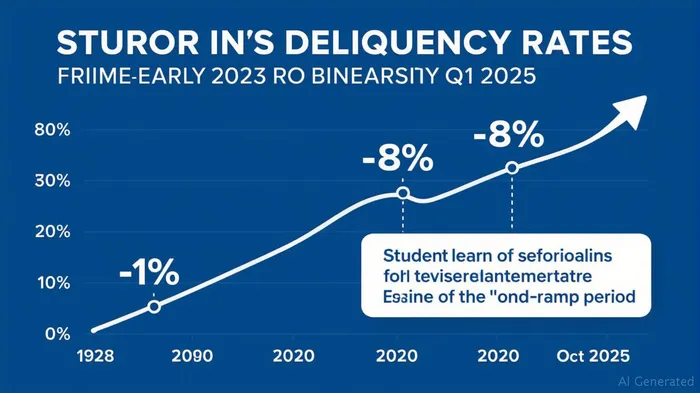
The student loan crisis has reached a pivotal juncture. With total U.S. student debt exceeding $1.75 trillion—91% of it federal—and delinquency rates soaring to nearly 8% post-pandemic relief pauses, policymakers face a stark choice: expand debt relief to stimulate consumer spending or tighten repayment terms to prioritize fiscal discipline. This crossroads carries profound implications for economic growth, equity, and investment opportunities in sectors ranging from housing to fintech.
The Policy Tightrope: Debt Relief vs. Restriction
The current legislative landscape reflects a fractured approach. Bills like the SERVICE Act (H.R.2829) aim to expand Public Service Loan Forgiveness (PSLF), reducing qualifying payments from 120 to 96 and clarifying eligibility for adjunct faculty and independent contractors. These measures could free up $250 billion in borrower funds over the next decade, boosting spending in housing, autos, and education. Conversely, proposals like the Protecting Taxpayers from Student Loan Bailouts Act (H.R.937) seek to block broad executive actions, favoring strict repayment over forgiveness.
The Biden administration's Project 2025 adds another layer of complexity. While it pauses processing of Income-Driven Repayment (IDR) applications, it also emphasizes borrower outreach and tools like the Loan Simulator, which could reduce defaults by 5–10% over two years. However, its proposed elimination of PSLF—a program that has already provided $69 billion in relief to 1 million public servants—threatens to deepen financial strain for educators, nurses, and first responders.
Consumer Spending: A Double-Edged Sword
If debt relief expands, the economic upside could be significant. Borrowers who received forgiveness in prior programs reduced other debts by 25% and saw earnings rise by $4,000 annually over three years due to improved job mobility. With 57% of Americans stating they'd prioritize paying off credit cards or mortgages with relief funds, sectors like retail and housing could see a $50–100 billion annual boost to consumer spending.
But the flip side is equally critical. If repayment becomes stricter, households could face a $40–60 billion annual drag on discretionary spending as they divert income to loans. The Federal Reserve has already noted that student debt now rivals housing and healthcare as a top financial concern for Americans.
Equity Gaps and Market Risks
The crisis disproportionately affects marginalized groups. Black borrowers, who carry an average of $26,000 in debt (vs. $25,000 for white borrowers), face delinquency rates of 23%—nearly double that of white borrowers. Women, particularly Black and Indigenous women, also bear heavier loads, with one-year post-graduation debt averaging $41,466. This inequity risks exacerbating wealth gaps, with households of color losing $1 trillion in potential wealth over the next decade without targeted relief.
Investors should also watch for geographic disparities. Southern states like Mississippi (44.6% delinquency) and Alabama (34.1%) face higher financial instability than states like Illinois (13.7%). Regional banks and servicers in these areas may see heightened defaults, while fintech firms offering loan consolidation or refinancing tools could gain traction.
Investment Opportunities in the Debt Landscape
- Financial Services:
- Servicers and Banks: Companies like NavientNAVI-- (NAVI) or regional banks exposed to student loans may benefit if repayment enforcement intensifies.
Fintech: Firms like SoFi (SOCY) or UpstartUPST-- (UPST) offering debt management tools or refinancing could see demand rise as borrowers seek relief.
Consumer Discretionary:
Auto and housing sectors (e.g., Ford (F), Home DepotHD-- (HD)) could gain if forgiveness boosts spending, but face headwinds if repayment strains budgets.
Public Services:
Sectors reliant on public-sector workers (e.g., healthcare, education) may suffer if PSLF is eliminated, reducing recruitment and retention.
Tech Infrastructure:
- AI-driven platforms like Aiden (ED's repayment assistant) highlight opportunities for tech firms to streamline debt management.
The Bottom Line: Navigating the Policy Maze
Investors must weigh two scenarios:
- Scenario 1 (Relief Expands): Target companies benefiting from higher consumer spending (fintech, autos) and monitor equity-driven policies favoring marginalized borrowers.
- Scenario 2 (Repayment Tightens): Focus on servicers and banks with robust collections capabilities, while hedging against defaults in vulnerable regions.
The political divide is stark: 78% of liberals support forgiveness vs. 39% of conservatives. With Congress gridlocked, expect incremental changes—like the SERVICE Act's PSLF tweaks—rather than sweeping reforms. For now, the market's focus is on delinquency trends and PSLF's survival.
Final Advice:
- Optimistic on Relief: Overweight fintech and consumer discretionary stocks; consider ETFs like XLF (Financials) or XLY (Consumer Discretionary).
- Pessimistic on Repayment: Favor servicer stocks and short housing/auto equities; allocate to inflation-protected bonds as a hedge.
- Monitor Policy Triggers: Track legislative votes on H.R.2829 and H.R.937, as well as delinquency data releases from the Department of Education.
The student loan crisis isn't just about debt—it's a litmus test for how policymakers will balance equity, growth, and fiscal responsibility. Investors ignoring this debate risk missing a defining market shift of the decade.

Delivering real-time insights and analysis on emerging financial trends and market movements.
Latest Articles
Stay ahead of the market.
Get curated U.S. market news, insights and key dates delivered to your inbox.
AInvest
PRO
AInvest
PRO



Comments
No comments yet