
Student Loan Debt Crisis: Legislative Shifts and Generational Economic Fallout
The total U.S. student loan debt has reached a staggering $1.77 trillion, with federal loans accounting for 91% of this burden. Yet, as policymakers tighten repayment rules and borrowing limits, the systemic risks to the economy—from rising delinquencies to stifled generational wealth—are coming into sharp focus.
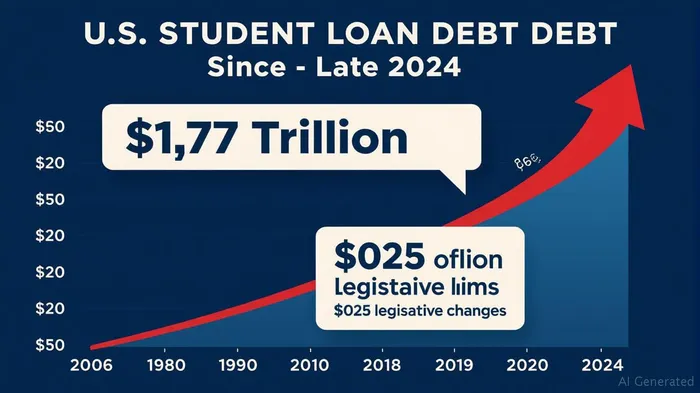
The Legislative Tightening of Student Loan Policies
The One Big Beautiful Bill Act, enacted in July 2025, represents a seismic shift in U.S. student loan policy. Key provisions include:
- Stricter Repayment Plans: Borrowers are now funneled into either a 10–30-year fixed-payment plan or the Income-Based Repayment Assistance Plan (IRAP), which offers less flexibility than prior income-driven options.
- Caps on Borrowing: Graduate students face lifetime limits of $200,000 for professional degrees, insufficient for many programs (e.g., medical schools). Parent PLUS loans are now capped at $65,000 per child.
- Eliminated Protections: Economic hardship deferment is gone, and forbearance is limited to 9 months every two years.
These changes, while framed as fiscal discipline, risk exacerbating the already dire delinquency crisis. As of April 2025, 31% of borrowers were 90+ days delinquent, a record high. Even borrowers with strong credit histories have seen scores plummet, with superprime borrowers losing an average of 174 points due to missed payments.
Systemic Risks: A Cascade of Financial Vulnerabilities
The ripple effects of these policies extend far beyond individual borrowers:
1. Consumer Spending Drag: Younger generations, burdened by debt, are delaying major purchases like homes and cars. With $38,375 in average federal debt per borrower, their disposable income is constrained, hitting sectors like retail and real estate.
2. Credit Market Stress: Rising defaults could strain banks and private lenders. The $128 billion in private student loans—often issued with stricter terms—pose particular risks, as servicers like NavientNAVI-- have faced lawsuits over predatory practices.
3. Workforce Shortages: Caps on graduate loans may deter students from high-debt professions like medicine, worsening staffing crises in critical industries.
Generational Inequities and Long-Term Economic Impact
The crisis disproportionately affects marginalized groups. Black borrowers carry a median debt of $26,000 versus $25,000 for white borrowers, despite earning less post-graduation. Meanwhile, older borrowers (ages 35–49) hold nearly $647 billion in debt, reflecting prolonged repayment timelines. These disparities risk entrenching wealth gaps, as younger generations miss out on compounding savings opportunities.
Investment Implications: Navigating the Fallout
For investors, the student debt crisis presents both risks and opportunities:
- Avoid Overexposure to Consumer Debt: Financial institutionsFISI-- with significant exposure to student loans—such as regional banks or fintechs like SoFi—face elevated default risks. Monitor their credit ratings and loan-loss provisions.
- Bet on Education Alternatives: Companies offering vocational training or affordable certification programs (e.g., CourseraCOUR--, Pluralsight) could benefit as students seek cheaper pathways to employment.
- Consider Debt Relief Firms: Firms specializing in loan consolidation or debt management (e.g., National Debt Relief) may see demand rise as borrowers scramble to avoid delinquency.
Conclusion: A Crossroads for Policy and Prosperity
The legislative changes of 2025 have set the stage for a reckoning. While austerity may curb federal spending in the short term, the long-term costs—stunted economic growth, widening inequality, and financial instability—are mounting. Investors must remain vigilant to these trends, hedging against consumer debt risks while seeking opportunities in sectors that empower financially burdened generations. The student loan crisis is no longer just a personal struggle; it's a systemic threat demanding strategic foresight.

Delivering real-time insights and analysis on emerging financial trends and market movements.
Latest Articles
Stay ahead of the market.
Get curated U.S. market news, insights and key dates delivered to your inbox.
AInvest
PRO
AInvest
PRO



Comments
No comments yet