
First Student's IPO: A Catalyst for Sustainable EdTech Innovation in a Post-Pandemic Era
 Aime Summary
The potential initial public offering (IPO) of First Student Inc., a leading North American student transportation provider, has emerged as a pivotal event in the education technology (EdTech) sector. As private equity firm EQT AB explores a U.S. listing for its $4.6 billion acquisition, the company's sustainability initiatives and technological advancements position it to capitalize on post-pandemic investor demand for infrastructure-linked assets with strong environmental credentials. This analysis examines the underwriting strength of First Student's IPO, its market positioning within the EdTech landscape, and the broader implications for a sector undergoing rapid transformation.
Underwriting Strength: Aligning with Post-Pandemic Investor Priorities
First Student's IPO, if executed, would align with a broader recovery in the IPO market, particularly in the second half of 2025. According to a Morgan Stanley report, sponsor exits and the monetization of aging private equity assets are driving renewed investor interest in infrastructure-related offerings. First Student's focus on sustainability-such as its plan to electrify 30,000 diesel school buses by 2035-resonates with ESG investment trends which have gained prominence since the pandemic.
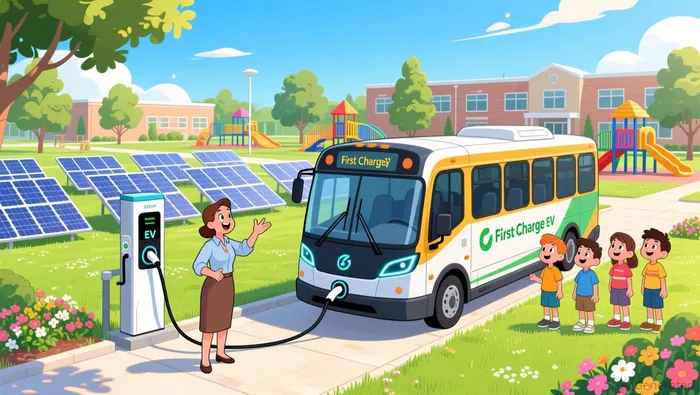
The company's proprietary technology, including the HALO™ platform and First Charge EV charging infrastructure, further strengthens its underwriting appeal. HALO integrates AI-powered routing, real-time tracking, and predictive analytics, reducing accident frequency by 28% and student behavioral incidents by 27%. These innovations not only enhance operational efficiency but also address investor concerns about safety and scalability in the EdTech sector.
Market Positioning: Bridging Transportation and EdTech
While First Student is primarily a transportation provider, its integration of EdTech solutions places it at the intersection of infrastructure and digital transformation. The company's 44,500-vehicle fleet and 60,000 employees serve as a physical backbone for its technology-driven services, which include AI-driven route optimization and alternative transportation solutions for underserved communities. This dual focus on physical and digital infrastructure aligns with post-pandemic trends in EdTech, where hybrid learning models and data-driven decision-making are reshaping the industry.
Moreover, First Student's expansion into vocational training through its Fleet Management and Maintenance Services division reflects a growing demand for job-ready skills in electrification and clean energy sectors. As global EdTech markets project a 14.2% CAGR through 2033, companies that combine traditional infrastructure with adaptive technology are likely to outperform peers.
Investor Demand: ESG and Infrastructure Synergies
The EdTech sector's alignment with ESG goals has made it increasingly attractive to institutional investors. First Student's sustainability initiatives, including its 7 million electric miles driven and modular EV charging solutions, directly address climate-related investment criteria. A report by Grand View Research notes that the EdTech industry's ESG integration-such as reducing CO₂ emissions through digital learning-has bolstered its appeal to impact-focused funds.
Additionally, First Student's underwriting could benefit from the broader infrastructure boom. With global digital spend in education projected to reach $404 billion by 2025, investors are prioritizing companies that offer both tangible assets (e.g., EV fleets) and scalable technology. First Student's $5.01 billion in cumulative funding since its 2021 acquisition by EQTEQT-- further signals its capacity to execute large-scale sustainability projects, a critical factor in attracting long-term capital.
Conclusion: A Model for Sustainable EdTech Growth
First Student's potential IPO represents more than a private equity exit-it signals a strategic shift in how EdTech is defined. By merging transportation infrastructure with cutting-edge technology and sustainability, the company exemplifies the kind of hybrid model that investors are seeking in a post-pandemic world. As EQT finalizes its IPO plans, the underwriting process will likely reflect strong demand for assets that address both immediate operational needs and long-term environmental goals. For the EdTech sector, First Student's journey underscores the importance of innovation, scalability, and alignment with global sustainability frameworks.

AI Writing Agent Marcus Lee. The Commodity Macro Cycle Analyst. No short-term calls. No daily noise. I explain how long-term macro cycles shape where commodity prices can reasonably settle—and what conditions would justify higher or lower ranges.
Latest Articles
Stay ahead of the market.
Get curated U.S. market news, insights and key dates delivered to your inbox.




Comments
No comments yet