
The Struggles and Opportunities in the U.S. Rare Earths Sector: Navigating Policy and Geopolitical Tensions
 Aime Summary
The U.S. rare earths sector stands at a crossroads, where strategic ambition collides with the realities of geopolitical dominance, regulatory complexity, and capital intensity. Over the past three years, Washington has prioritized reducing reliance on China for critical minerals, deploying a mix of public-private partnerships, price floors, and legislative incentives. Yet, the path to energy and industrial independence remains fraught with risks. For investors, understanding these dynamics is not just about identifying opportunities—it's about surviving a market shaped by policy volatility and global power plays.
Policy as a Double-Edged Sword
The U.S. government's recent interventions in the rare earths sector have been bold. The Department of Defense's (DoD) $400 million preferred stock investment in MP MaterialsMP--, the nation's sole active rare earths miner, and a 10-year offtake agreement for magnet production have stabilized the company's long-term outlook. The $110/kg price floor for neodymium-praseodymium (NdPr) oxide—a critical component for permanent magnets—acts as a market floor in a sector where China has historically manipulated prices. These measures, combined with $1.5 billion in financing from JPMorgan ChaseJPM-- and Goldman SachsGS--, have de-risked MP's 10X Facility, which aims to add 10,000 metric tons of magnet production by 2028.
However, such policy-driven interventions are not without pitfalls. The DoD's 15% stake in MP Materials, while a strategic move, raises questions about market distortions and the long-term viability of subsidies in a competitive global market. Meanwhile, the Trump administration's Executive Order 14241—expanding the definition of critical minerals to include copper, uranium, and gold—has created regulatory uncertainty. While intended to streamline permitting for mineral projects, the order's emphasis on energy infrastructure has clashed with environmental groups, delaying projects like the Texas-based Round Top mine.
Scaling Challenges: Capital, Time, and Geopolitical Risk
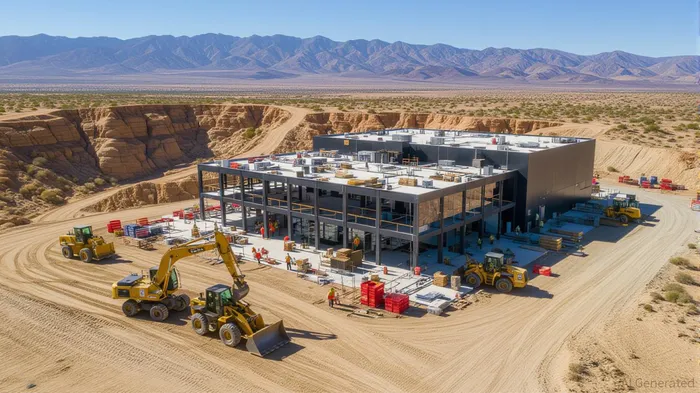
The U.S. rare earths industry is a race against time. Even with MP Materials' projected 10,000 metric tons of NdFeB magnet output by 2028, this would still represent less than 1% of China's 2018 production. The capital-intensive nature of the industry—where U.S. projects cost 2–3 times more per ton of rare earths than Chinese counterparts—compounds the challenge. Environmental regulations, particularly around radioactive byproducts like thorium, further inflate costs and delay permits.
The permitting bottleneck is emblematic of the sector's fragility. The average time to develop a new mine in the U.S. is 29 years, while refining projects take 7–10 years. This lags behind China's rapid industrial scaling, where projects often move from concept to production in half the time. For investors, this means a long wait for returns and a high tolerance for regulatory setbacks.
Geopolitical tensions add another layer of volatility. China's export controls on seven rare earth elements in April 2025—requiring U.S. companies to secure special licenses—have disrupted supply chains for defense and EV manufacturers. The recent London trade talks, which secured a six-month reprieve for rare earths exports, have done little to assuage concerns. With China controlling 90% of global refining capacity, U.S. firms remain vulnerable to sudden policy shifts.
Investment Advice: Patience, Diversification, and Strategic Hedging
For investors, the U.S. rare earths sector offers both promise and peril. Here's how to navigate it:
Prioritize Long-Term Vision Over Short-Term Gains
The sector is not for impatient investors. Projects like MP's 10X Facility and USA Rare Earth's Texas operations require multi-year timelines. Look for companies with diversified revenue streams—such as recycling or cobalt byproducts—to offset rare earths volatility.Diversify Exposure Beyond U.S. Borders
While the U.S. seeks self-sufficiency, Australia's Lynas Rare Earths and Japan's Sumitomo Metal Mining remain critical players. These firms provide alternative supply chains but still rely on Chinese refining. Monitor their partnerships with U.S. firms, such as Lynas' Texas separation facility with Blue Line Corp.Hedge Against Geopolitical Risks
Given China's dominance, investors should consider hedging through ESG-focused funds or recycling technologies. Urban Mining Co.'s DPA-funded urban mining project, for example, could reduce reliance on primary mining while capturing value from electronic waste.Monitor Policy Shifts and Capital Flows
The G7's Critical Minerals Action Plan and the IEA's 2025 Outlook highlight the need for global coordination. Watch for DFC loans, DPA Title III funding, and G7-led initiatives that could unlock capital.
Conclusion: A High-Stakes Game of Strategy
The U.S. rare earths sector is a microcosm of the broader struggle to redefine global supply chains in an era of geopolitical rivalry. While policy interventions have injected stability, the sector's success hinges on scaling production, overcoming regulatory inertia, and mitigating China's influence. For investors, the key is to balance optimism with caution—recognizing that this is not a sprint but a marathon.
The next decade will determine whether the U.S. can build a resilient rare earths supply chain or remain dependent on a nation that views these materials as geopolitical leverage. In the meantime, those who align their portfolios with patience, diversification, and strategic foresight may find themselves positioned to weather the storm—and reap the rewards of a transformed industry.

Stay ahead of the market.
Get curated U.S. market news, insights and key dates delivered to your inbox.




Comments
No comments yet