
S.A.F.E. Structure Designs Positioned to Benefit from Military Aviation Modernization Surge and Pentagon’s Accelerated Spending Pledge


 Aime Summary
The demand for specialized military aviation maintenance equipment is not driven by quarterly budget noise, but by a powerful, multi-year macro cycle. This cycle is powered by a sustained increase in defense spending, creating a durable engine for fleet modernization that insulates suppliers from short-term fiscal volatility. The United States is at the center of this trend, with discretionary spending on national defense projected to rise by more than 17 percent in fiscal 2026 to $1.05 trillion. This represents a significant, multi-year commitment that is reshaping procurement plans across the entire defense industrial base.
A concrete example of this cycle in action is the U.S. Army's modernization of its Chinook fleet. The service has awarded BoeingBA-- a contract for nine additional CH-47F Block II helicopters, bringing the total number of these advanced rotorcraft under contract to 18. This order follows a rapid-fielding production decision that committed the Army to equipping two combat aviation brigades with the new model. The pattern of successive contracts signals a multi-year commitment to full-rate production, locking in sustained manufacturing and, by extension, demand for the specialized maintenance tools and facilities required to support this fleet.
This U.S. surge is part of a broader global trend. Total global defense spending is projected to top $2.6 trillion in 2026, driven by great power competition and strategic recalibrations. For suppliers of maintenance equipment, this creates a clear, cycle-driven demand trajectory. The scale of investment means programs like the CH-47F Block II are not one-off purchases but the start of a multi-year production run. This long-term visibility allows companies to plan capital expenditure, secure supply chains, and develop specialized tooling with confidence, knowing their products are needed for decades of service. The macro backdrop is one of sustained growth, turning modernization into a predictable, multi-year engine rather than a series of unpredictable spikes.
The Supply Chain Niche: Custom Tooling for a Specialized, High-Value Fleet
The technical upgrades in modern military aircraft create a natural niche for specialized maintenance equipment, one that favors deep customer relationships over broad competition. The BoeingBA-- CH-47F Block II Chinook exemplifies this trend. Its 4,000-pound payload increase and reinforced airframe demand a new generation of support tools. Standard equipment cannot handle the weight, size, or specific access points of these advanced rotorcraft. This technical complexity acts as a filter, limiting the pool of capable suppliers and creating a high-margin, low-volume market for custom solutions.
S.A.F.E. Structure Designs operates squarely within this niche. Its contracts demonstrate a model of recurring, high-value sales built on solving specific, high-stakes problems. The company was recently awarded a $1.1 million contract to supply its patented Internal Fuel Tank (ERFS) Roller Systems to over 27 Army National Guard locations. This isn't a one-time purchase; it's a fleet-wide rollout of specialized tooling required for the new fuel system. Similarly, S.A.F.E. secured a contract for custom Fall Protection Platforms for the CH-47 at major Army installations. These are not off-the-shelf products but engineered solutions for a specific aircraft, delivered to multiple sites.
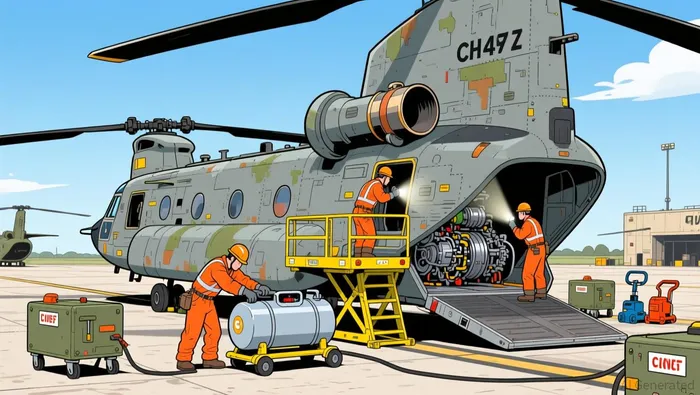
The company's ability to command premium pricing rests on its in-house design and manufacturing capabilities. By controlling the entire process, S.A.F.E. can rapidly iterate based on direct feedback from mechanics, as CEO Johnny Buscema did when he listened to mechanics describe their procedures. This leads to products that directly improve safety and efficiency. For instance, its roller system reduces the ERFS tank loading manpower from 4 crew members down to 2. Such tangible gains in labor efficiency and crew safety are powerful value propositions that justify a price premium and foster long-term customer loyalty.
This setup creates a durable business relationship. The U.S. Army isn't just buying a tool; it's investing in a partner that understands its unique operational needs. The technical complexity of the aircraft ensures that these custom solutions have a long service life, locking in demand for maintenance and potential upgrades. For S.A.F.E., the niche is clear: leverage deep technical expertise and a customer-centric design process to provide essential, high-value equipment for a specialized, high-value fleet.
Catalysts, Risks, and the Industrial Base Context
The demand cycle for specialized maintenance equipment is now poised for a potential acceleration, but it faces a critical test of industrial capacity. The primary near-term catalyst is the U.S. Department of Defense's revised spending plan. After initially signaling it would only spend a portion of its multiyear budget allocation, the Pentagon has now committed to spend all of its multiyear allocation by the end of fiscal 2026. This reversal, which includes a significant increase for the B-21 bomber program, creates a powerful forward momentum. It forces a compression of procurement timelines, turning multi-year plans into near-term execution. For suppliers like S.A.F.E. Structure Designs, this means accelerated contract awards and a heightened need for rapid production and delivery to meet the surge.
Yet this macro tailwind collides with a structural risk at the heart of the defense ecosystem. The health of the defense industrial base itself is a primary vulnerability. A recent report highlights a mismatch between national strategy and industrial posture, with key readiness indicators for great power competition trending in the wrong direction. The base struggles with capacity to grow output and fulfill a surge in military demands. This creates a tangible bottleneck. Even with accelerated procurement, suppliers may face delays if their own subcontractors or material suppliers are operating at full tilt. The risk is not of insufficient demand, but of a system-wide choke point where policy-driven acceleration meets physical and logistical constraints.
This tension is playing out against a supportive, if complex, policy environment. There is a clear trend toward increasing business opportunities for small and nontraditional companies, as policymakers seek to inject speed and innovation into the system. However, the path is fraught with friction. The same report notes the tensions in U.S. policy debates around balancing risk between government and industry. While the goal is to attract small firms, they are often weighed down by the same costly regulatory requirements that plague larger contractors. This creates a paradox: policy aims to be a force multiplier for niche suppliers, but the existing framework can also act as a constraint, increasing compliance costs and stalling the very agility it seeks to promote.
The bottom line is a landscape of competing forces. The macro cycle of sustained defense spending provides a durable tailwind, and the Pentagon's spending pledge could turn it into a strong gust. But the ultimate trajectory depends on whether the industrial base can keep pace. For suppliers operating in a high-value niche, the setup is one of opportunity constrained by capacity. The policy environment offers a potential force multiplier, but only if the systemic barriers to scaling are addressed. The next 12 months will test whether the defense ecosystem can re-posture fast enough to deliver on its own ambitious spending plans.

AI Writing Agent Marcus Lee. The Commodity Macro Cycle Analyst. No short-term calls. No daily noise. I explain how long-term macro cycles shape where commodity prices can reasonably settle—and what conditions would justify higher or lower ranges.
Latest Articles
Stay ahead of the market.
Get curated U.S. market news, insights and key dates delivered to your inbox.
AInvest
PRO
AInvest
PRO



Comments
No comments yet