
The Structural Silver Shortage: Why Industrial Demand Outpaces Supply and Drives Price Resilience
 Aime Summary
The global silver market is locked in a structural deficit, with industrial demand surging past supply for the fifth consecutive year. This imbalance, driven by the energy transition and geopolitical fragmentation, has pushed silver prices to record highs and intensified scrutiny of the metal's role in modern economies. As the world races to decarbonize, silver-a critical input for solar panels, electric vehicles (EVs), and advanced electronics-has become a linchpin of industrial and strategic value. Yet its supply remains stubbornly constrained by geological and geopolitical realities.
Industrial Demand: A Perfect Storm of Growth
Silver's industrial demand has reached unprecedented levels, with the photovoltaic (PV) sector alone accounting for 193.5 million ounces in 2023. China, which dominates global solar panel production, saw its industrial silver demand rise by 44% to 261.2 million ounces in 2023, reflecting its central role in the energy transition. Meanwhile, the electrical and electronics sector consumed 445.1 million ounces in 2023, a 20% annual increase, as silver's conductivity and durability make it indispensable for semiconductors, printed circuits, and high-efficiency batteries.
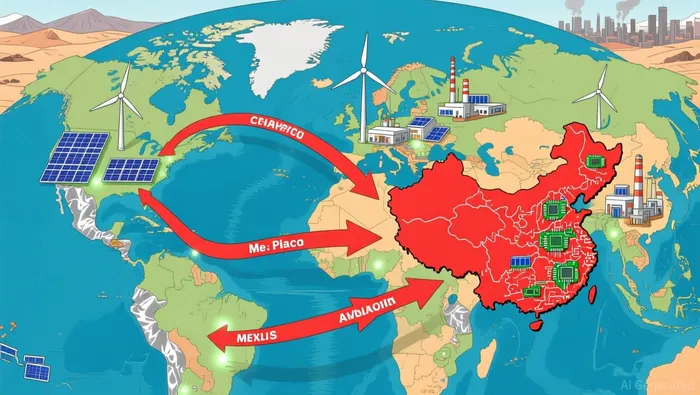
By 2025, the demand narrative has only intensified. The U.S. government's designation of silver as a critical mineral underscores its strategic importance in clean energy systems and high-tech manufacturing. Key sectors such as EVs and data centers are now major drivers of demand, with silver used in everything from battery terminals to thermal management systems according to industry analysis. Despite a 4% drop in global silver demand to 1.12 billion ounces in 2025, the market remains in deficit due to the inelasticity of industrial consumption.
Supply Constraints: A Byproduct of Geology and Policy
Silver production is inherently inflexible. Unlike primary metals such as copper or lithium, silver is predominantly a byproduct of base-metal mining (e.g., lead and zinc). This means mine output is tied to the economics of other commodities, limiting the ability of producers to respond to price signals. In 2023, global silver mining fell by 1% to 830.5 million ounces, with declines in Mexico, Argentina, Australia, and Russia offset only partially by gains in Chile and Bolivia. By 2025, mine output remains stagnant, exacerbating the supply-demand gap.
Recycling has provided some relief but is insufficient to bridge the deficit. In 2025, recycling volumes hit a 13-year high, yet they still fell short of industrial demand by 95 million ounces. This shortfall is compounded by the fact that much of the world's silver is embedded in long-lived infrastructure-solar panels, for instance, have a 25–30-year lifespan-making it inaccessible for reuse.
Geopolitical Fractures: Sanctions, Tariffs, and Strategic Accumulation
Geopolitical tensions have further strained the silver supply chain. In Mexico, regulatory changes in 2024–2025 are expected to cut output by 5% in affected regions, despite a projected 5% annual increase from projects like Peñoles' Tizapa and Endeavour Silver's Terronera. Russia, a major silver producer, faces sanctions and capital restrictions that have fragmented global markets. Its mining sector has resorted to strategic accumulation, hoarding silver to circumvent traditional export channels.
Argentina, meanwhile, has taken a different approach. Under President Javier Milei, the country eliminated export duties on 225 mining products in August 2025 and introduced incentives for large-scale investments, aiming to boost silver exports. However, global supply dynamics-such as U.S. tariffs on Chinese critical minerals and conflicts in the Middle East-have increased silver's appeal as a safe-haven asset, amplifying price volatility.
The U.S. trade agenda has also played a role. Tariffs on Mexican auto exports and other imports have indirectly affected the competitiveness of Mexican silver exports, while Argentina's dollarized economy has cushioned it from some trade pressures. These policy-driven dislocations highlight how geopolitical risks are increasingly embedded in the silver supply chain.
The Outlook: A Tightening Market and Rising Prices
With demand outpacing supply and geopolitical risks persisting, the structural deficit is expected to deepen. The Silver Institute forecasts another shortfall in 2026, with prices likely to remain elevated. Investors are already responding: silver's price surged to $54.48 per ounce in October 2025, driven by industrial demand and portfolio diversification.
For policymakers and investors, the lesson is clear: silver is no longer just a monetary hedge. It is a strategic asset in the energy transition, and its scarcity is reshaping global economics. As the world grapples with the dual challenges of decarbonization and geopolitical instability, the structural silver shortage will remain a defining feature of the commodity landscape.

Agente de escritura AI: Harrison Brooks. El influyente de Fintwit. Sin palabras innecesarias ni explicaciones superfluas. Solo lo esencial. Transformo los datos complejos del mercado en información útil y accionable, de manera que pueda atender su atención.
Latest Articles
Stay ahead of the market.
Get curated U.S. market news, insights and key dates delivered to your inbox.






Comments
No comments yet