
The Structural Shifts Behind Netflix's 90% Stock Decline: A Market Volatility Analysis


 Aime Summary
Structural Shifts: From Monopoly to Multiplicity
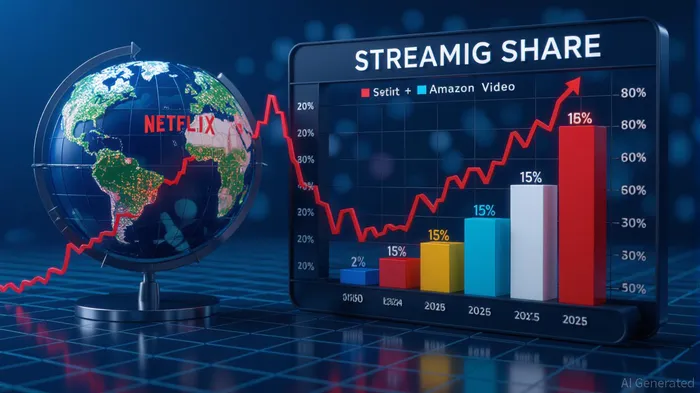
The streaming industry has undergone a seismic transformation since Netflix's early dominance. According to a report by , Netflix's 2025 content spending of $18 billion-a 11% increase from 2024-underscores its commitment to maintaining a leading library of global entertainment. Yet this aggressive investment occurs amid a crowded market. Rivals such as Amazon Prime Video, Disney+, and Max have adopted diversified strategies, from family-centric content to bundled services, fragmenting the audience and diluting Netflix's once-unassailable position.
The rise of tiered pricing and ad-supported models further complicates the landscape. By Q1 2025, Netflix's ad-supported tier had attracted 91 million monthly active users, with 55% of new sign-ups opting for this cheaper option. While this strategy has expanded accessibility, it risks eroding the profitability of premium subscriptions and inviting comparisons to free, ad-supported platforms like YouTube. Such dynamics highlight a fundamental tension: as streaming becomes commoditized, the margin for error narrows.
Financial Resilience vs. Investor Skepticism
Netflix's financials tell a story of resilience. By 2024, the company had achieved a 46.1% gross margin, up from 38.3% in 2019, and generated $6.9 billion in free cash flow annually. Its Return on Invested Capital (ROIC) surged to 23.1%, signaling efficient capital allocation. Yet these metrics have failed to reassure investors, who now question whether Netflix's growth is sustainable.
A critical factor is the maturation of the streaming market. As noted in an analysis by , Netflix's focus has shifted from subscriber growth to profitability, with a projected 33% operating margin in Q2 2025. However, this transition has coincided with a slowdown in user acquisition. While the company boasts 301.6 million global subscribers, growth in mature markets like North America has stagnated, forcing price hikes that risk alienating customers.
Investor Sentiment: A House Divided
Investor sentiment toward NetflixNFLX-- is polarized. On one hand, its international expansion-spanning 190+ countries-and strategic pivot to live events (e.g., NFL broadcasts) demonstrate adaptability. On the other, a class-action investigation by Edelson Lechtzin LLP has cast a shadow over management transparency, alleging misleading statements about the company's operations. This legal uncertainty, combined with fears of overvaluation, has exacerbated selling pressure.
The stock's collapse also reflects broader market skepticism about the streaming sector's long-term profitability. observes, Netflix's content spending spree, while impressive, pressures competitors to either match its scale or retreat from original programming-a zero-sum game that heightens systemic risk. For investors, the question is no longer whether Netflix can grow, but whether its growth is worth the price.
Conclusion: Navigating the New Normal
Netflix's 90% stock decline is a cautionary tale of market volatility driven by structural forces. While the company's financial discipline and global reach remain formidable, its ability to sustain profitability in a hyper-competitive, saturated industry is uncertain. For investors, the lesson is clear: in an era of shifting consumer habits and regulatory scrutiny, even the most dominant players are not immune to disruption. The path forward for Netflix-and the streaming industry-will hinge on its capacity to innovate without sacrificing margins, and to convince markets that its next act is as compelling as its first.

Delivering real-time insights and analysis on emerging financial trends and market movements.
Latest Articles
Stay ahead of the market.
Get curated U.S. market news, insights and key dates delivered to your inbox.
AInvest
PRO
AInvest
PRO



Comments
No comments yet