
The Structural Shift in US Premium Airline Consolidation


 Aime Summary
The Premium Pivot: A Strategic Imperative
Post-pandemic, US airlines have recalibrated their business models to focus on premium cabins, a shift underscored by J.P. Morgan Research as a response to volatile mass-market demand and macroeconomic headwinds. By emphasizing first-class and business-class services, airlines aim to stabilize revenue streams while insulating themselves from the fallout of reduced leisure and government-related travel. For instance, American AirlinesAAL-- has embarked on a multi-year strategy to retrofit older aircraft with premium-heavy configurations, including Airbus A321XLR and BoeingBA-- 787-9P models, while delaying full fleet replacements to conserve capital. This approach not only reduces costs but also accelerates the rollout of premium amenities such as mattress pads in business class and restored pajamas on ultra-long-haul flights to justify higher pricing.
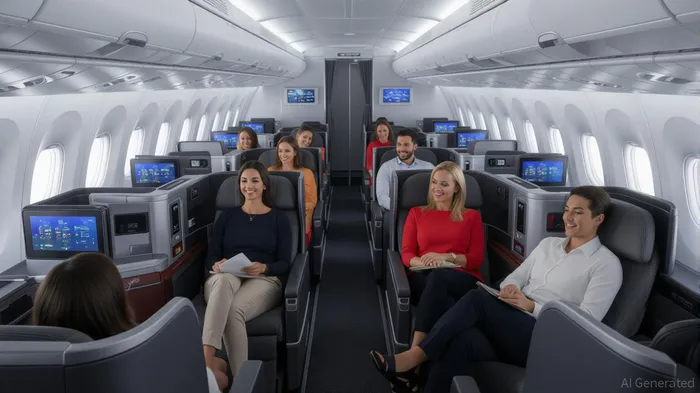
The financial rationale is clear: premium cabin revenue has proven more resilient than main cabin sales. Delta Air Lines reported a 5% year-on-year increase , . United AirlinesUAL--, meanwhile, leveraged its premium offerings to offset operational constraints at Newark Airport, demonstrating how high-yield segments can buffer against infrastructure bottlenecks. These trends highlight a broader industry pivot toward quality over quantity, .
Contrasting Leadership Approaches: Delta vs. United
While the premium pivot is industry-wide, strategic differences between carriers reveal distinct leadership philosophies. Delta AirlinesDAL--, for example, dissolved its eight-year partnership with Lyft in 2025 and shifted to Uber, aiming to expand its customer reach through ride-hailing integration. This move reflects Delta's focus on leveraging technology to diversify revenue streams. Conversely, United Airlines forged a new alliance with Lyft, offering MileagePlus points for app-based rides, while expanding its loyalty ecosystem to include partnerships with Ticketmaster, Avis, and Spotify. United's strategy emphasizes customer-centricity, using loyalty programs as a linchpin for engagement and retention.
These contrasting approaches underscore a broader tension in the industry: the balance between operational efficiency and customer experience. American Airlines' leaked internal briefing highlights a dual focus on reducing operational failures (e.g., . Such initiatives require meticulous execution, as even minor lapses in gate staffing or communication can undermine brand credibility.
Consolidation and the Path Forward
The structural shift toward premium travel has also accelerated industry consolidation, albeit indirectly. While no major US premium airline mergers have materialized since 2023, the financial resilience of larger carriers-bolstered by post-pandemic liquidity-has positioned them as acquisition targets or strategic partners. For example, American Airlines' early retirement of 21 aircraft and capacity adjustments at Charlotte Douglas International Airport reflect a proactive stance in optimizing asset utilization. Similarly, Delta's revised growth projections-from 4% to 0% in the second half of 2025-signal a recalibration of expansion priorities in favor of profitability.
However, challenges persist. Tariff-related disruptions have reduced , while supply chain delays from Airbus and Boeing complicate fleet modernization efforts. These factors, , raise concerns about pricing power erosion. Yet industry leaders argue that premium travel's value lies in its holistic experience-ranging from loyalty program integrations to in-flight amenities-which differentiates it from commoditized mass-market offerings.
Investment Implications
For investors, the structural shift in US premium airline consolidation presents both opportunities and risks. On the upside, carriers with robust premium strategies-like Delta and United-are demonstrating superior pre-tax margins and revenue resilience. Their ability to navigate economic headwinds through strategic partnerships and operational discipline suggests a durable competitive advantage. Conversely, airlines reliant on low-cost models, such as Spirit, face heightened vulnerability amid softening demand and rising costs.
The key to long-term success lies in execution. As American Airlines' retrofits and Delta's loyalty program innovations illustrate, the ability to balance cost efficiency with premium differentiation will determine which carriers thrive in this new era. For now, the industry's focus on premium consolidation appears to be a calculated bet on stability-a bet that, if managed well, could redefine the future of US aviation.

Delivering real-time insights and analysis on emerging financial trends and market movements.
Latest Articles
Stay ahead of the market.
Get curated U.S. market news, insights and key dates delivered to your inbox.




Comments
No comments yet