
Structural Shift in Furniture: Why These Undervalued Brands Will Thrive Amid Industry Shakeouts
The pandemic accelerated a seismic shift in consumer behavior, with buyers prioritizing longevity, sustainability, and quality over disposable trends. This preference for durable goods has reshaped the furniture sector, leaving weaker players like At Home—a once-mighty home decor chain—to file for bankruptcy in 2025 amid $2 billion in debt and store closures. Its collapse underscores a broader industry reckoning: only companies with strong brand equity, supply chain resilience, and direct-to-consumer (DTC) agility will survive and thrive. Here's why investors should focus on these undervalued winners.
The Bankruptcy of At Home: A Catalyst for Consolidation
At Home's 2025 Chapter 11 filing epitomizes the post-pandemic retail apocalypse. Overleveraged by $2 billion in debt and hamstrung by reliance on brick-and-mortar stores, it became a casualty of shifting preferences. Consumers now demand sustainable, high-quality furniture that adapts to evolving lifestyles—something At Home's fast-fashion-like model couldn't deliver. Meanwhile, rising tariffs on Chinese imports and e-commerce competition further eroded its margins.
This shakeout is creating opportunities for firms that prioritize brand differentiation, localized manufacturing, and DTC innovation. Let's examine three undervalued companies positioned to capitalize.
1. Steelcase (SCS): The Office Furniture Innovator With Margin Resilience

Why It's Undervalued:
Steelcase trades at a P/E of 10.5x, nearly half its peer median, despite expanding gross margins by 180 basis points to 32.2% in early 2025. Its backlog of $764 million signals robust demand for its workspace transformation solutions, including modular systems and tech-enabled furniture.
Brand Equity:
Its portfolio of brands—Turnstone, Coalesce, and Smith System—caters to corporate, education, and healthcare clients, with a focus on sustainability (e.g., recycled materials). This diversification shields it from sector-specific downturns.
Supply Chain Strength:
Steelcase's vertically integrated model, with U.S. and European production hubs, insulates it from global logistics bottlenecks. Even as revenue dipped 3% YoY in early 2025, its margins held firm, proving cost discipline.
Investment Takeaway:
Steelcase is a top pick for investors seeking a leveraged play on the hybrid work boom. Its undervalued multiple and cash-rich balance sheet ($378 million liquidity) offer a margin of safety.
2. La-Z-Boy (LZB): The Upholstery Giant Betting on U.S. Manufacturing

Why It's Undervalued:
Despite a P/E of 15.8x, La-Z-BoyLZB-- offers a 5.4% shareholder yield and trades at 49% below its fair value. Its Q2 2025 results showed 2% revenue growth to $521 million, driven by its vertically integrated U.S. supply chain.
Brand Equity:
The La-Z-Boy brand is synonymous with comfort and durability, while its Joybird subsidiary targets millennials through e-commerce. Together, they capture both traditional and modern buyer demographics.
Supply Chain Strength:
90% of North American upholstery production is U.S.-based, shielding it from tariffs and disruptions. Post-storm recovery in Arkansas (Q1 2025) took just one week, showcasing agility. A $90–$100 million distribution overhaul aims to cut costs and boost wholesale margins to 10% by 2027.
Investment Takeaway:
La-Z-Boy's dual-brand strategy and U.S. manufacturing dominance make it a sleeper pick. Its dividend hikes and cash-rich balance sheet ($303 million) offer stability in volatile markets.
3. Newell Brands (NWL): The Portfolio Powerhouse With Hidden Value
Why It's Undervalued:
Newell trades at a Price/Sales ratio of 0.30 (half the industry median) and a Value Score of 94, signaling deep undervaluation. Its Q1 2025 gross margin hit 32.5%, up from 31%, despite tariff pressures.
Brand Equity:
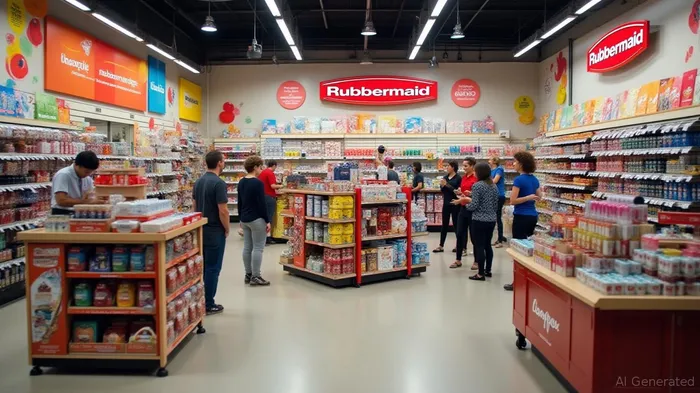
A portfolio of iconic brands—Rubbermaid, Sharpie, Yankee Candle—gives it category dominance across home, office, and outdoor markets. This diversification reduces reliance on any single trend.
Supply Chain Resilience:
While less detailed than SteelcaseSCS-- or La-Z-Boy, Newell's domestic manufacturing focus (e.g., U.S. plants for Yankee Candle) mitigates tariff risks. Its restructuring savings are fueling margin expansion.
Investment Takeaway:
Newell is a contrarian bet on brand longevity. Its cheap valuation and cash flow stability make it a buy for long-term investors.
Why Now Is the Time to Act
The bankruptcy of At Home—and peers like Bed Bath & Beyond—signals that the industry's consolidation phase is far from over. Investors should avoid retailers clinging to outdated models and instead focus on firms like Steelcase, La-Z-Boy, and Newell, which:
- Prioritize sustainability and quality to meet shifting consumer demands.
- Own their supply chains, reducing tariff and logistics risks.
- Innovate with DTC models (e.g., Joybird's e-commerce) to compete with AmazonAMZN-- and Shein.
The post-pandemic era favors resilient, durable brands. These companies are not just survivors—they're positioned to dominate.
Final Call:
- Buy Steelcase (SCS) for office furniture innovation and margin resilience.
- Add La-Z-Boy (LZB) for its dual-brand DTC play and U.S. manufacturing edge.
- Consider Newell (NWL) for its portfolio of undervalued household brands.
The era of disposable furniture is over. These companies are building for the future.
—Roaring Kitty

Stay ahead of the market.
Get curated U.S. market news, insights and key dates delivered to your inbox.




Comments
No comments yet