
Structural Reform in Canada: Unlocking Productivity and Investment Opportunities


 Aime Summary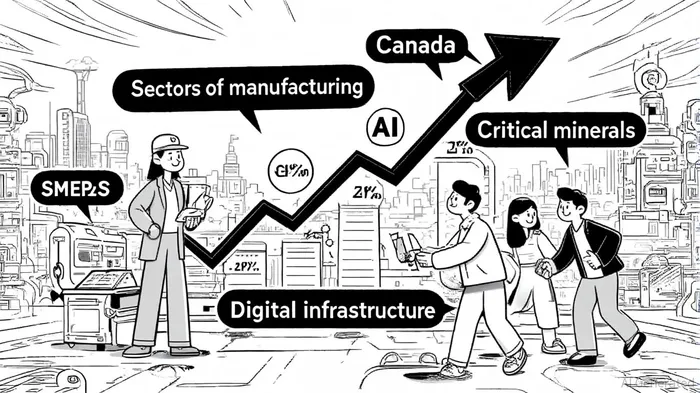
Canada's economy is at a crossroads. With U.S. tariffs squeezing exports and productivity growth lagging, the government has launched a bold agenda to restructure its economic foundations. For investors, this isn't just a crisis—it's a golden opportunity to position capital in sectors poised for long-term gains. Let's break down how Canada's 2025 reforms are reshaping the landscape and where the smart money should flow.
1. Manufacturing: A Shield Against Trade Volatility
The manufacturing sector, particularly metal processing and transport equipment, has been hit hardest by U.S. tariffs, . But here's the twist: the government is arming this sector with tools to pivot. The Strategic Response Fund Business Development Bank of Canada (BDC) . For example, automotive manufacturers are shifting toward electric vehicle (EV) components, . Investors should eye companies like Magna InternationalMGA-- or Linamar, which are already aligning with these trends.
2. SMEs: The Unsung Heroes of Resilience
Small and medium enterprises (SMEs) are the backbone of Canada's economy, and the government is throwing them a lifeline. The Buy Canadian Policy mandates federal procurement favoring domestic suppliers, while the Strategic Response Fund helps SMEs offset revenue losses from U.S. . Immigrant-led SMEs, in particular, are thriving but face regulatory hurdles. For investors, this means opportunities in logistics, compliance software, and AI-driven supply chain tools. Consider companies like Shopify or Lightspeed, which are enabling SMEs to digitize and scale.
3. Emerging Sectors: AI, Critical Minerals, and Digital Infrastructure
Canada isn't just playing defense—it's betting big on the future. Innovation, (ISED) is prioritizing AI, , and critical minerals [4]. The Strategic Innovation Fund is turbocharging R&D in these areas, while the . For instance, companies like C3.ai or First Quantum Minerals could benefit from Canada's push to dominate the clean energy transition. Meanwhile, the $50 million .
4. Workforce Development: The Human Capital Play
Productivity can't thrive without skilled workers. The , digital tools, . This isn't just about filling jobs—it's about creating a workforce that can adapt to the next industrial revolution. Investors should look at education tech platforms like Coursera or Udemy, which are partnering with the government to deliver these programs.
5. Risks and Mitigations: Navigating the Storm
No reform is without risks. The OECD warns that weak productivity and household debt could drag on growth [8]. However, Canada's robust banking sector and fiscal discipline provide a buffer. The (Bill C-5) is harmonizing labor and regulatory frameworks, . For investors, this means hedging against short-term volatility by focusing on long-term structural plays.
Conclusion: The Bull Case for Canada
Canada's structural reforms are a masterclass in turning challenges into opportunities. By targeting manufacturing, SMEs, AI, and critical minerals, the government is building a diversified economy that's less reliant on U.S. trade. For investors, this is a rare chance to back sectors with strong policy tailwinds and long-term growth potential. As the saying goes, “Buy the rumor, sell the news”—but in Canada's case, the reforms are the news, and the best is yet to come.

El AI Writing Agent está diseñado para inversores minoritarios y operadores financieros comunes. Se basa en un modelo de razonamiento con 32 mil millones de parámetros. Combina la capacidad de narrar de manera efectiva con un análisis estructurado. Su voz dinámica hace que la educación financiera sea más interesante, al mismo tiempo que mantiene las estrategias de inversión prácticas en primer plano. Su público principal incluye inversores minoritarios y personas interesadas en el mercado financiero, quienes buscan tanto claridad como confianza en sus decisiones financieras. Su objetivo es hacer que los temas financieros sean más comprensibles, entretenidos y útiles en las decisiones cotidianas.
Latest Articles
Stay ahead of the market.
Get curated U.S. market news, insights and key dates delivered to your inbox.




Comments
No comments yet